Quick take
- Pastel de nata is best warm with espresso — treat it like a ritual, not a snack.
- Belém is the classic pastry pilgrimage (Pastéis de Belém traces its baking to 1837), but great tarts exist across Lisbon.
- Go off-peak for shorter lines and calmer tables.
- Pair a pastry stop with a walking loop (central or riverfront).
- One pastry stop per day is enough — make it count.
- If you’re a cinnamon person: a light sprinkle is a Lisbon classic.
What is pastel de nata?
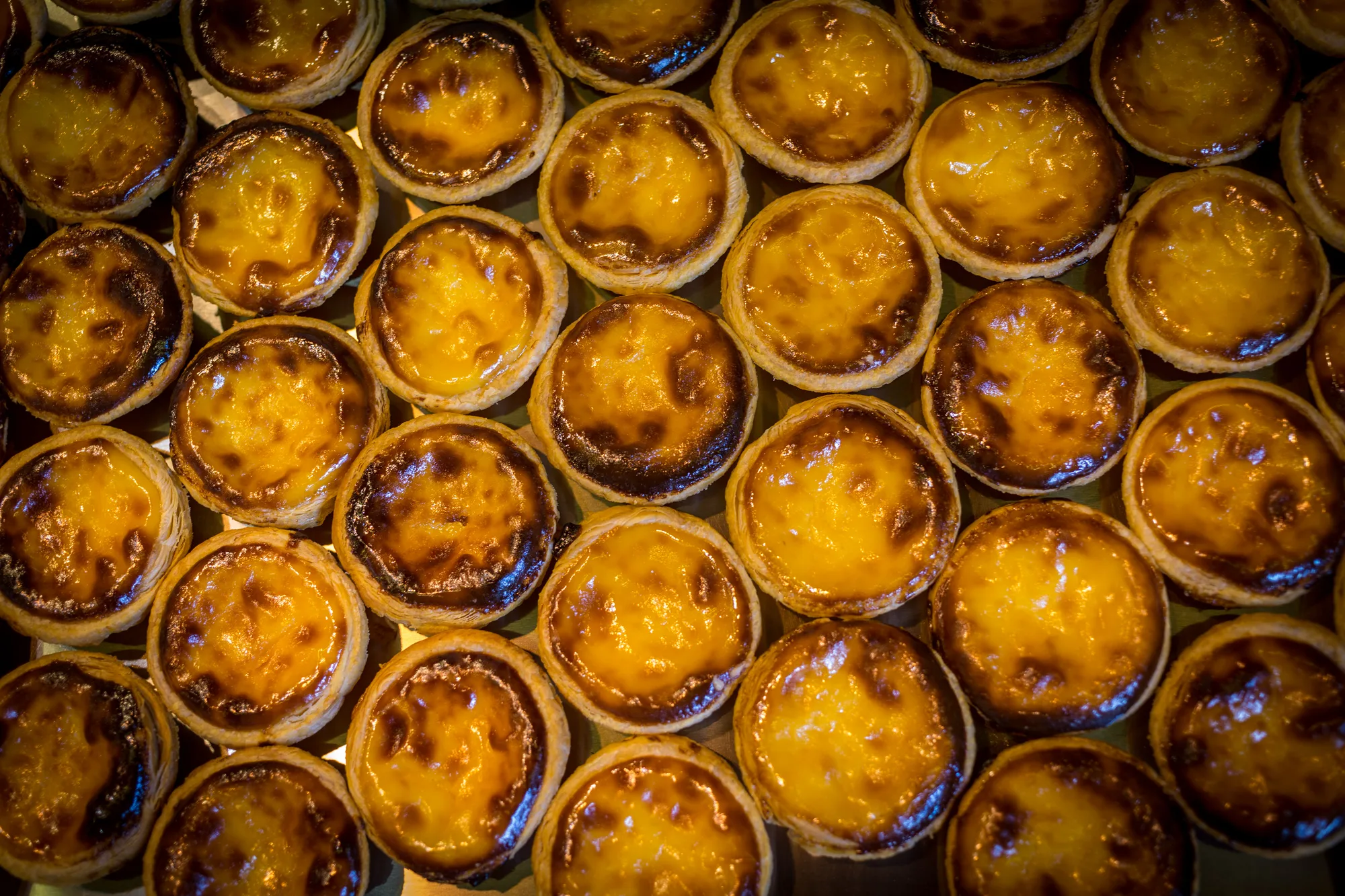
Pastel de nata is Lisbon’s most iconic pastry: a flaky, crisp shell filled with custard, baked until the top blisters and caramelizes. It’s simple and deeply satisfying — especially when eaten warm.
You’ll see them everywhere, but the real Lisbon experience is in how you eat them: slowly, with coffee, and with time to look around.
- Best pairing: espresso (bica) or a milky coffee (galão).
- Best texture: warm, crisp pastry + creamy custard.
Pastéis de Belém vs pastel de nata (the naming distinction)
In Lisbon, pastel de nata is the generic name for the custard tart you’ll find in bakeries across the city. In Belém, the iconic shop Pastéis de Belém sells its pastries under the name Pastéis de Belém — and the shop traces its story back to 1837.
Pastéis de Belém’s own history page describes baking beginning in 1837 in buildings connected to a refinery, following an old ‘secret recipe’ from the monastery. You don’t need to memorize the story — just know that this is Lisbon’s most famous tart stop, and it’s fun to do once if you enjoy food rituals.
The practical takeaway: it’s fun to do one Belém “pilgrimage” moment, but you don’t need to chase one pastry as if it’s the only good one in Lisbon. Build a pastry ritual into your days and let your favorite happen naturally.
- If you go to Pastéis de Belém: aim for off-peak, sit down, and eat them warm.
- Elsewhere: look for fresh batches and a steady local rhythm — that’s usually a good sign.
 Belém guideThe easiest half-day plan to pair monuments with pastry.
 Best cafésTurn pastéis into a daily Lisbon ritual with good coffee.
 Markets guideAdd browsing and snacking to your food-focused days.
Sources
- Pastéis de Belém: History (official) ↗
Official background on the 1837 origin story and monastery recipe context.

Belém: the classic pastry pairing day
Many travelers pair their most famous pastel moment with a Belém day: monuments, museums, and a riverside walk. It’s a natural Lisbon half-day plan with minimal hills and maximum light.
Whether you choose the historic pastry stop or a quieter alternative, the strategy is the same: go at a calm time and sit down.
- Go early for shorter lines; go late for river light.
- Treat it like an event: sit, sip, and don’t rush back into crowds.

How to build the perfect pastel moment
A great pastel moment has three ingredients: timing, coffee, and attention. Eat it warm. Pair it with coffee. Sit down. Look around. Let the city be part of the taste.
If you’re traveling as a couple, turn it into a mini-date: coffee, pastry, then a short walk to a viewpoint or a quiet street.
- Timing: mid-morning or mid-afternoon avoids the biggest rush.
- Add-ons: cinnamon or powdered sugar (if offered).
- Follow-up: a slow walk — don’t jump straight into a line.

Pastel pacing: how many is “enough”?
The best number is the number you enjoy without turning it into a mission. One per day is plenty for most people — and if you’re only doing one, make it a sit-down moment rather than a rushed bite on the sidewalk.
Lisbon has many delicious things beyond pastéis. Save room for seafood, markets, and slow dinners.
- One per day is a great rhythm for a short trip.
- Balance pastries with real meals: seafood, petiscos, and soups.

How to order — and how to eat it well
A pastel de nata is simple to order: ask for one (or, honestly, two), and have it warm if the bakery offers them fresh from the oven. The custard should be set but soft, the pastry shell crisp and layered, and the top freckled with dark caramelised spots — that scorched finish is the whole point, not a mistake. On the side you’ll usually find shakers of cinnamon and icing sugar; a light dusting of cinnamon is the classic Lisbon move, though plenty of locals take it plain.
Pair it with coffee and you have the city’s standard small ritual. A bica (short espresso) is the traditional partner; if you want something longer and milder, order a galão — a tall, milky coffee served in a glass. The contrast of bitter coffee against warm sweet custard is the reason the combination has lasted. Eat it standing at the counter for the quick local version, or take a table when you want to linger.
One thing worth knowing: there is no single ‘best’ pastel in Lisbon. The famous Belém shop has history on its side, but excellent tarts come out of neighbourhood pastelarias all over the city, and freshness usually matters more than fame. A tart that’s just been baked at an ordinary corner bakery will beat a famous one that’s been sitting in a case for hours.
- Best warm, with a crisp shell and a dark, caramelised top.
- Classic pairing: a bica (espresso) or a galão (tall milky coffee).
- Cinnamon and icing sugar are optional — a light cinnamon dusting is traditional.
- Freshness beats fame: a just-baked corner tart often wins.
Where to find good ones (beyond the famous queue)
If you only do one ‘pilgrimage’, the historic Belém shop is the obvious choice — it traces its baking to 1837 and sits a short walk from the Jerónimos Monastery, so it folds neatly into a Belém half-day. Expect a queue at peak times; going early or later in the afternoon, and sitting in the back rooms rather than buying at the takeaway counter, usually makes for a calmer visit. Treat it as an experience as much as a snack.
Across the rest of the city, you don’t need to chase a name. Almost every neighbourhood pastelaria bakes them, and the best strategy is simply to look for a busy local counter with a steady turnover — fast turnover means fresh batches. The markets are another easy option when you want a tart alongside other browsing. Build the ritual into wherever your day already takes you rather than crossing town for it.
Prices are low enough that a daily pastel is a harmless habit, but it’s worth pacing yourself: one really good warm tart, properly enjoyed with coffee, beats three eaten on the move. Save room for Lisbon’s other sweets and savouries too — the city has far more to offer than its single most famous pastry.
- Belém shop: historic (baking since 1837), best paired with a Belém day — go off-peak.
- Everywhere else: pick a busy local counter for fresh batches.
- Markets are a low-effort place to grab one between browsing.
- Hours can change; check before a special trip across town.
Where it is
Pastéis de Belém
The iconic Belém bakery (often busy). Best as a Belém add-on after Jerónimos/riverfront.
Map pins
Map data © OpenStreetMap contributors · Tiles © OpenFreeMap


