
Quick take
- Walk in clusters: Baixa/Chiado, Alfama/Graça, Belém riverfront, Príncipe Real/Estrela, or modern Parque das Nações.
- Do your main climb early, then drift downhill into dinner.
- Treat miradouros as timed stops (sunset!) rather than random detours.
- Belém and Parque das Nações are your low-stairs days.
- Bring good shoes: cobblestones + slopes turn “nearby” into “later”.
- If you’re short on time, prioritize one central loop + one old-town hill loop.
How to walk Lisbon (without turning it into a workout)
Lisbon is a walking city — but it’s also a hill city. The key is to choose walks that make sense geographically and to avoid zigzagging between neighborhoods that sit on different elevations.
A good Lisbon walking day has a shape: start with the climb while you’re fresh, pause in shade or a café mid-day, then end with a viewpoint and an easy downhill drift into dinner.
If you want a single rule: plan one “big hill” segment per day. Everything else should be gentle, flat, or downhill.
- Start early for calmer streets and softer light.
- Keep water with you — the hills add dehydration faster than you expect.
- If rain is possible, prioritize routes with fewer polished stone descents.


Classic central loop: Baixa → Chiado → Bairro Alto → Santa Catarina
This is the best “first Lisbon” walk: it’s central, readable, and full of natural pause points. You start in the flat Baixa grid, climb into Chiado’s cafés and culture, and finish near the river for sunset.
It’s also easy to shorten: you can stop at Chiado if you’ve had enough hills, or extend into Bairro Alto if you want nightlife later.
- Time: ~2–4 hours depending on stops.
- Best for: first day orientation + cafés + an easy sunset finish.
- End option: Miradouro de Santa Catarina (Adamastor) for golden hour.
Old-town hills: Graça viewpoints → Alfama lanes → riverside finish
If you want Lisbon’s most classic atmosphere, do one deliberate “old hills” walk. Start high in Graça for panoramic views, then drift down through Alfama’s lanes toward the Tagus.
This route is less about landmarks and more about texture: tiles, staircases, tiny squares, and the way Lisbon reveals itself in layers.
- Time: ~3–5 hours with stops.
- Best for: views + old Lisbon + fado-night setup.
- Tip: do it in the morning or late afternoon for calmer streets.
 Alfama guideA calmer, more intentional way to wander the oldest district.Fado in LisbonHow to plan one great fado evening (and keep it romantic).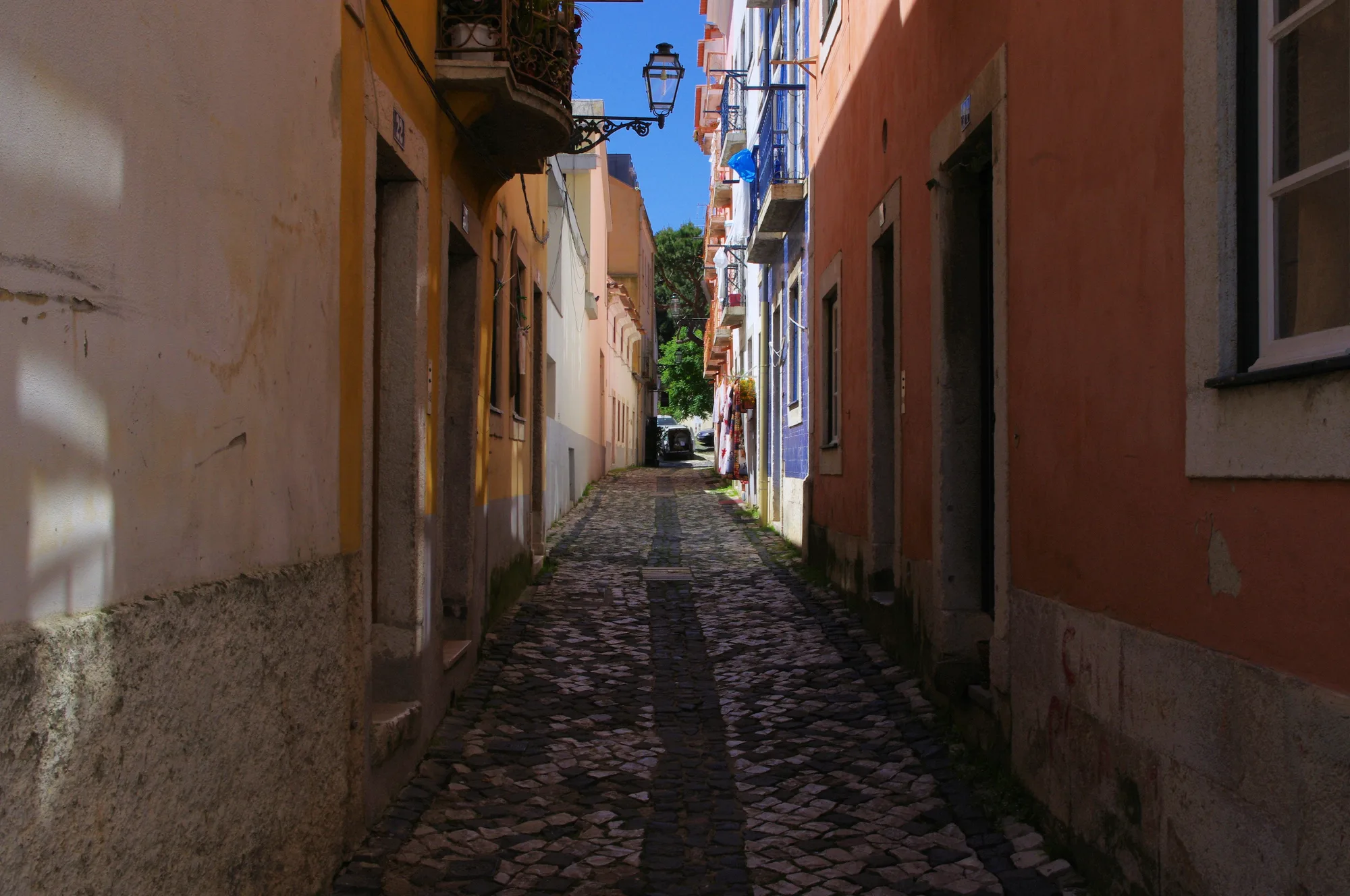
Belém riverfront stroll: monuments + modern architecture
Belém is your easiest long walk day: flatter terrain, big skies, and a natural route along the water. It also packs Lisbon’s most famous monuments into a compact area.
A great Belém afternoon is monuments first (if you care), then a slow riverside walk toward modern architecture and museums, finishing with a pastry ritual before you head back.
The walking logic here is linear: the Jerónimos Monastery and the Padrão dos Descobrimentos sit a short stroll apart, with the Belém Tower a little further along the waterfront, so you can string them together on one flat, riverside line rather than backtracking. Because there’s little climbing, it’s the ideal route on a tired-legs day or after a hill-heavy one.
- Time: half-day.
- Best for: UNESCO monuments + river light + low-effort walking.
- Pair with: museums (MAAT area) and a pastry stop.


Low-effort Lisbon: Príncipe Real → Estrela park time
Some of Lisbon’s most romantic walking is quiet: gardens, cafés, and neighborhoods that feel local rather than headline-driven. Príncipe Real and Estrela are perfect for this.
This is the route to choose if you want shade, benches, bookshops, and a calmer pace — the kind of day where the city feels like yours.
- Best for: couples, slow travel, and a break from crowds.
- Ideal midday route in warmer months: parks beat steep streets.
 Príncipe Real guideWhere to stroll, stop for coffee, and browse.
 Estrela guidePark time, basilica views, and a slower Lisbon.
Modern promenade: Parque das Nações riverside
Parque das Nações is Lisbon’s modern waterfront district — wide promenades, contemporary architecture, and space. It’s ideal if you want a long walk without stairs.
Treat it as a half-day reset: a museum or aquarium anchor, then a riverside stroll with coffee stops and room to breathe.
- Best for: families, accessibility, and a calm counterpoint to Alfama.
- Perfect if you want to ‘walk far’ without ‘climb hard’.

Reading Lisbon’s surfaces (cobblestones and the calçada)
Lisbon’s footing is part of its beauty and part of its challenge. Many sidewalks and squares are paved in calçada portuguesa — hand-laid limestone cobbles, often in striking wave and mosaic patterns. They photograph beautifully and they polish to a sheen underfoot over decades, which means they can be genuinely slippery, especially on a slope and especially when wet.
The takeaway for walkers is simple: wear grippy, comfortable shoes, slow down on downhill stretches, and be extra careful after rain. If a steep cobbled descent looks like an ice rink, take a flatter parallel street or use a lift. None of this should put you off — it’s just the single most useful thing to know before you start clocking miles on Lisbon’s hills.
- Calçada portuguesa: beautiful patterned limestone — and slick when worn or wet.
- Grippy shoes plus a slower downhill pace prevent most slips.
- After rain, favor flatter streets or a lift over the steepest cobbled descents.
A self-guided themed walk: tiles, street art, or sunset
Once you’ve done the headline loops, the most rewarding way to walk Lisbon is around a single theme rather than a list of sights. A tile walk turns the whole city into a gallery: pick a neighborhood (Alfama, or the streets around the center) and simply look up and down at façades, noticing patterns, ages, and the occasional dazzling exception. A street-art walk does the same in the creative districts, where large murals reward a slow, head-up wander.
A sunset walk is the easiest theme of all: choose a route that climbs gently to a west-facing miradouro and time it to arrive thirty to forty-five minutes before the sun drops. The walk becomes the warm-up, the view is the payoff, and a downhill drift into dinner is the natural finish. Themed walks are free, flexible, and the best antidote to checklist fatigue.
- Tile walk: pick a neighborhood and read the façades, up and down.
- Street-art walk: head into the creative districts and look up for murals.
- Sunset walk: climb gently to a west-facing miradouro, arriving before the light peaks.
- Let the theme — not a sight list — set the route.


