
Quick take
- Build each day as one main area + one ‘golden hour’ moment.
- Day 1 is for Baixa/Chiado; Day 2 for Alfama/Graça; Day 3 for Belém or modern riverside.
- If you want only one day trip, choose Sintra (palaces) or Cascais (coast).
- Use the metro for the reset — but walk the ‘story’ parts of the city.
- Plan a fado night once, not every night.
- Always schedule a quiet hour: café, park, or riverfront.
How these itineraries are built
Lisbon’s best experiences are clustered. These itineraries are built around that reality: each day is anchored in one area, with minimal cross-city bouncing.
You’ll see the biggest sights — but you’ll also keep space for Lisbon’s real magic: a viewpoint at the right time, a slow pastry ritual, and the kind of wandering that makes you feel at home.
- Each day: 1 anchor + 2 supporting stops + 1 sunset plan.
- If you’re a fast walker, add museums. If not, add cafés.

1 day in Lisbon (the greatest-hits loop)
If you have one day, keep it central. Start in Baixa, climb through Chiado, and end at a viewpoint near the river. You’ll get the geometry, the cafés, the lanes, and the light — without overcommitting to the hills.
If you want a taste of old Lisbon, add a short Alfama loop in the late afternoon, but keep it tight.
- Morning: Baixa squares + riverside breeze.
- Midday: Chiado cafés + shopping streets.
- Sunset: Santa Catarina (Adamastor) or a nearby terrace.
- Night: easy dinner in Chiado/Cais do Sodré.
2–3 days in Lisbon (classic + deep)
With two to three days, you can split Lisbon into its essential personalities: the elegant downtown, the old hillside neighborhoods, and the riverside icons of Belém.
Add one museum block and one slow garden/café block to keep the trip balanced.
- Day 1: Baixa + Chiado + Bairro Alto (sunset + nightlife optional).
- Day 2: Alfama + Graça viewpoints + fado night.
- Day 3: Belém monuments + riverfront museums + pastry ritual.


4–5 days in Lisbon (day trips + modern Lisbon)
At four to five days, Lisbon becomes a base rather than a checklist. You can add a day trip and still have time for modern Lisbon and for slow mornings that don’t feel like you’re ‘missing’ anything.
Parque das Nações is your best low-effort contrast day: wide promenades, modern architecture, and the Oceanário.
- Add 1 day trip: Sintra or Cascais (or both if you’re energetic).
- Add 1 slow day: Príncipe Real + Estrela + cafés.
- Add 1 modern day: Parque das Nações + riverside walk.
 Day trips from LisbonChoose the right escape based on your travel mood.Parque das Nações guideModern Lisbon for a calm, spacious afternoon.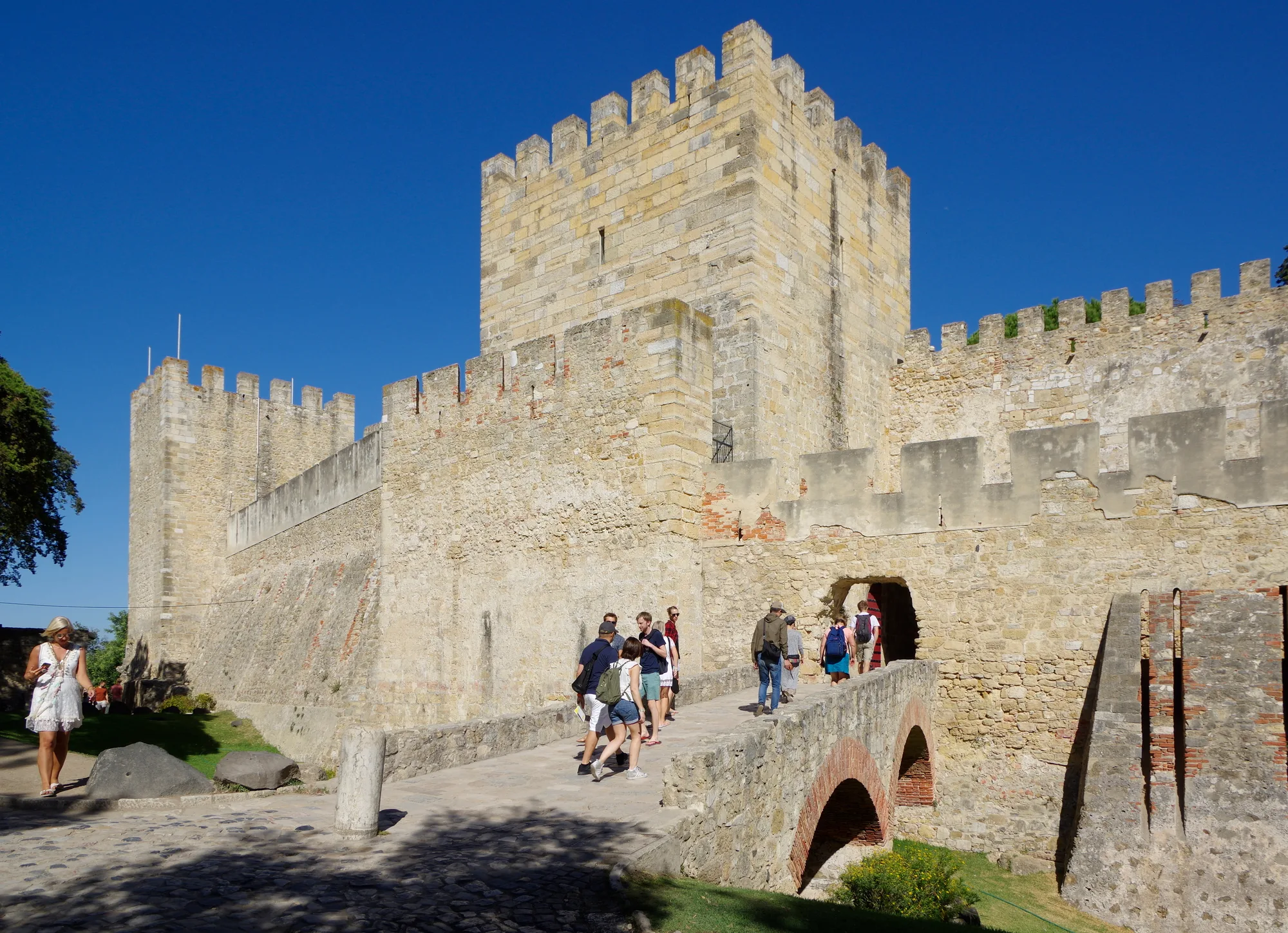
Day 1 in detail: the central core (Baixa → Chiado → river)
Your first day should make Lisbon feel legible. Start in flat Baixa, the planned grid rebuilt after the 1755 earthquake, and use its straight streets and big squares to find your bearings. Praça do Comércio, opening onto the river, is the natural starting point — grand, open, and easy to orient from. From there, drift up Rua Augusta and into Chiado, the city’s café-and-culture quarter.
Chiado is where the climb begins. Take the historic Santa Justa Lift (if it’s running — check the operator’s status) or simply walk up toward Largo do Carmo, then keep going into Bairro Alto if you want. The day’s payoff is a sunset at a nearby miradouro such as Santa Catarina (Adamastor), followed by an easy dinner in Chiado or down in Cais do Sodré.
Keep this day light on interiors. Day 1 is about understanding the shape of the city; save the heavy ticketed sights for when your legs and your sense of direction have settled.
- Morning: Praça do Comércio → Rua Augusta → Baixa squares (flat, orienting).
- Afternoon: Chiado cafés + the Santa Justa Lift / Largo do Carmo (verify lift status).
- Sunset: Miradouro de Santa Catarina (Adamastor) or a nearby terrace.
- Night: easy dinner in Chiado or Cais do Sodré — nothing far.
Day 2 in detail: the old hills (Alfama, Graça, the castle)
Day 2 is for the oldest, most atmospheric Lisbon. The smart move is to go up first while you’re fresh, then let gravity do the rest. Climb (or ride the famous Tram 28, early to beat crowds) up toward Graça for the big panoramas, then drift down through Alfama’s tangle of lanes — the medieval quarter that largely survived the 1755 quake — toward the river.
Castelo de São Jorge sits at the top of the hill and is the day’s main optional interior; it’s as much about the ramparts and the view as the history. On the way down you can fold in the Sé (Lisbon Cathedral), the tile-rich São Vicente de Fora, and the National Pantheon, each a short, calm stop rather than a major time sink. The evening belongs to fado: Alfama and neighboring Mouraria are its historic home, and one small fado house makes the perfect end to this day.
- Morning: up to Graça (walk or early Tram 28) for the panoramas.
- Mid-day: Castelo de São Jorge, then wander down through Alfama.
- Add-ons: Sé Cathedral, São Vicente de Fora, the National Pantheon (short stops).
- Night: a fado evening in Alfama or Mouraria — go to listen, keep it slow.
Day 3 in detail: Belém and the Age of Discoveries
Day 3 trades hills for big skies. Belém, downriver to the west, is where Lisbon’s seafaring history is written into stone: the Jerónimos Monastery and the Belém Tower are together a UNESCO World Heritage site, with the Padrão dos Descobrimentos (Monument to the Discoveries) on the waterfront between them. Make it a dedicated half-day so you’re not zigzagging back and forth across the city.
Reach Belém by Tram 15E or train from Cais do Sodré, go early if you want the monuments before the queues build, and pace the day around the riverfront walk rather than the ticket line. Pair the monuments with the modern MAAT (Museum of Art, Architecture and Technology) and a pastry ritual, then keep the rest of the day soft. If you’d rather rest your legs entirely, swap Belém for the flat, modern Parque das Nações and the Oceanário.
- Get there: Tram 15E or the train from Cais do Sodré (keep it a half-day).
- See: Jerónimos Monastery + Belém Tower (UNESCO) + Padrão dos Descobrimentos.
- Pair with: the riverside MAAT and a pastel de nata stop.
- Alternative: a flat, modern day in Parque das Nações with the Oceanário.
Days 4–7: day trips, modern Lisbon, and slow time
Past three days, Lisbon stops being a checklist and becomes a base. The best use of extra days is one or two day trips plus a deliberately slow day in the city. Sintra is the fairytale classic — palaces, gardens, and forest air, reachable by train but crowd-prone, so go early and pick fewer sites. Cascais is the easy coastal counterpoint: a relaxed beach-and-promenade day with simple logistics on the train from Cais do Sodré.
Balance every big day out with a soft Lisbon day: gardens and cafés in Príncipe Real and Estrela, a creative afternoon in Alcântara’s LX Factory, or a quiet morning that you don’t plan at all. With a full week you can also add a quieter day trip — Óbidos, Mafra, Setúbal, or Évora — without feeling like you’re missing the city.
- Day trip 1: Sintra (palaces, drama) — go early, choose two big stops.
- Day trip 2: Cascais (coast, ease) — the recovery day after a hill-heavy one.
- Slow day: Príncipe Real + Estrela gardens and cafés, or LX Factory.
- Week-long bonus: a quieter trip — Óbidos, Mafra, Setúbal, or Évora.
Build-a-day: swaps for energy, weather, and crowds
No itinerary survives contact with tired legs or a sudden change in weather, so treat each day as swappable parts rather than a fixed schedule. The structure stays the same — one anchor, two light extras, one golden-hour moment — but you change what fills it based on how you feel and what the sky is doing.
If it’s raining, pull a museum or a tiled church forward and push the viewpoint to the next clear evening. If it’s scorching, do the hills early, hide in shade or a museum at mid-day, and save the river for late. If a famous sight is mobbed, do the quieter version: skip the queue and wander the neighborhood it sits in. The point is to protect the rhythm, not the plan.
- Rain swap: museum or church now, viewpoint later.
- Heat swap: hills at dawn, shade at noon, river at dusk.
- Crowd swap: skip the line, walk the surrounding neighborhood instead.
- Tired-legs swap: trade a hill day for flat Belém or Parque das Nações.
 Rainy day LisbonIndoor anchors to swap in when the weather turns.
 Getting around LisbonUse metro and trams to protect your legs between stops.
 Viewpoints in LisbonWhere to chase golden hour once the sky clears.
Itinerary FAQ (pace, length, and order)
A few questions come up on almost every trip. How many days do you really need? Three is the comfortable minimum for the classic city; four or five lets you add a day trip and keep slow mornings. Should you rent a car? No — the historic center is best on foot and by metro/tram, and the main day trips (Sintra, Cascais) are reached by train. A car is more hassle than help unless you’re going deep into the wider region.
Does the order matter? A little. Front-load the orientation day (the central core) so the rest of the city makes sense, and try not to stack two big hill days back-to-back. And the most common mistake is over-scheduling: Lisbon’s hills add time, so plan fewer things than you think you can do and leave room for the unplanned moments that end up being your favorites.
- Minimum: 3 full days for the classic city; 4–5 to add a day trip comfortably.
- Car? Not needed — walk, ride the metro/tram, and take the train for day trips.
- Order: orientation day first; don’t stack two hill days in a row.
- Biggest mistake: over-scheduling — plan fewer stops, keep slots loose.
A weekend in Lisbon (the 48-hour version)
If a weekend is all you have, compress the classic three-day shape into two by combining the central core and the old hills on the first day, then dedicating the second to Belém or a single day trip. It’s busier than the relaxed version, but Lisbon’s clustering makes it possible without feeling like a sprint — as long as you stay disciplined about not adding ‘just one more’ stop.
A good weekend looks like this: Day 1 starts in Baixa for orientation, climbs through Chiado, then crosses to Alfama and the castle hill in the afternoon, finishing with a sunset miradouro and a fado dinner. Day 2 goes to Belém in the morning for the monuments and a pastry, returns for a slow riverside afternoon, and ends with a final viewpoint. Skip the day trip on a pure weekend; save Sintra and Cascais for trips with a spare day.
- Day 1: Baixa orientation → Chiado → Alfama + castle → sunset + fado.
- Day 2: Belém monuments + pastry → riverside afternoon → a last viewpoint.
- Keep it tight: skip the day trip on a two-day visit.
- Stay central so you’re never far from your next stop.
Choosing the right itinerary length for you
The ‘perfect’ Lisbon itinerary depends on how you travel, not just how many days you have. Fast-paced sightseers can fit a lot into a short trip; slow travelers will be happier doing less and lingering more. Use the duration guides below as starting points and then bend them to your own pace — adding museums and interiors if you move quickly, or adding cafés, gardens, and unstructured wandering if you don’t.
As a rule of thumb: one and two-day trips should stay strictly central; three days is the comfortable classic; four to five days lets you add a day trip and a genuinely slow city day; and six to seven days turns Lisbon into a relaxed base for exploring the wider region. Whatever the length, resist the urge to fill every hour — the gaps are where the city happens.
- 1–2 days: stay central, see the core, don’t add a day trip.
- 3 days: the comfortable classic — core, hills, and Belém.
- 4–5 days: add one day trip plus a deliberately slow city day.
- 6–7 days: use Lisbon as a base for two day trips and lots of slow time.
Making the plan work on the ground
A good itinerary is only as good as its logistics. The two details that quietly make or break a Lisbon plan are your base and your timing. Stay reasonably central so you’re never far from the next stop, and you’ll spend the days you saved on transit actually enjoying the city. Anchor each day around the light — hills and viewpoints early or late, museums and long lunches in the heat of the day — and the schedule looks after itself.
Sort the small stuff once, up front: set up a transit card or rideshare app on arrival, decide which (if any) sights you’ll pre-book, and keep your evenings near your base so a tired night ends in a short walk rather than a long climb. Then hold the plan loosely. The itineraries here are scaffolding, not a script — the best Lisbon days are the ones where you let a wrong turn become the highlight.
- Stay central enough that the next stop is always close.
- Anchor days to the light: hills early/late, interiors mid-day.
- Set up transit/rideshare on arrival; pre-book only the busiest sights.
- Keep evenings near your base; hold the plan loosely.
Where it is
LX Factory
A creative Alcântara complex for browsing, street art, cafés, and a modern-Lisbon afternoon vibe.
Map pins
Map data © OpenStreetMap contributors · Tiles © OpenFreeMap


