
Quick take
- Lisbon is walkable, but steep — plan your days as clusters.
- Use the metro for distance; walk for story and atmosphere.
- Buy a reusable Viva Viagem card for metro + many transit options.
- Lisboa Card can be useful on a dense sightseeing day (transport + attractions), but only if you plan it.
- Golden hour is a real activity here; plan around it.
- Pickpocketing risk is real in crowded trams and viewpoints — be aware, not anxious.
- Leave space for spontaneity: Lisbon’s best moments are often unplanned.
The Lisbon learning curve (and how to skip it)
Lisbon’s first impression can be deceptive: it feels small until the hills add time. The fastest way to enjoy the city is to plan in neighborhood clusters and to use transit strategically.
If you get one thing right, let it be this: don’t bounce from Belém to Alfama to Parque das Nações in one day. Lisbon rewards coherence.
- Choose one main area per day: central, old hills, or riverfront.
- Schedule a mid-day reset: café, park, or ‘flat hour’ in Baixa.
Getting around: metro, trams, and the Viva Viagem card
Lisbon’s metro is the most efficient way to cover distance. For trams, treat them as both transit and experience — especially the iconic Tram 28, which passes through historic neighborhoods.
For tickets, Lisbon uses the reusable Viva Viagem card, which you can load with different ticket types depending on your plans.
If you’re doing multiple paid sights in a short time window, Lisboa Card is another option: a sightseeing pass that bundles transport and attraction entry/discounts (verify current inclusions and opening days before you rely on it).
- Metro for distance; walking for discovery; trams (and historic lifts, if running) for the ‘Lisbon feel’.
- Peak-season Tram 28 is crowded; ride early if it matters to you.
- Pass mindset: one intentional ‘card day’ is better than trying to optimize every hour.


Timing: when to start, when to rest, when to chase light
Lisbon rewards early starts: calmer streets, shorter lines, softer light. Midday is for shade, museums, or long lunches; late afternoon is for viewpoints and riverfront walks.
If you’re visiting in summer, treat the middle of the day as a slow block. If you’re visiting in winter, lean into golden hour — sunsets come earlier, and the city glows.
- Morning: hills and old neighborhoods.
- Midday: museums + cafés + markets.
- Late afternoon: viewpoints + river.
Safety and common-sense travel
Lisbon is generally considered safe, but like any major tourist city, crowded areas can attract pickpocketing. Use common sense on trams, at viewpoints, and in busy nightlife areas.
The bigger ‘danger’ for many visitors is physical: slippery cobblestones, steep descents, and tired legs. Plan shoes and pace accordingly.
- Keep your phone secure on crowded trams and at popular miradouros.
- Watch your footing on polished stone sidewalks, especially after rain.
Money, cards, and tipping (no surprises)
Portugal uses the euro, and Lisbon is largely card-friendly — contactless works in most restaurants, shops, and supermarkets. Still, carry a little cash for the small, charming exceptions: a ginjinha counter, a market stall, a tiny tasca, a tip, or a ticket machine that prefers coins. ATMs (look for the Multibanco network) are widespread; where possible, choose to be charged in euros rather than your home currency to avoid poor ‘dynamic currency conversion’ rates.
Tipping is modest and not obligatory in the way it is in some countries. Rounding up or leaving a small amount for good service is normal and appreciated rather than expected. One thing to know at restaurants: the couvert — bread, olives, or cheese placed on your table before you order — is optional and chargeable, so it’s completely fine to wave it away if you don’t want it.
- Currency: the euro; cards (incl. contactless) work widely, but carry some cash.
- ATMs: the Multibanco network is everywhere; decline ‘dynamic currency conversion’.
- Tipping: modest — round up or leave a little; it’s appreciated, not required.
- Couvert: table bread/olives are optional and chargeable — decline if unwanted.
 Money & tipping in LisbonHow payment, ATMs, couvert, and tipping work here.
 Food & drink in LisbonHow to eat well — and affordably — across the city.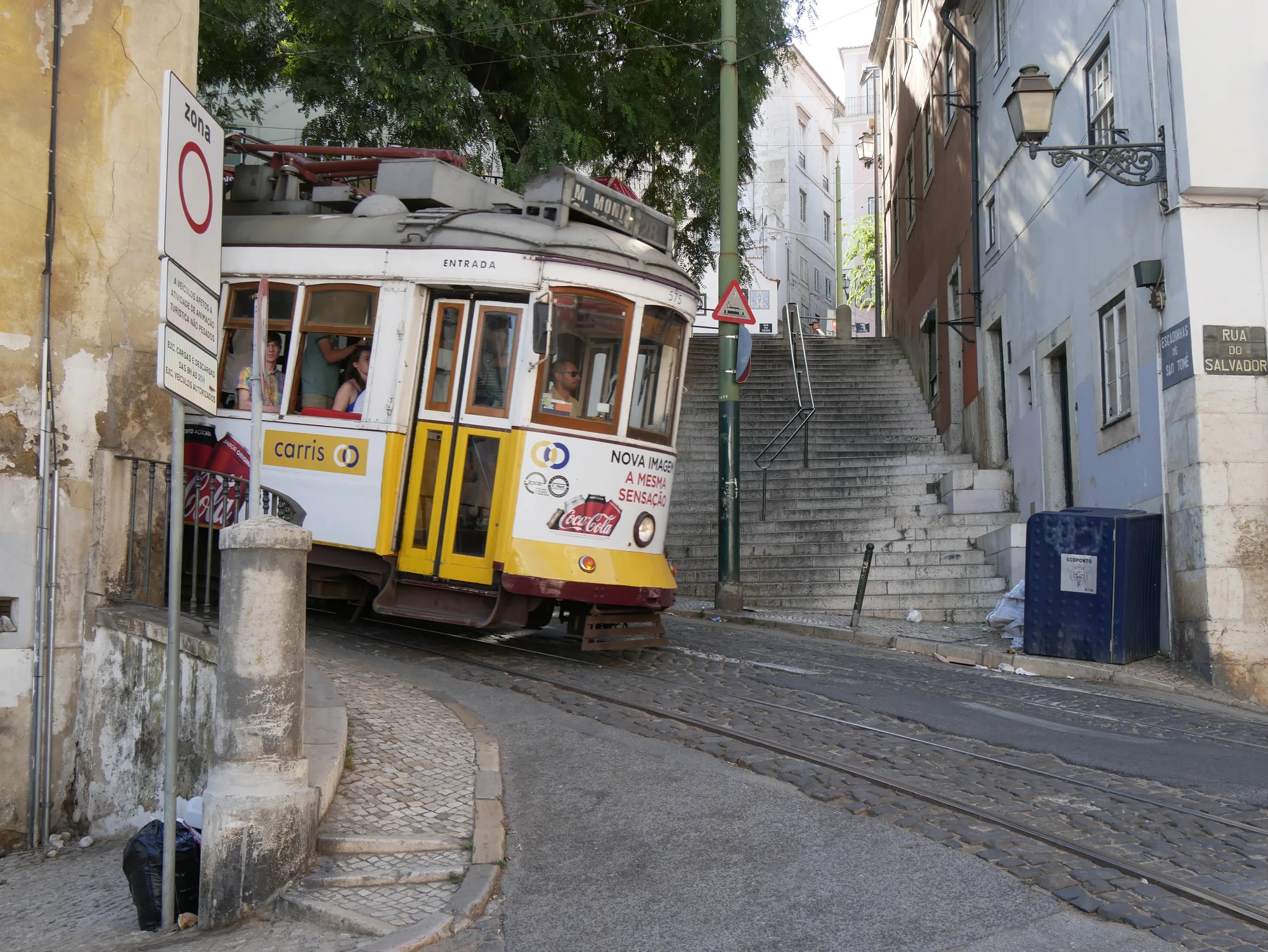
Connectivity: SIMs, eSIMs, and staying online
Staying connected in Lisbon is straightforward. If you’re visiting from elsewhere in the EU, your existing plan may roam at home rates — check with your provider first, because that can make a local SIM unnecessary. Travelers from outside the EU often do best with an eSIM bought before arrival (instant setup, no shop visit) or a local prepaid SIM picked up in the city.
Public Wi-Fi is common in cafés, hotels, and many attractions, but it’s patchy on the move — and Lisbon is a city where you’ll lean on your phone for maps, transit times, and ride-hailing apps. Having your own data makes the hills and the day-trip mornings far less stressful. Whatever you choose, verify current coverage and plans on the provider’s official site before relying on it.
- EU visitors: check whether your plan roams at home rates before buying anything.
- Non-EU visitors: an eSIM (pre-arrival) or a local prepaid SIM are the simplest options.
- Wi-Fi is common but patchy on the move — your own data smooths maps and apps.
Arrival: airport to the city
Lisbon’s airport (Humberto Delgado) is unusually close to the center — a real advantage after a long flight. The metro’s Red Line runs directly from the airport into the network, which is cheap and efficient if you’re not weighed down by luggage and your accommodation is near a station. Buses also serve the city, and taxis or ride-hailing (Uber/Bolt) are the easy door-to-door option, especially with bags, at night, or if your base is uphill.
Match the choice to your situation rather than chasing the cheapest fare. Metro is great for light, mobile travelers in daylight; a paid ride is worth it when you’re tired, loaded with luggage, arriving late, or facing a steep final climb to your door. Either way, sort out your transit card or app on arrival so your first hour stays calm.
- Metro Red Line: direct from the airport, cheap — best with light luggage.
- Taxi / Uber / Bolt: easiest door-to-door, especially with bags or a late arrival.
- Uphill base or night arrival? A paid ride is usually worth it.
What to pack (hills, sun, and cobblestones)
Lisbon’s packing list is dominated by one fact: you’ll walk a lot, on steep, polished cobblestone — the calçada portuguesa that looks beautiful and turns slick when wet. Comfortable, grippy shoes are the single most important item; smooth-soled shoes plus a rainy hill is the city’s most common avoidable mishap. Layers matter too, because the river breeze can cool an evening quickly even after a warm day.
In summer, add sun protection and a refillable water bottle — the hills plus the heat dehydrate you faster than you expect. In the cooler months, a light waterproof layer covers the occasional Atlantic shower. You don’t need much; Lisbon rewards travelling light, since you’ll be carrying whatever you bring up and down all those stairs.
- Non-negotiable: comfortable, grippy walking shoes (cobblestones get slippery).
- Layers: a light jacket for the river breeze, even in warm months.
- Summer: sun protection, a hat, and a refillable water bottle.
- Cooler months: a packable waterproof for Atlantic showers.
Language, etiquette, and a few useful words
You can get by easily with English in central Lisbon — it’s widely spoken in tourism, hospitality, and among younger people. But a little Portuguese goes a long way and is genuinely appreciated: a simple bom dia (good morning), por favor (please), and obrigado/obrigada (thank you — the ending changes with the speaker’s gender) will warm almost any interaction.
Etiquette here is relaxed and courteous rather than formal. Greet staff when you enter a small shop or café; don’t rush a meal (lingering is the norm, not rude); and be mindful that the historic neighborhoods are lived-in homes, not film sets — keep noise down in residential lanes at night and don’t block doorways for photos. A calm, friendly approach matches the city’s pace.
- English is widely spoken centrally; basic Portuguese is appreciated.
- Useful words: bom dia, boa tarde, por favor, obrigado/obrigada, desculpe.
- Manners: greet staff, don’t rush meals, and keep residential lanes quiet at night.
 First time in LisbonOrientation tips for a smooth first visit.
 Solo travel in LisbonPractical, calm tips for travelling on your own.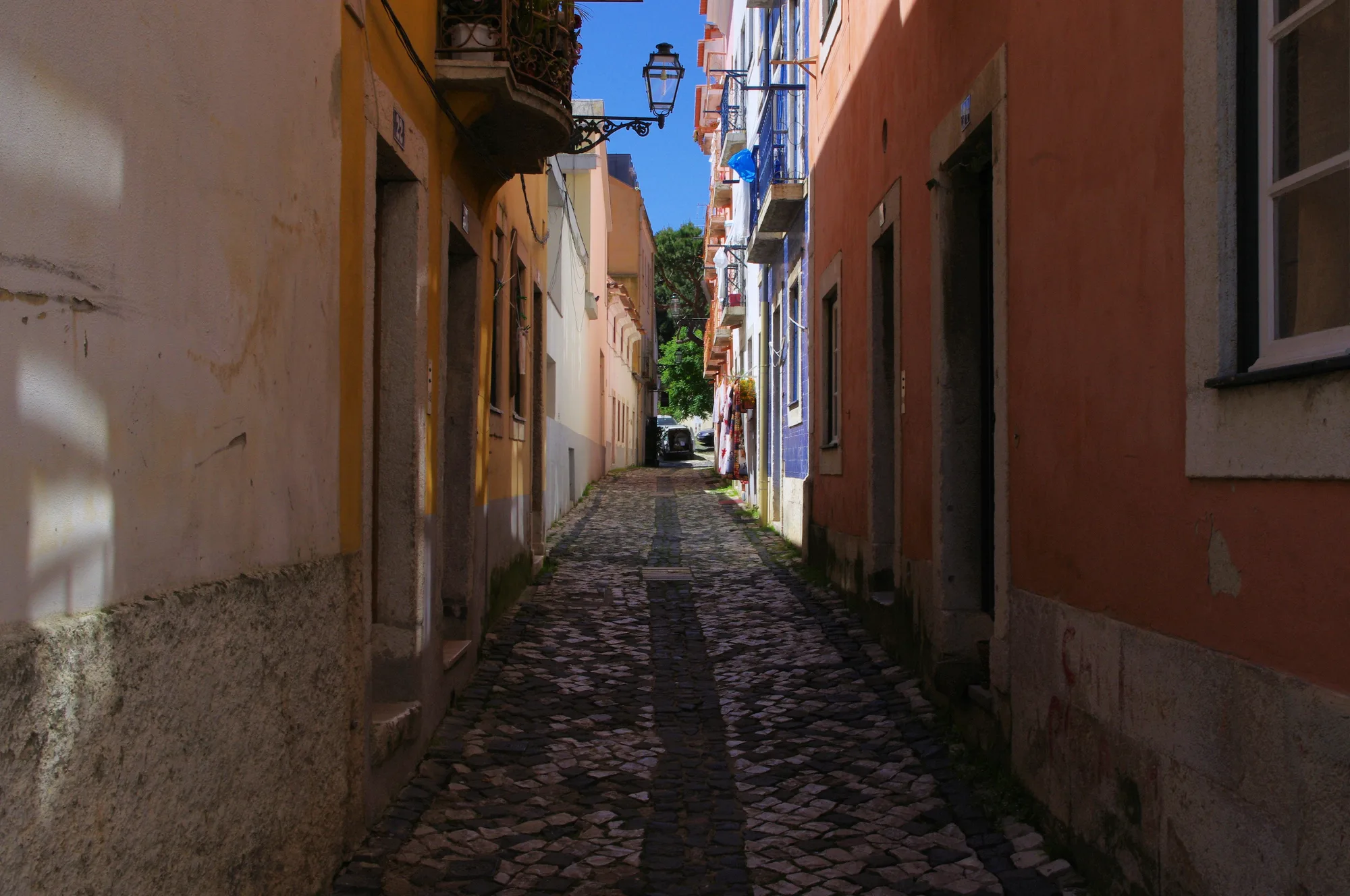
Beating the heat (and the crowds)
Lisbon summers are warm and bright, and the city’s hills amplify the effort, so a little strategy goes a long way. The single best habit is to shift your day to the edges: do the steep neighborhoods and the popular sights early, retreat to shade, a museum, a long lunch, or a café through the hottest hours, then come back out for the long, golden late afternoon and evening. The light is better then anyway.
Crowds follow a similar pattern. Famous spots — Tram 28, the Belém monuments, the best-known miradouros, Sintra on a day trip — are calmest first thing and again toward dusk. Carry water, wear a hat and sunscreen, and don’t fight the clock; the city rewards travelers who move with its rhythm rather than against it. None of this is unique to peak summer, but it matters most then.
- Front-load the hills and big sights to the early morning.
- Hide from the midday sun: museum, church, market, or a long lunch.
- Save energy for the long, beautiful late afternoon and evening.
- Carry water; wear a hat and sunscreen on hot, exposed days.
Tickets, passes, and skipping queues
Lisbon doesn’t require much advance ticketing, but a few sights reward planning. The big-draw monuments — the Jerónimos Monastery and Belém Tower especially, and the headline palaces if you day-trip to Sintra — can build long queues in peak season, so booking a timed entry online ahead of time can save a chunk of your morning. Hours, closure days, and ticketing systems do change, so a glance at the official site close to your visit is worth it.
Whether a sightseeing pass like the Lisboa Card pays off depends entirely on your plans. It bundles public transport with entry or discounts at a list of museums and monuments over a fixed window, so it’s most worthwhile on a dense, interior-heavy day (a Belém ‘card day’ is the classic example) and least worthwhile if your trip is mostly free wandering, viewpoints, and cafés. Decide your itinerary first, then buy the pass if the numbers and your plan actually line up — not the other way round.
- Pre-book timed entry for the busiest sights (Belém monuments; Sintra palaces).
- A pass (e.g. Lisboa Card) suits a dense, interior-heavy day — not a wandering trip.
- Plan the itinerary first; buy the pass only if it genuinely fits.
- Hours, closures, and ticket rules can shift, so a quick look at the official sites before you go never hurts.
Health, water, and everyday practicalities
Day to day, Lisbon is an easy city to be a visitor in. Tap water is safe to drink, so a refillable bottle saves money and plastic on hot, hilly days. Pharmacies (farmácias, marked with a green cross) are common and staff can advise on minor ailments; many neighborhoods have a rotating after-hours pharmacy if you need something at night. For anything serious, know the pan-European emergency number, 112.
A few small things smooth the rest: plugs are the standard continental European type (Type C/F, 230V), so bring an adapter if you’re coming from outside the region; sun and dehydration sneak up on you faster than the temperature suggests; and the polished cobblestones are genuinely slippery in the rain, which is more often the cause of trouble than anything else. Travel light, pace yourself, and the city stays comfortable.
- Tap water is safe — carry a refillable bottle.
- Pharmacies (farmácia, green cross) are widespread; emergency number is 112.
- Plugs: continental European Type C/F, 230V — bring an adapter if needed.
- Watch your footing on wet cobblestones — the most common avoidable mishap.
Traveling with kids, accessibility, and slower paces
Lisbon’s hills and cobblestones are the main practical hurdle for families, wheelchair users, and anyone moving slowly — so the planning trick is the same for all three: favor the flat, modern parts of the city and let the metro and lifts do the climbing. Parque das Nações and the Belém riverfront are spacious and largely level, the Oceanário is an easy, all-weather anchor for kids, and the funiculars and the Santa Justa Lift exist precisely to skip the steepest streets (verify which are running before you rely on them).
For the old hill neighborhoods, plan ‘up by transit, down on foot’ and accept that some lanes are stairs only. Strollers are workable but a carrier can be easier on the worst cobblestone. None of this means avoiding the historic core — it just means choosing routes that match your energy, and building in more rest stops than you would in a flat city.
- Easiest zones: Parque das Nações and the Belém riverfront — flat and spacious.
- Use lifts/funiculars and the metro to skip the steepest climbs.
- Old hills: go up by transit, wander down on foot; expect some stairs-only lanes.
- Plan more rest stops than you would in a flat city.

The five-minute pre-trip checklist
Most of what makes a Lisbon trip smooth can be sorted in a few minutes before you go. None of it is complicated — it’s just easier to handle calmly at home than tired at the airport or halfway up a hill. Run through this list, and the rest of the trip can be improvised.
- Pack grippy, comfortable walking shoes — the single most important item.
- Sort connectivity: check EU roaming, or arrange an eSIM/local SIM.
- Plan airport-to-base transport for your arrival time and luggage.
- Decide which (if any) busy sights to pre-book; verify hours officially.
- Note the season’s quirks: heat strategy in summer, a waterproof in winter.
- Keep a little cash for counters, markets, and tips; cards work widely otherwise.


