
Quick take
- Use the metro to skip long climbs; walk the historic cores for atmosphere.
- Metro operating hours are 06:30–01:00 daily — plan late nights and early airport runs accordingly (verify any service changes close to travel).
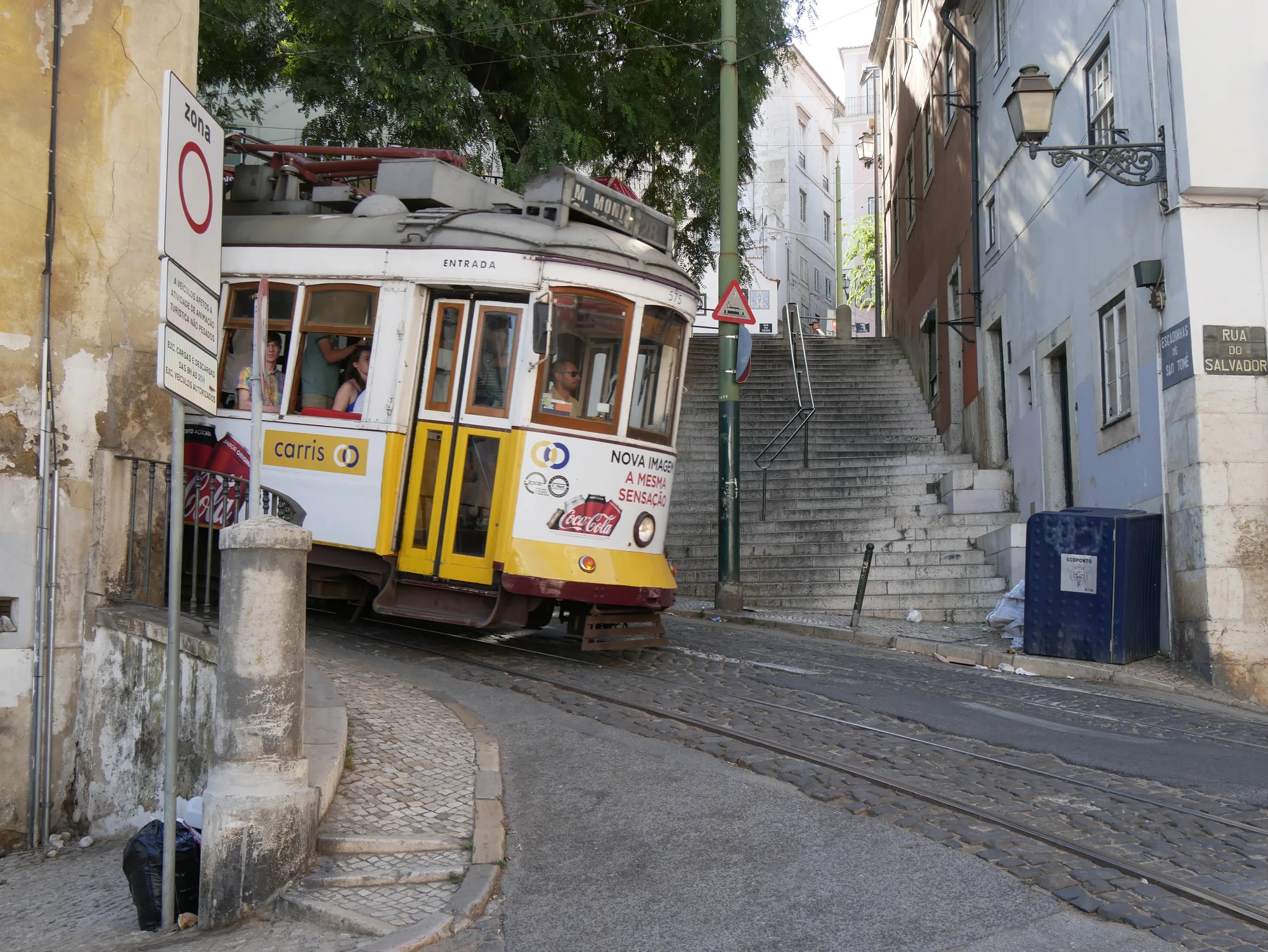
- Tram 28 is iconic — ride early to avoid crowds.
- Viva Viagem is the reusable transit card used across many Lisbon transport options.
- If you’re doing a dense sightseeing day, Lisboa Card can bundle transport + attraction entry (verify current inclusions).
- Plan routes that go up once, then drift down toward dinner.
- For Belém, use Tram 15E or a riverside approach; keep it a half-day.
- For day trips, start from central hubs like Rossio or Cais do Sodré.
The best Lisbon transport strategy
Lisbon is a city where you can walk a lot — as long as you walk smart. The trick is to combine metro rides with scenic, short walks rather than forcing cross-city treks over multiple hills.
Think of walking as the ‘story layer’ (lanes, tiles, viewpoints) and the metro as the ‘skip layer’ (distance, exhaustion, time).
- Up once, down later: plan your day with gravity on your side.
- Avoid switching neighborhoods too often — you’ll spend your day commuting vertically.
Metro basics + Viva Viagem card
Lisbon’s metro is efficient for getting between key zones. For tickets, Lisbon uses the reusable Viva Viagem card, which you can load and use across metro and many other services.
Metro de Lisboa publishes operating hours of 06:30–01:00 daily. If you’re planning a late return (or an early airport run), check the latest service updates so your ‘last ride’ plan is solid.
If you’re taking the train to Sintra or Cascais, you’ll often use the same card system — plan ahead so you’re not buying new tickets repeatedly.
- Keep one card per person and treat it like a travel essential (like your key).
- Validate properly and avoid rushing through barriers — small mistakes waste time.
- Early flight? The metro may not fit your schedule; consider a taxi/ride share for the airport.
 Lisbon metro guideWhen the metro is the best move — plus late-night planning.Airport to cityChoose metro vs taxi based on time and luggage.Lisboa CardWhen a transport + museums pass is actually worth it.
Sources
- Metropolitano de Lisboa: Timetables and frequent travel ↗
Official metro hours (useful for late nights and early mornings).
Lisboa Card and tourist passes (when it’s worth it)
Lisbon’s transport is easy to use without a pass — but a sightseeing pass can be useful if you’re planning multiple paid attractions in one day. Visit Lisboa positions Lisboa Card as a combined transport + museum/attraction product, and it’s most valuable when you cluster your ‘ticketed’ stops.
In practical terms, Lisboa Card is most compelling when you’ll actually use the included transport and train lines (central ↔ Belém, central ↔ Sintra/Cascais) plus a handful of included museums/monuments in the same 24/48/72-hour window.
The most common mistake is buying a pass without a plan. The best strategy is one intentional ‘card day’ (often Belém), plus other days that are mostly walking neighborhoods with one or two optional interiors.
- Best value day: Belém monuments + museum time + river walk.
- It’s worth confirming current inclusions and opening days before you commit.
Lisboa Card guideWhat it includes, when it pays off, and how to plan a card day. Belém guideA half-day route that stacks monuments, museums, and river light.
 Museums guidePick one or two museums that actually fit your trip rhythm.
 Santa Justa liftA classic central shortcut that pairs well with a pass day.
Sources
- Visit Lisboa (official): Lisboa Card ↗
Transport networks covered + the official overview of benefits and inclusions.
- CP (Comboios de Portugal): Lisboa Card benefits ↗
Official CP info on which train routes are included with Lisboa Card.
Hours and late-night reality (so you’re not stranded)
According to Metropolitano de Lisboa, all lines open at 06:30 and the last trains depart from terminal stations at 01:00. That covers most sightseeing days — but it matters for late dinners, nightlife, and early flights.
Tram routes and service patterns can change with works. For anything iconic (especially Tram 28E), glance at official service notices before you build a whole morning around it.
- Metro: ~06:30–01:00 (last departures from terminal stations at 01:00).
- If you’re arriving late or leaving early: taxis/ride shares are often the simplest.
- Treat iconic tram rides as a ‘nice-to-have’ — have a walking alternative ready.
Lisbon metro guideHow to use metro + walking together (the Lisbon cheat code).Lisbon airport transfersHow to start (or end) a trip without transit stress.Tram 28 guideTiming tips, safety notes, and alternatives if it’s crowded.Safety in LisbonCrowd-smart habits for trams, viewpoints, and nightlife streets.Trams, funiculars, and the iconic Tram 28
Lisbon’s trams are both transit and theatre. Tram 28 is the most famous: it rattles through historic neighborhoods like Graça, Alfama, Baixa, and Estrela, turning a commute into a moving viewpoint.
Because it’s iconic, it can be crowded. If it matters to you, go early; if it doesn’t, pick a quieter tram line (or a classic shortcut like the Santa Justa Lift, if it’s running) and spend your energy walking the neighborhoods instead.
Historic ascensores/elevators sometimes go out of service for testing or maintenance — check Carris service updates before you plan your day around them.
- Tram 28E passes through classic neighborhoods (routes and endpoints can change — check Carris for the latest).
- Crowds peak midday; early morning is your best shot at a calmer ride.
 Walking routesBest scenic walks that match Lisbon’s topography.
 Estrela guideA calmer, greener district that Tram 28 passes near.Tram 28 guideWhen to ride, what to expect, and the best alternatives.
Sources
- Carris: service changes (official) ↗
Check current status for trams, ascensores, and the Santa Justa Lift.
- Carris: ascensores + elevator temporarily out of service (official note) ↗
An example of why it’s worth checking status before you build plans around historic lifts.
Funiculars, lifts, and the ferry across the Tagus
Lisbon’s topography produced some charming transport oddities that double as sights. Three funiculars — the Ascensor da Glória, the Bica, and the Lavra — haul you up the steepest slopes, and the Santa Justa Lift connects the Baixa grid up to the Largo do Carmo area. They’re genuinely useful for skipping a brutal climb, though they’re also popular, so expect queues at peak times and check the operator’s service notices, since these historic machines occasionally close for maintenance.
Don’t forget the river. Public ferries (operated across the Tagus) link central Lisbon to the south bank — most usefully Cais do Sodré to Cacilhas in Almada — and they’re ordinary commuter transport priced accordingly, not a pricey tour. For a few euros you get an open-air crossing with the whole skyline behind you, and on the far side you can continue to the Cristo Rei viewpoint. Verify current ferry schedules before you build a plan around a specific departure.
- Funiculars (Glória, Bica, Lavra) and the Santa Justa Lift skip the steepest climbs.
- Historic lifts can close for maintenance — check Carris service notices.
- Ferries cross the Tagus (e.g. Cais do Sodré ↔ Cacilhas) at commuter prices.
- The ferry doubles as a cheap, scenic skyline ride — verify the schedule first.


