Quick take
- Carris operates the Santa Justa Lift (Elevador Sta. Justa) in central Lisbon.
- Carris notes it was inaugurated on 10 July 1902 and originally moved by steam before being electrified in November 1907.
- Carris also notes a capacity of 20 seated + 15 standing (per cabin) — a clue why queues form quickly.
- It connects Rua do Ouro (Baixa) with Largo do Carmo (Chiado/Carmo) — a very useful hill-skip.
- Go early or late to avoid the longest queues; midday lines can be intense.
- Treat it as both transport and viewpoint: short ride, big atmosphere.
- Carris lists a return ride at €5.30 from the machine (around €6.20 if bought on board); it’s free with a valid Lisboa Card.
- If queues are long, take a walking alternative and keep your day moving.
What the Santa Justa Lift is (and where it actually goes)
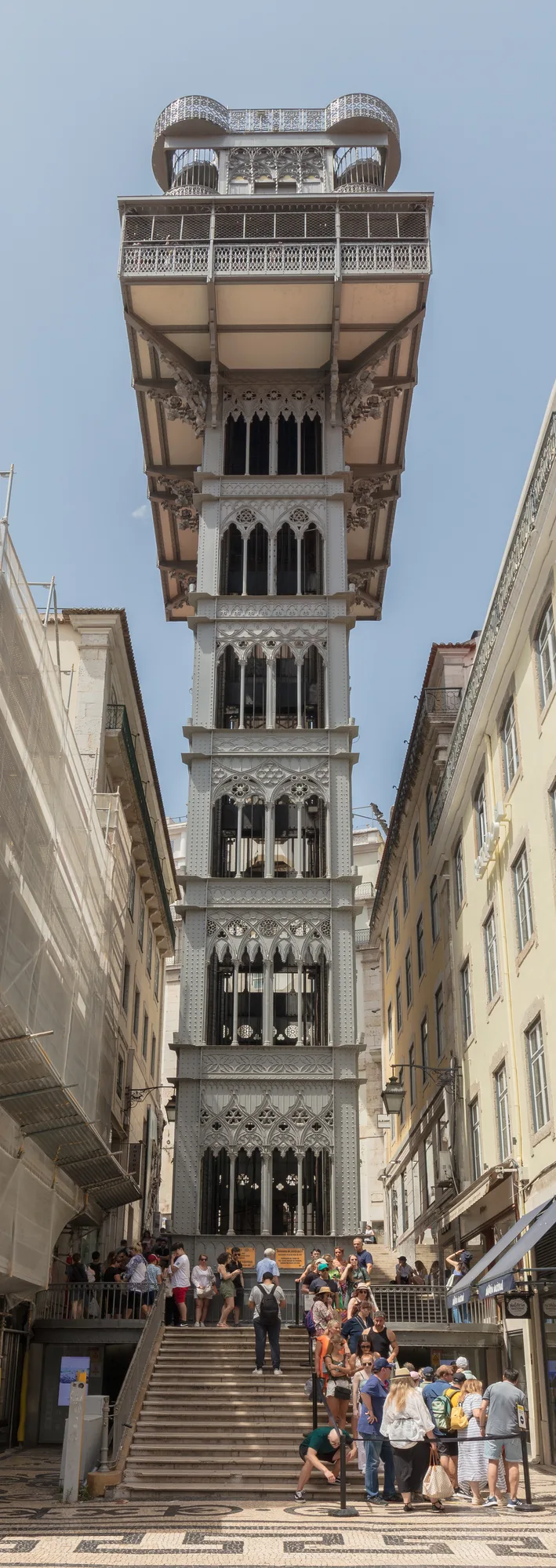
The Santa Justa Lift (Elevador de Santa Justa) — also known as Elevador do Carmo — is a historic vertical shortcut in central Lisbon. Carris describes its route simply: it links Rua do Ouro in Baixa to Largo do Carmo above.
For first-time visitors, that’s the magic: it turns a steep climb into a short ride, and it drops you near one of the prettiest hilltop corners in the center.
- Lower connection: Rua do Ouro (Baixa).
- Upper connection: Largo do Carmo (Chiado/Carmo).
 Baixa & Chiado guideThe best first-day loop that pairs naturally with the lift.
 Getting around LisbonUse ‘shortcuts’ like this to save energy for the best streets.
Sources
- Carris: Elevador de Santa Justa (official facts + history) ↗
Route description, inauguration date, steam→electric timeline, and capacity details.
Quick history (why it looks and feels so “Lisbon”)
Part of the lift’s charm is that it isn’t just a viewpoint gimmick — it’s a real piece of old-city infrastructure. Carris notes it was inaugurated on 10 July 1902, originally steam-powered, and later electrified in November 1907.
That early-1900s engineering story explains the vibe: compact cabins, a short ride, and a system that was built for a smaller city scale — which is why modern queues can feel dramatic for such a quick trip.
- Inaugurated: 10 July 1902 (Carris).
- Steam-powered at first; electrified in November 1907 (Carris).
- Capacity note: 20 seated + 15 standing per cabin (Carris).
When to ride (queue strategy)
The lift is popular, and the queue is the one real downside. If you just want the experience, go early. If you want it as a shortcut, be willing to pivot when the line is long.
A good rule: don’t spend more time waiting than riding. Lisbon has too many better moments for that.
- Best queue odds: early morning.
- If the line is long: walk instead and come back later if you still care.

How to fit it into a central walking day
The lift works best as a connector in a Baixa/Chiado day: do the flat downtown grid first, then use the lift to reach the Carmo/Chiado level for cafés and evening plans.
From there, you can drift into Bairro Alto, end at a viewpoint, or head toward dinner without backtracking.
Map pins
Map data © OpenStreetMap contributors · Tiles © OpenFreeMap
- Baixa wandering → Santa Justa lift → Chiado cafés → golden hour → dinner.
Tickets and passes (what it costs)
Carris (the operator) lists a return ride at €5.30 bought from the machine at the lower entrance, or around €6.20 if you pay on board — both valid for two journeys, so you can ride up and back. It’s included free with a valid Lisboa Card, which is the simplest option if you already hold one. (Fares can nudge up year to year, so the official Carris price list is the place to confirm.)
Before you commit to the detour, check Carris service updates — the lift can be temporarily out of service for testing or maintenance.
If you’re paying separately, decide quickly: short line = yes, long line = no (and walk instead).
- Return ride: €5.30 from the machine (~€6.20 on board); free with the Lisboa Card.
Lisboa Card guideHow to decide if a transport + museum pass fits your trip. Practical travel tipsSmall habits that keep your Lisbon days smooth.
Sources
- Visit Lisboa (official): Lisboa Card inclusions ↗
Check the current transport coverage and included attractions list for your dates.
- Carris: service changes (official) ↗
It’s worth a quick look at the Santa Justa Lift’s current status before you go.
The view from the top (and the part many people miss)
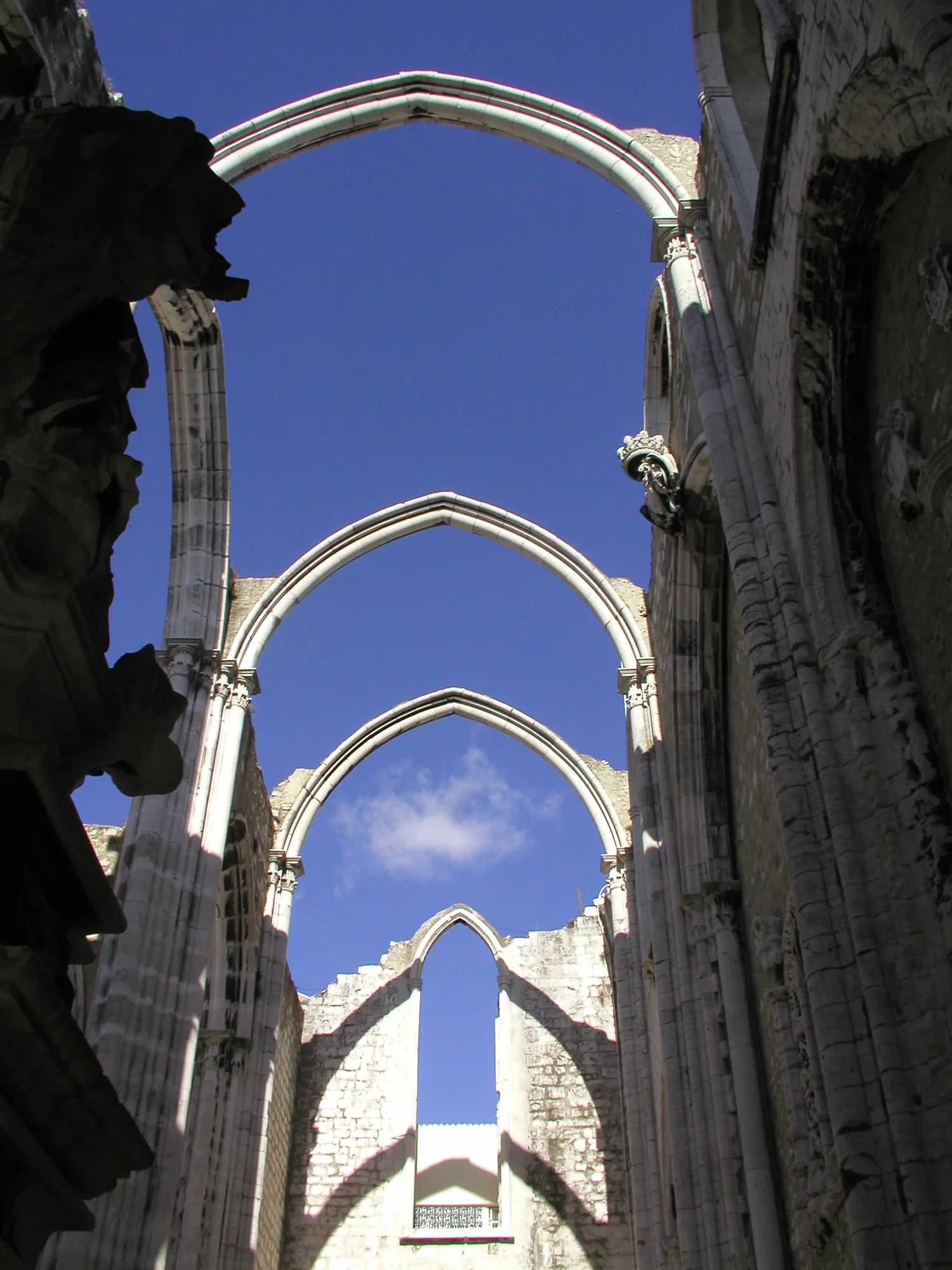
Once you ride up, the lift delivers two things. First, a small viewing platform reached by a tight spiral staircase at the very top, which gives a 360-degree look over the Baixa grid, the castle hill across the valley, and the river beyond — a genuinely good central panorama for so little effort. Second, and more usefully, the upper walkway exits onto the Carmo level, putting you steps from the roofless Carmo Convent and the heart of Chiado.
That second point is the one travellers often overlook. The lift isn’t only a novelty ride to a viewpoint and back down — it’s a connector. Treat the exit at the top as your gateway into upper Chiado and Bairro Alto, and the whole experience suddenly earns its place in your day rather than feeling like a detour. From the top you can wander straight into the convent ruins, the squares, and the café streets without backtracking.
Note that the top viewing platform sometimes carries a small separate charge or is included depending on your ticket, and this can change — so check on the day rather than assuming. If the platform line is long, the walkway exit and the surrounding views are reward enough on their own.
- Top platform: a 360° central panorama via a tight spiral staircase.
- The upper walkway exits right by the Carmo Convent and Chiado.
- Use it as a connector into upper Chiado / Bairro Alto, not just a ride.
- The viewing-deck charge/inclusion can vary — check on the day.
Worth it or skip it? An honest take
The Santa Justa Lift is genuinely beautiful — a neo-Gothic iron tower that looks like it belongs in a different century, which is part of why it’s so photographed. As a piece of the city’s fabric and a quick way up the hill, it’s a lovely thing to do once. But it’s also one of central Lisbon’s busiest attractions, and the queue can be wildly out of proportion to the short ride.
Here’s the practical decision. If you arrive early or late and the line is short, ride it up and enjoy the connection into Chiado. If you hit a long midday queue, don’t burn half an hour for a one-minute trip — there’s a free walking route up to the same Carmo/Largo do Carmo level via the streets behind, and Lisbon is full of free viewpoints with equally good or better panoramas. The lift is a nice-to-do, not a must-do, and your time is usually better spent walking the city than waiting to be lifted over a small part of it.
- Do it once if the queue is short (early or late in the day).
- Long midday line? Walk up the back streets to the same Carmo level for free.
- Plenty of free viewpoints rival the view — it’s a nice-to-do, not essential.


