
Quick take
- Plan one sunset: miradouro → small drink → late dinner.
- Choose one iconic moment (Tram 28 or the Santa Justa Lift, if it’s running) and one quiet one (a garden, a ferry, a backstreet café).
- Alfama is the most atmospheric after dusk; Chiado is best for a polished afternoon date.
- Belém is a great daytime couple plan: monuments + river walk + pastry ritual.
- Proposals are best at sunrise or weekday golden hour — same view, fewer crowds.
- Keep your itinerary light: romance is a pace, not a list.
The Lisbon romance formula
Lisbon romance isn’t about fancy plans — it’s about timing. The city feels cinematic in the in-between hours: morning calm, late afternoon glow, evening lanes with music drifting out of doors.
Build your days around two tones: a practical core (museums, monuments, neighborhoods) and a soft edge (sunset, pastry, a slow walk, a fado set). That balance is what makes Lisbon feel like a love story rather than a sprint.
- Golden hour > any single attraction.
- One big climb per day, then drift downhill into dinner.
- Choose one ‘iconic’ and one ‘secret-feeling’ moment daily.
Sunset viewpoints (miradouros) for couples
Lisbon is famously hilly — which means it’s full of viewpoints. Some are big and social; others are calmer. The trick is to pick the right one for your mood.
Miradouro de Santa Catarina (Adamastor) is a classic sunset terrace with a social vibe. Miradouro da Senhora do Monte is higher, more panoramic, and often magical in the late light.
- Bring a light layer — the river breeze can cool evenings quickly.
- Arrive 30–45 minutes before sunset for the best spot without rushing.
- Pair your viewpoint with a nearby dinner neighborhood (Chiado/Bairro Alto or Alfama/Graça).
 Adamastor viewpointLisbon’s classic social sunset terrace (easy first golden hour).
 Senhora do Monte viewpointThe big panorama: best at sunrise for calm, gorgeous at sunset for light.Ribeira das Naus river walkA low-effort golden-hour stroll that feels instantly romantic.Viewpoints in LisbonWhich miradouro fits which kind of evening.Walking routesSunset-friendly walks that feel romantic, not exhausting.
Fado: the most Lisbon kind of date night
Fado is woven into Lisbon’s old neighborhoods, especially Alfama and neighboring Mouraria, and it carries UNESCO recognition as intangible cultural heritage. The best fado nights feel intimate: dim light, simple food, a quiet room, and voices that stop conversations mid-sentence.
To keep it romantic, choose one night, go in with the right mindset (less talk, more listening), and let the rest of your evening be slow. A small fado house beats a big show — the closeness is the whole point.
- Pick one fado night — it’s better as a highlight than as background.
- Plan a light dinner earlier if you don’t want a full meal during the show.
Romantic daytime: gardens, tiles, and cafés
For daytime romance, Lisbon shines in its quiet rituals: a café pause in Chiado, a slow walk in Príncipe Real’s garden, or a shady break in Jardim da Estrela.
Mix in a tile moment — azulejos are everywhere, but seeing them with intention (a museum or a dedicated wandering hour) makes the city feel even more textured.
The unifying idea is to treat the pause as the plan, not the gap between plans. A long coffee with a shared pastry, an hour on a garden bench, a slow look at a tiled façade — in Lisbon these aren’t filler, they’re the romance itself. Pick one calm anchor for the afternoon and let it stretch, and the day will feel far more memorable than one packed with sights.
- Best soft-day neighborhoods: Príncipe Real, Estrela, and the calmer edges of Chiado.
- Plan one long café stop and treat it like an activity, not a gap.
 Príncipe Real guideGardens, boutiques, and a polished local rhythm.Museums in LisbonShortlist: tiles + modern riverfront + classic collections.
A romantic day arc (morning calm to late dinner)
The most reliable way to make Lisbon feel romantic is to give a day a shape rather than a checklist. A gentle arc works almost anywhere: a slow start with coffee and a pastry, a relaxed mid-day in a garden or a single museum, then everything tilts toward golden hour — a viewpoint, a small drink, and a late dinner that you don’t rush.
The trick is to under-plan the evening. Pick the sunset spot and the rough neighborhood for dinner, but leave the rest loose. The best couple moments in Lisbon tend to happen in the gaps: a wrong turn into a quiet square, a fado voice drifting from an open door, a bench you didn’t plan to sit on for an hour.
- Morning: coffee + pastry, an easy walk, nothing scheduled too early.
- Mid-day: one garden or one museum — a single anchor, not three.
- Golden hour: a miradouro with a small drink, arriving before the light peaks.
- Night: a slow dinner, then a downhill wander home — not a transit marathon.

The river as a romantic stage: walks and ferries
Lisbon’s most underrated romantic asset is the Tagus. Where the hill streets are tight and busy, the riverfront is wide, breezy, and quiet — the city’s natural place to slow down. The Ribeira das Naus stretch, between Cais do Sodré and Praça do Comércio, is a low-effort waterfront walk that turns gorgeous as the light goes soft.
For something simple but memorable, take a public ferry across the river to Cacilhas. It’s ordinary transport for commuters, but for visitors it becomes a few euros of open-air river crossing with the whole Lisbon skyline behind you — and a different, calmer perspective from the south bank, including the Cristo Rei viewpoint. Verify current ferry schedules before you go, but the experience itself is evergreen.
- Ribeira das Naus: an easy, flat, golden-hour river walk in the center.
- Ferry to Cacilhas: cheap, breezy, and quietly spectacular at the right hour.
- Cristo Rei: big skyline views back across the river from the south bank.
Romance in any weather (and any season)
Lisbon’s romance doesn’t depend on perfect sun. A drizzly afternoon is a gift if you treat it that way: long lunches, a museum or a tiled church, a cozy wine bar, or a historic café where you can sit for hours. The city’s light is beautiful even when it’s grey, and the crowds thin out.
Season shifts the mood more than it limits it. Spring and autumn are the gentlest for walking and the softest for light. Summer is warm and lively — lean into early mornings and very late evenings. Winter is mild and quiet, with early sunsets that make golden hour easy to catch before dinner. Whatever the season, the romantic formula holds: slow down, chase the light, and keep your evenings easy.
- Rainy day: a long lunch, a museum or tiled church, a wine bar, a historic café.
- Summer: start early, rest at mid-day, save energy for a very late, slow evening.
- Winter: earlier sunsets make golden hour effortless before dinner.
Where to stay for a romantic trip
For couples, the right base is the one that makes evenings effortless — somewhere central enough to walk home from dinner, but quiet enough to actually sleep. Lisbon’s loudest nightlife corridors (the heart of Bairro Alto, the busiest edge of Cais do Sodré) are fun to visit but hard to rest in, so most couples are happier just outside them.
Príncipe Real, Estrela, and Lapa are the classic romantic picks: elegant, leafy, calm, and still close to the action. Chiado’s quieter streets work too. Wherever you land, prioritize the specific street over the famous neighborhood name, and picture the walk home at midnight — that’s the detail that makes or breaks a romantic stay.
- Best romantic bases: Príncipe Real, Estrela, Lapa, or a calm Chiado street.
- Avoid sleeping inside the loudest bar corridors — stay near, not in them.
- Choose the street, not just the neighborhood; picture the walk home at night.
Romantic neighborhoods (and the mood each one sets)
Different parts of Lisbon are romantic in different keys, and choosing the right one for the evening you want is half the magic. Alfama is the most cinematic after dark — narrow lanes, low light, fado drifting from doorways — best for a slow, atmospheric night. Chiado is the polished daytime date: historic cafés, bookshops, and a gentle climb toward viewpoints, perfect for an unhurried afternoon.
For calm and greenery, Príncipe Real and Estrela are the city’s quietest romantic corners: garden benches, leafy streets, and the kind of pace where an hour disappears. Cais do Sodré and the riverfront bring a different energy — water, breeze, and a transition from sunset to dinner. And Belém, by day, is a wide-open riverside romance of monuments, light, and a shared pastry. Pick the neighborhood to match the hour, not the other way round.
- Alfama: most atmospheric after dusk — lanes, low light, fado.
- Chiado: a polished daytime date of cafés and bookshops.
- Príncipe Real / Estrela: calm gardens for a slow afternoon.
- Cais do Sodré / riverfront: water and breeze, sunset into dinner.
- Belém: daytime monuments, big light, and a shared pastry.
Romantic places in LisbonSpecific viewpoints, gardens, and corners for couples.Príncipe Real guideLeafy, calm, and quietly romantic. Alfama guideThe most cinematic neighborhood after dark.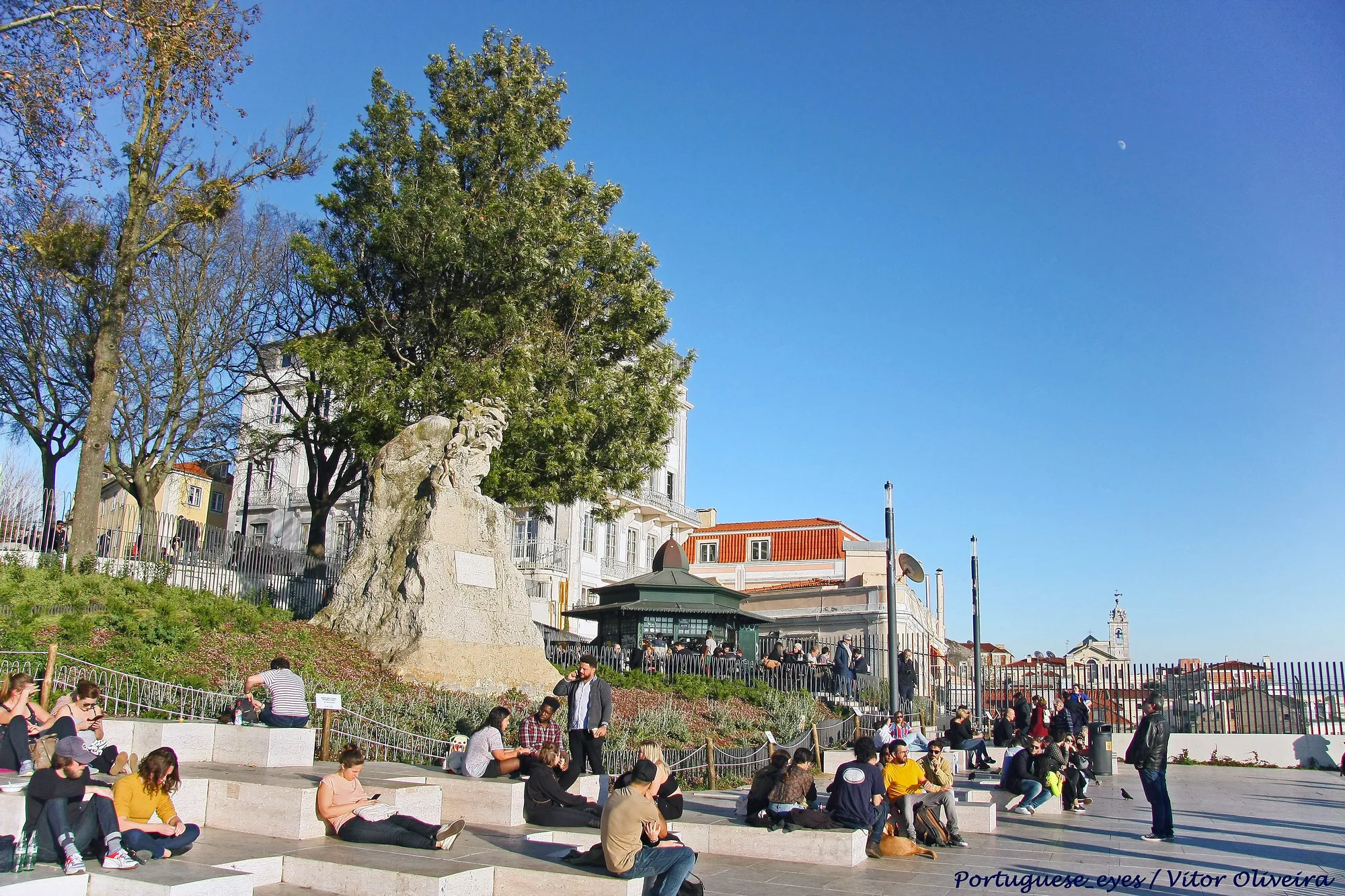
Special occasions: anniversaries, honeymoons, and proposals
Lisbon is a natural fit for milestone trips, and the same principles apply whether you’re celebrating an anniversary, on a honeymoon, or planning to propose: choose timing over spectacle. The city’s most memorable moments come from light and quiet, not from an expensive set piece. A weekday golden hour at a less-famous miradouro will almost always beat a packed, postcard-perfect one on a Saturday.
For a proposal in particular, the winning combination is a beautiful spot at a quiet hour — sunrise, or a weekday early evening, when the classic viewpoints are calm. Have a simple plan for afterward (a table you like, a quiet walk) and don’t over-engineer it. For honeymoons and anniversaries, build the trip around slow days and easy nights rather than a long list; the romance is in the pace.
- Choose a quiet hour (sunrise or weekday early evening) over a famous-but-crowded time.
- Have an easy ‘after’ plan: a table you like, a calm walk — don’t over-engineer it.
- Honeymoons/anniversaries: prioritize slow days and easy nights over a packed itinerary.
Romantic day trips and the river escape
When you want romance with a change of scene, Lisbon’s surroundings deliver without much effort. Sintra is the fairytale option — palaces wrapped in misty forest, cooler air, and gardens made for wandering hand in hand; go early to beat the crowds and choose fewer sites so the day stays unhurried. Cascais is the gentler coastal version: ocean air, a walkable seaside town, and a promenade that’s lovely at sunset.
For the lightest-touch escape, you don’t even need a full day. A public ferry across the Tagus to Cacilhas costs little and feels like a small adventure, with the whole skyline behind you and the Cristo Rei viewpoint waiting on the far side. Whatever you choose, keep the return evening soft — a riverside walk and a simple dinner — so the day ends as gently as it began.
- Sintra: misty palaces and forest gardens — go early, do fewer sites.
- Cascais: a calm coastal town and a sunset-friendly promenade.
- Ferry to Cacilhas: a cheap, breezy mini-escape with big skyline views.
Romantic food and drink: long tables and quiet bars
Romance in Lisbon is often easiest at the table. The city’s eating culture is built for lingering — petiscos (small shared plates) make a meal naturally slow and conversational, and a tasca tucked one street off the tourist drag is more intimate than any famous name. For a special night, pick a small neighborhood restaurant over a big-view rooftop; the rooftop is great for a drink at sunset, but candle-lit closeness wins for dinner.
For drinks, a quiet wine bar is the most reliable romantic move: Portugal’s wines are excellent and gentle on the wallet, so you can taste your way through a region over a long evening. Bookend the night with rituals — a ginjinha (sour-cherry liqueur) shot from a tiny counter on the way out, or a shared pastry the next morning. The pattern is the same as everywhere in romantic Lisbon: slow down, share, and don’t rush the check.
- Choose a small neighborhood restaurant over a big-name view for dinner.
- Petiscos make a meal naturally slow and shared — ideal for couples.
- A quiet wine bar beats a loud rooftop for an intimate evening.
- Add rituals: a sunset rooftop drink, a ginjinha, a shared morning pastry.

Common romance mistakes (and how to avoid them)
The two ways couples accidentally undercut a romantic Lisbon trip are over-scheduling and chasing the famous version of everything. Cramming six sights into a day turns the hills into a chore and leaves no room for the slow moments that actually feel romantic. The fix is to plan less: one anchor, one golden-hour spot, and a deliberately empty stretch for wandering.
The second mistake is going to the most crowded place at the most crowded time — the packed sunset terrace, the headline restaurant booked solid, the postcard miradouro shoulder-to-shoulder on a Saturday. The romantic move is almost always the quieter sibling: a weekday golden hour, a smaller neighborhood restaurant, a less-Instagrammed viewpoint. Finally, mind the logistics that sour a mood — a steep, tired walk home at midnight is worth replacing with a short taxi or rideshare. Comfort, not effort, is what makes the evening.
- Don’t over-schedule — plan one anchor and leave space to wander.
- Skip the most-crowded place at peak time; choose the quieter sibling.
- Go for weekday golden hours and smaller restaurants over headline ones.
- Replace the tired uphill walk home with a short paid ride — comfort sets the mood.


