
Quick take
- Start simple: one pastry ritual, one seafood meal, one petiscos night.
- Time Out Market (Mercado da Ribeira) is fun for variety — go off-peak for elbow room.
- Don’t over-optimize; Lisbon is made for grazing and long lunches.
- Pair Belém with a pastry stop; pair Alfama with fado dinner.
- Treat viewpoints like an aperitivo: sunset + something small, then dinner later.
- Hydrate — the hills plus the sun make it easy to forget.
How to eat your way through Lisbon
Lisbon is at its best when you eat in a rhythm, not a checklist. You don’t need a reservation every night — you need anchors: a pastry stop, a seafood meal, and one evening built around atmosphere (a neighborhood, a viewpoint, a fado set).
Plan your meals around where you already are. Belém is for riverside daytime food; Baixa/Chiado is for cafés and easy dinner options; Alfama is for classic atmosphere; Cais do Sodré is for markets and late evenings.
- One day, one highlight: pastry OR market OR seafood OR petiscos — not all four.
- Use lunch for the ‘famous’ spots; use dinner for the neighborhood vibe.
Pastries: pastel de nata (and what to do in Belém)
Pastel de nata is Lisbon’s signature pastry ritual: a warm custard tart with blistered top, best with espresso. You’ll find good versions across the city, but Belém is the historic pastry pilgrimage for many visitors.
Pair your pastry stop with a Belém monument route — it’s a natural Lisbon half-day plan.
- Go early if you want shorter lines; go late if you want river light and a slower walk.
- Treat it like a ritual: sit, sip, and don’t rush to the next thing.

Seafood and classic Portuguese flavors
Lisbon is a coastal capital with a deep seafood tradition. Even if you’re not doing a ‘food trip’, it’s worth planning one seafood meal: grilled fish, shellfish, or a classic cod dish.
If you want to keep it simple: choose one seafood-focused place and one casual petiscos night. That covers the ‘Lisbon taste’ without turning your trip into spreadsheet dining.
- Order like a Lisbon week: fish + greens + bread + something small to start.
- Don’t skip the soup culture — it’s a quiet superpower of Portuguese eating.

Markets: Mercado da Ribeira / Time Out Market
Time Out Market Lisboa sits inside Mercado da Ribeira in Cais do Sodré — a mix of restaurants, bars, and stalls under one roof.
It’s best treated as a ‘variety night’ when your group can’t agree, or as a daytime snack circuit. Go off-peak for a better experience and more room to sit.
- Best for: groups, variety, and low-commitment sampling.
- Worst for: quiet, romantic meals — choose a neighborhood restaurant instead.
 Time Out Market guideBest times to go, what it’s good for, and what to skip.Markets in LisbonTime Out Market + other market experiences worth your time.
 Cais do Sodré guideWaterfront evenings, Pink Street, and where it fits in your trip.
Sources
- Time Out Market Lisboa (official site) ↗
Visitor information and vendor updates.
Petiscos: Lisbon’s answer to small plates
If you want to eat the way Lisbon actually eats, learn the word petiscos — small, shareable plates designed to stretch a meal into a long, sociable evening. It’s the Portuguese cousin of tapas, but with its own repertoire: things like peixinhos da horta (battered green beans), pica-pau, cured meats and cheeses, grilled sardines in season, and bread with good olive oil. The point isn’t a single perfect dish; it’s the rhythm of ordering a few things, talking, then ordering a few more.
Petiscos are the easiest, lowest-pressure way to eat well without reservations or a big budget. A casual tasca (a small, traditional tavern) is the natural home for them. Order what looks busy, don’t over-order at the start, and treat the table as the evening’s anchor rather than a stop on the way to something else.
- What it is: small, shared plates eaten slowly over conversation.
- Where to find it: a tasca (small traditional tavern) in almost any neighborhood.
- How to do it: order a few plates, see how hungry you are, then add more.
 Petiscos in LisbonWhat to order and how a petiscos night actually flows.Best restaurants in LisbonPick a vibe per night: petiscos, seafood, or a long dinner.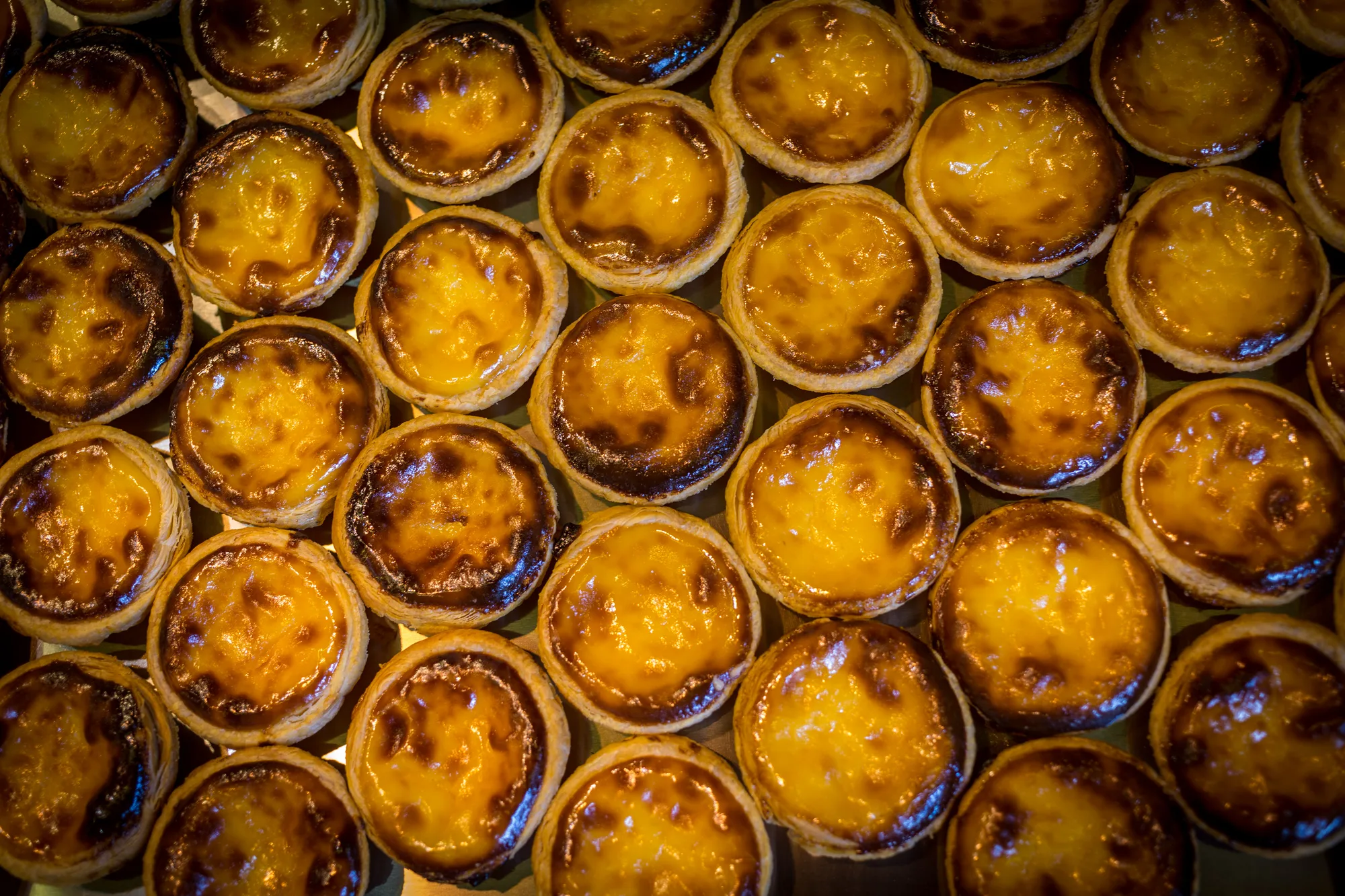
Bacalhau and the soul of Portuguese cooking
No food guide to Lisbon is honest without bacalhau — salted, dried cod, so central to the national table that Portugal is often said to have a different cod recipe for every day of the year. It’s a paradox worth savoring: a fish that isn’t caught locally (it comes salted from cold northern waters) became the country’s defining ingredient through centuries of trade and preservation.
You’ll meet it in many forms: bacalhau à brás (shredded with eggs, onions, and thin potato), bacalhau com natas (baked with cream), pastéis/bolinhos de bacalhau (fried cod cakes, a perfect petisco), or simply grilled with olive oil and potatoes. If you try one ‘classic Portuguese’ dish on your trip, this is the most representative — and most casual tascas do it well.
Beyond cod, lean into the broader comfort canon: hearty soups like caldo verde (kale and potato with a slice of sausage), grilled meats and fish, and bread that turns up at every table. Lisbon cooking is generous and unfussy more than it is refined.
- Try one bacalhau dish: à brás, com natas, grilled, or as fried cod cakes.
- Don’t skip the soups — caldo verde is a quiet staple worth ordering.
- Bread, olive oil, and olives often arrive as a paid couvert; it’s normal to be charged (or to wave it away).
Sweet Lisbon beyond the pastel de nata
The custard tart deserves its fame, but Portuguese baking goes much further — much of it descended from convent recipes built on egg yolks and sugar (the so-called ‘doces conventuais’). It’s worth ordering a few unfamiliar names from a pastelaria counter and seeing what you love.
Look for travesseiros and queijadas (Sintra is famous for both, if you day-trip there), bolo de arroz, pão de Deus, and a slice of bolo de bolacha. Pair any of them with a galão (milky coffee) and you have the most reliable, low-cost ‘activity’ in the city: a sit-down sweet break that doubles as a rest from the hills.
- Beyond nata: travesseiros, queijadas, bolo de arroz, pão de Deus, bolo de bolacha.
- Many sweets trace back to convent ‘egg-yolk’ recipes — rich and very Portuguese.
- Best ritual: a pastry + a galão, sitting down, between two walks.
What to drink: wine, ginjinha, and Lisbon’s bar scene
Portugal is a serious wine country at gentle prices, and Lisbon is a great place to drink across its regions: vinho verde (light, faintly spritzy, perfect in the heat), full reds from the Douro and Alentejo, and fortified wines like port and Madeira for after dinner. A small wine bar with a knowledgeable pour is one of the easiest ways to taste widely without committing to bottles.
For something very Lisbon, try ginjinha — a sweet sour-cherry liqueur sold by the shot from tiny hole-in-the-wall counters around the center (often near Rossio and the São Domingos area). It’s a one-euro-ish ritual more than a session drink: knock one back, with or without a cherry in the glass, and move on. The city also has a growing craft-beer and rooftop-bar scene if you want a more modern evening.
- Wine to try: vinho verde, Douro/Alentejo reds, and port or Madeira after dinner.
- Ginjinha: a sweet cherry-liqueur shot from tiny central counters — a quick ritual.
- Modern options: craft-beer taprooms and rooftop bars for a different evening mood.
Eating well on a budget (and the tourist-trap rule)
Lisbon is still one of Western Europe’s better-value capitals for eating, but the gap between a great cheap meal and an overpriced disappointment is mostly about location. The rule of thumb is simple: the closer you are to a famous square or a tram-28 photo spot, the more you pay for the view and the less you get on the plate. Walk one or two streets inland and prices fall while quality rises.
Practical money-savers: eat your big meal at lunch, when many places offer a ‘prato do dia’ (dish of the day) at a fair price; look for tascas full of locals rather than menus in six languages with photos; and remember the couvert (bread/olives/cheese set on the table) is optional and chargeable. None of this requires sacrifice — it just steers you toward the food the city actually eats.
- Walk inland: one block off a famous square usually means better food, lower prices.
- Lunch deals: look for the daily ‘prato do dia’ for the best value.
- Couvert: bread and olives put on your table are optional — it’s fine to decline them.
- Trust the crowd: a tasca full of locals beats a photo-menu tourist spot.
Cheap eats in LisbonAffordable, genuinely good places and dishes. Money & tipping in LisbonHow payment, couvert, and tipping work here.Vegetarian & vegan LisbonPlant-based options in a traditionally meat-and-fish city.
A simple food rhythm for a 3-day trip
If you want a plan rather than a list, anchor each day with one food highlight and let the rest be spontaneous. Over three days you can comfortably hit every signature experience without turning the trip into a reservations spreadsheet.
The structure below keeps lunches light and central (so you can keep sightseeing) and saves the atmospheric meals for the evening, when the neighborhoods come alive.
- Day 1: pastel de nata + galão in the morning; a casual petiscos dinner in a central tasca.
- Day 2: a market lunch (variety, low commitment); a fado dinner in Alfama or Mouraria.
- Day 3: a proper seafood or bacalhau meal; a wine bar or ginjinha nightcap to finish.
- Throughout: keep one ‘big’ meal per day and let the others be loose.
Coffee culture: how to order like a local
Coffee is a daily ritual in Lisbon, and learning a few words makes ordering effortless. A plain espresso is a bica (or just um café) — short, strong, and usually taken quickly at the counter. Want it longer? Ask for a café cheio. A galão is a tall glass of coffee with lots of milk, the classic breakfast or afternoon drink; a meia de leite is the smaller cup version, and an abatanado is closer to a larger black coffee.
The etiquette is relaxed but worth knowing: standing at the balcão (counter) is often cheaper and faster than sitting at a table, and a quick bica with a pastel de nata is one of the great low-cost pleasures of the city. Don’t expect giant takeaway cups everywhere; Lisbon coffee is small, frequent, and meant to be enjoyed in the moment.
- Bica / um café: a short espresso (the default).
- Galão: tall glass of milky coffee; meia de leite: the smaller milky cup.
- Abatanado: a larger black coffee; café cheio: a slightly longer espresso.
- Counter (balcão) service is often cheaper and faster than a table.
Where to eat, by neighborhood
Food in Lisbon is a moveable feast, and the smartest move is to let the neighborhood you’re already in decide dinner rather than crossing the city for a name on a list. Each district has a distinct eating personality, so matching meal to area keeps the evening flowing into a viewpoint, a walk, or a bar instead of a transit leg.
Use this as a rough map: Alfama for fado dinners and old-Lisbon atmosphere; Chiado and Baixa for cafés and convenient central meals; Cais do Sodré for the Time Out Market and waterfront evenings; Bairro Alto for bar-hopping with small plates; Príncipe Real and Campo de Ourique for a more local, relaxed sit-down; and Belém for daytime riverside food capped with a pastry. None of these are rules — just a way to eat where the night naturally wants to go.
- Alfama: fado dinners and atmospheric tascas.
- Chiado / Baixa: historic cafés and easy central dinners.
- Cais do Sodré: Time Out Market variety and waterfront evenings.
- Bairro Alto: small plates between bars.
- Príncipe Real / Campo de Ourique: relaxed, more local sit-down meals.
- Belém: daytime riverside food + a pastel de nata finish.
Dietary needs and meal timing (good to know)
Traditional Portuguese cooking leans on fish, meat, and cod, so committed vegetarians and vegans once had a thin time of it — but Lisbon has changed fast, and the city now has a strong plant-based scene, especially in the creative and central neighborhoods. You’ll still want to choose your spot rather than walk into the first old-school tasca, but eating meat-free here is genuinely easy now.
Meal timing is worth knowing too. Lunch typically runs from around 12:30 to 15:00 and dinner starts late by some standards — many kitchens get going around 19:30 or 20:00 and stay busy well into the night. Walking in very early can mean an empty room; arriving fashionably late is normal. For popular dinner spots, especially at weekends, a quick reservation saves disappointment, but plenty of casual tascas and petiscos bars are happy to seat walk-ins.
- Vegetarian/vegan options are now widespread, especially centrally — but pick your spot.
- Lunch: roughly 12:30–15:00; dinner often starts 19:30–20:00 and runs late.
- Reserve ahead for popular dinners; casual tascas usually take walk-ins.
The one-line food bucket list
If you remember nothing else, aim for a handful of experiences and you’ll have eaten Lisbon properly. Each is easy, mostly affordable, and woven into ordinary days rather than requiring a special pilgrimage. Treat it as a loose checklist, not a mission — the joy is in the lingering, not the ticking.
- A pastel de nata, warm, with a bica or galão.
- One bacalhau (salt cod) dish — the most Portuguese order there is.
- A petiscos night of small shared plates in a neighborhood tasca.
- A seafood meal in a coastal capital that does it well.
- A ginjinha shot from a tiny central counter.
- A glass of Portuguese wine in a quiet wine bar.
Where it is
Time Out Market Lisboa (Mercado da Ribeira)
A central food hall inside Mercado da Ribeira — best off-peak for a calmer, more enjoyable visit.
Map pins
Map data © OpenStreetMap contributors · Tiles © OpenFreeMap


