
Quick take
- Baixa/Chiado is the easiest place to eat well without logistics — central, walkable, and flexible.
- Best strategy: coffee + pastry in the morning, a real lunch, then an easy sunset and dinner nearby.
- Tourist menus exist; the fix is simple: choose calmer side streets and don’t eat only on the busiest squares.
- Chiado is great for cafés and polished evenings; Baixa is great for simple convenience.
- If the trip is short, eating central saves time and energy (and protects your evening mood).
- Pair dinner with a short post-meal walk — Lisbon nights feel better on foot.
Why Baixa & Chiado is an easy place to eat
Baixa and Chiado are Lisbon’s connective tissue: central, readable, and full of food options. It’s the best zone for travelers who want great meals without spending the day on transit.
It’s also the easiest place to keep meals flexible — which is one of the best travel upgrades in Lisbon.
- Best for: first-timers, short trips, and anyone who wants easy evenings.
- Ideal rhythm: cafés by day, a calm dinner neighborhood by night.

Breakfast and cafés (the central Lisbon ritual)
Central Lisbon mornings are made for cafés. The goal isn’t a huge breakfast; it’s a slow start: espresso, something small, then walking while the city wakes up.
If you want a bigger breakfast, do it intentionally — then keep the rest of the morning lighter.
- Best move: coffee + pastry, then walk.
- If you want brunch: do it once, not every day (it’s a time block).
Lunch in Baixa/Chiado (best time for the ‘famous’ places)
Lunch is the easiest time to do places that are popular or central — it fits the walking rhythm, and it leaves your evenings free to be about atmosphere instead of logistics.
If you want one ‘famous’ meal, make it lunch. Then keep dinner more neighborhood-driven.
- Do lunch when you’re already central — don’t commute hungry.
- Choose one highlight dish, not a full ‘order everything’ plan.
 Food & drink overviewA practical meal rhythm that works for real trips.Cheap eatsHow to eat well without turning meals into a budget project.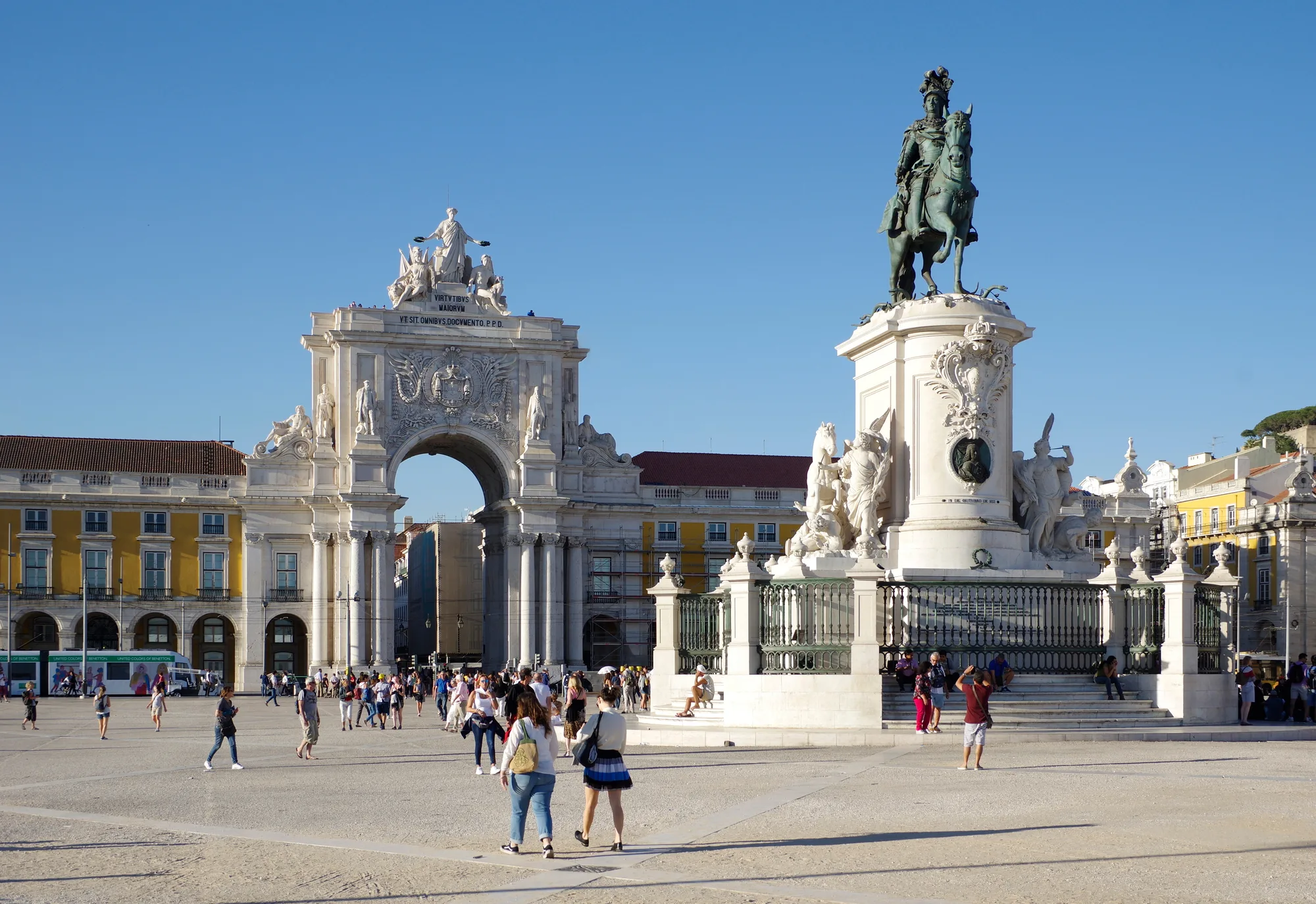
Dinner strategy: keep it close to your sunset plan
The best Lisbon evenings don’t involve crossing the city hungry. Watch sunset, then eat nearby. Central Lisbon makes this easy: you can do an easy golden hour moment and still be close to dinner.
If you want old-lane atmosphere, do Alfama for dinner one night. If you want polished ease, stay in Chiado. If you want riverfront energy, drift toward Cais do Sodré.
- Easy central pairing: sunset near the river → dinner in Chiado/Bairro Alto edge.
- Old-lane night: one night in Alfama (start high, drift down).
- Riverfront night: one night around Cais do Sodré (timing matters).


How to avoid tourist menus in the center
Central Lisbon attracts tourist menus — it’s the price of convenience. The good news is the fix is simple: don’t eat only on the busiest squares and don’t let someone else’s urgency become your plan.
- Walk one or two streets off the busiest corridors for calmer tables.
- If someone is aggressively pitching a menu, keep walking.
- If the menu feels designed for speed, choose a place designed for sitting.

A perfect central ‘food day’ template
If you want a low-stress, high-payoff food day without constant planning, use this template. It’s flexible and it fits Lisbon’s rhythm.
- Morning: café + pastry + central walking loop.
- Midday: one real lunch (sit down, slow down).
- Afternoon: museum/market block or browsing.
- Golden hour: viewpoint or riverfront walk.
- Night: dinner close to where you end the day.


Baixa vs Chiado at the table (they eat differently)
Although people say ‘Baixa-Chiado’ in one breath, the two halves have distinct dining personalities, and knowing the difference helps you choose. Baixa — the flat, grid-planned downtown rebuilt after the 1755 earthquake — is convenience territory: lots of restaurants packed along the pedestrian Rua Augusta and the surrounding streets, plenty of them aimed squarely at passing tourists. There are good meals here, but it’s the zone where you most need to step a street or two off the main drag.
Chiado, just uphill, is the more grown-up half: historic cafés, theatres, bookshops and a polished evening crowd. This is where Lisbon’s café tradition is most visible, and where a long, civilised lunch or a smart dinner feels natural. Keep climbing past Chiado and you reach Bairro Alto, which flips after dark into the city’s densest cluster of small bars and casual late kitchens — useful to know when an early dinner turns into a longer night.
A simple rule of thumb: use Baixa for speed and central convenience, Chiado for atmosphere and a slower pace, and the Bairro Alto edge when you want the evening to keep going. All three are within an easy walk of each other, so you can combine them in a single night without any transport at all.
- Baixa: convenient, central, busiest with visitors — step off Rua Augusta.
- Chiado: café tradition, theatres, the more polished sit-down scene.
- Bairro Alto (uphill edge): small bars and casual late-night food.
What to order in central Lisbon (cafés, classics, a sweet note)
Central Lisbon is a good place to meet the classics. For a quick, very local moment, find a hole-in-the-wall serving ginjinha — a sweet sour-cherry liqueur poured into a tiny glass and drunk standing up, often near Rossio and Praça da Figueira. For coffee, learn two words: a bica is a short espresso, and a galão is a tall, milky coffee served in a glass — both pair with a pastel de nata.
At lunch and dinner, the central tascas do the Portuguese canon well: bacalhau à brás (salt cod with eggs and shoestring potatoes), grilled fish, bifana (a marinated pork sandwich that’s a perfect cheap lunch), and hearty soups. Chiado’s grander cafés are as much about the room and the ritual as the plate — go for the experience and a coffee, then eat your serious meal elsewhere if the menu looks tourist-priced.
Two habits keep central meals honest. Treat the couvert (the bread and nibbles set down before you order) as optional and chargeable — decline it if you don’t want it. And if a place has photos on the menu, a host waving you in off the street, and a view of the busiest square, assume you’re paying a convenience premium; one or two streets back, the same food is usually cheaper and calmer.
- Coffee: bica (espresso) or galão (tall milky coffee in a glass).
- Cheap, local lunch: a bifana (pork sandwich) or the prato do dia.
- Try ginjinha standing up at a tiny bar near Rossio — a 2-minute ritual.
- Photo menus + street touts + a square view usually mean a tourist mark-up.
Landmark tables and counters in Baixa & Chiado
This is the part of Lisbon richest in institutions that have outlasted every trend, so here you can plan around names. On Praça do Comércio, Martinho da Arcada is the city's oldest café-restaurant, trading since 1782 — a grand spot for a coffee or a classic Portuguese lunch. Up in Chiado, A Brasileira has served coffee since 1905 in a marble-and-mirror room once frequented by Fernando Pessoa, and Cervejaria Trindade fills a tiled former convent with grilled fish, steaks and beer under vaulted ceilings (it calls itself the city's oldest beer hall, trading since 1836).
For sweets and a quick stop, Confeitaria Nacional on Praça da Figueira has run in the same family since 1829, and Manteigaria in Chiado bakes some of the city's most reliable pastéis de nata. Read these as durable anchors rather than a ranking — Baixa's grid also hides plenty of tourist-trap terraces, so step a street back from Rua Augusta for better value, and check current hours and any closing day before a special trip.
- Martinho da Arcada (Praça do Comércio): the city's oldest café-restaurant, since 1782.
- A Brasileira (Chiado): the historic literary café, serving since 1905.
- Cervejaria Trindade (Chiado): grilled fish and beer in a tiled former convent, since 1836.
- Confeitaria Nacional (1829) and Manteigaria for sweets and pastéis de nata.
- Step a street back from Rua Augusta's terraces for better value.


