
Quick take
- Baixa is Lisbon’s flat, rebuilt downtown grid — best for orientation and easy walking.
- Chiado adds cafés, culture, and a gentle climb toward Bairro Alto.
- This is the best base for first-timers who want walkability and convenience.
- Pair the area with a sunset viewpoint near the river.
- Use Baixa as your ‘reset zone’ between hill-heavy neighborhoods.
- A perfect day here is slow: plazas, cafés, browsing, then golden hour.
Baixa vs Chiado: what’s the difference?
Baixa (often called Baixa Pombalina) is Lisbon’s downtown grid, rebuilt after the 1755 earthquake. It’s flat by Lisbon standards and wonderfully readable — which makes it perfect for first-day orientation.
Chiado sits just uphill and blends historic cafés, theaters, and shopping streets. It’s where you go when you want Lisbon to feel elegant and slow.
- Baixa: flat, practical, geometric, central.
- Chiado: cafés, culture, browsing, gentle hills.
Baixa Pombalina: the 1755 rebuild that shaped modern Lisbon
Baixa isn’t just “downtown” — it’s a reconstruction project that became Lisbon’s most readable neighborhood. UNESCO’s description of Pombaline Lisbon emphasizes the orthogonal (grid-like) plan along the Tagus and the rebuilding process that followed the 1755 earthquake.
The reconstruction started in 1756 and the plan was approved in 1758, under the authority of the Marquis of Pombal. The result is the Baixa you walk today: broad, structured streets and a city center that feels unusually geometric for Lisbon.
- Why it matters for travelers: it’s Lisbon’s easiest walking zone for orientation.
- Why it matters for the city: it’s a landmark example of planned reconstruction.
 Walking routesUse Baixa as your ‘flat’ start before you climb into old-town hills.
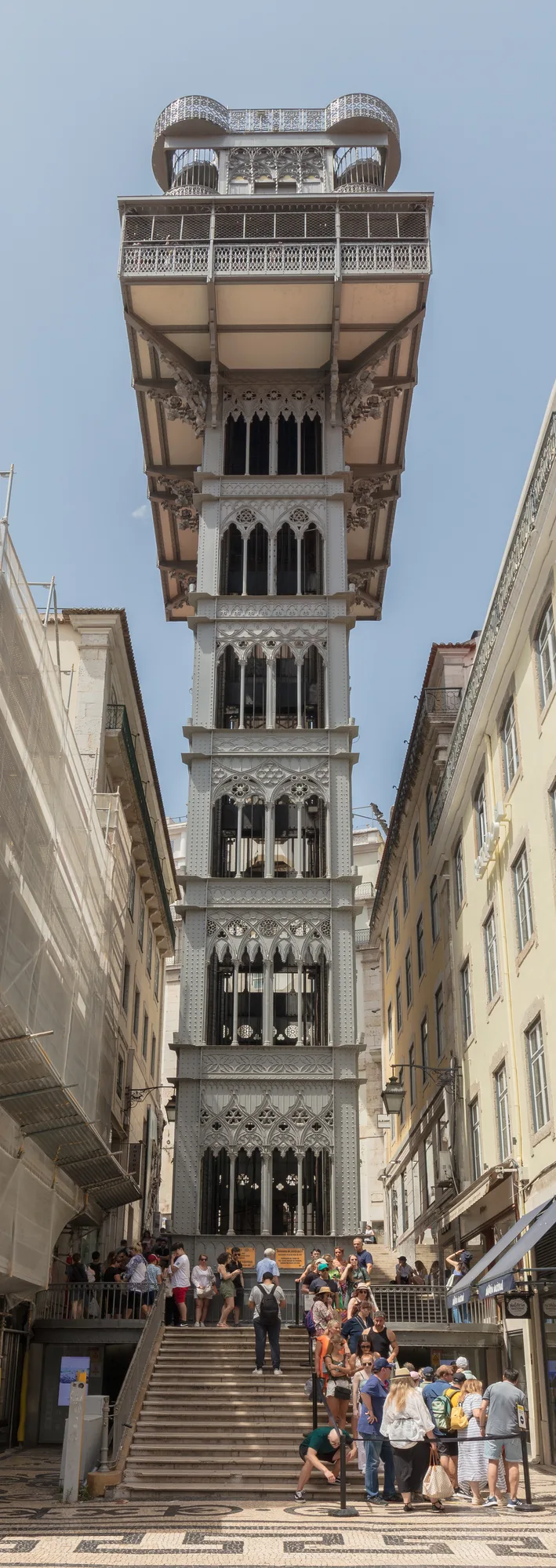
 Santa Justa liftA classic connector from Baixa up to Largo do Carmo.
Sources
- UNESCO (Tentative List): Pombaline Lisbon ↗
Background on the post-1755 reconstruction, grid plan, and historical context.
A simple central walking loop (first-day friendly)
A great way to experience Baixa and Chiado is as one continuous loop: start with big plazas, then drift toward cafés and culture, then finish at a viewpoint near the river.
This route is flexible: you can shorten it anytime, and it pairs well with shopping, museums, or a long lunch depending on your mood.
- Start: Baixa plazas and the downtown grid.
- Middle: Chiado cafés and browsing streets.
- Finish: a sunset viewpoint or riverside walk.
Walking routesMore route options that keep hills manageable.Praça do ComércioA perfect flat, riverfront ‘arrival moment’ at the bottom of Baixa.Rua Augusta ArchA quick central viewpoint above Baixa rooftops. ViewpointsThe best nearby miradouros for a first-day sunset.Santa Justa liftA beautiful shortcut that can turn this loop into an easy climb.
Café culture and slow afternoons
Chiado is one of Lisbon’s best areas for café afternoons: you can settle in, people-watch, and let the city slow down. This is also the easiest way to ‘do Lisbon’ without feeling like you’re always moving.
If you’re visiting as a couple, this neighborhood is a perfect daytime date: polished, comfortable, and full of natural pause points.
- Best for: café time, culture, and an easy pace.
- Great pairing: café → browsing → golden hour viewpoint → dinner.

Where to go next: Bairro Alto, the river, or old Lisbon
Baixa and Chiado connect naturally to the rest of Lisbon. From Chiado you can climb into Bairro Alto for nightlife; from Baixa you can walk to the river for sunset; and from central Lisbon you can jump to Alfama for old lanes and viewpoints.
Use this area as your connector neighborhood: it makes the city feel easy.
- To nightlife: Bairro Alto.
- To river light: waterfront walk near central Lisbon.
- To old lanes: Alfama (plan hills and timing).
Bairro Alto guideHow to enjoy it without turning your night into chaos.Praça do ComércioRiver light and an easy downtown loop (great at golden hour). Alfama guideOld Lisbon wandering, viewpoints, and evening atmosphere.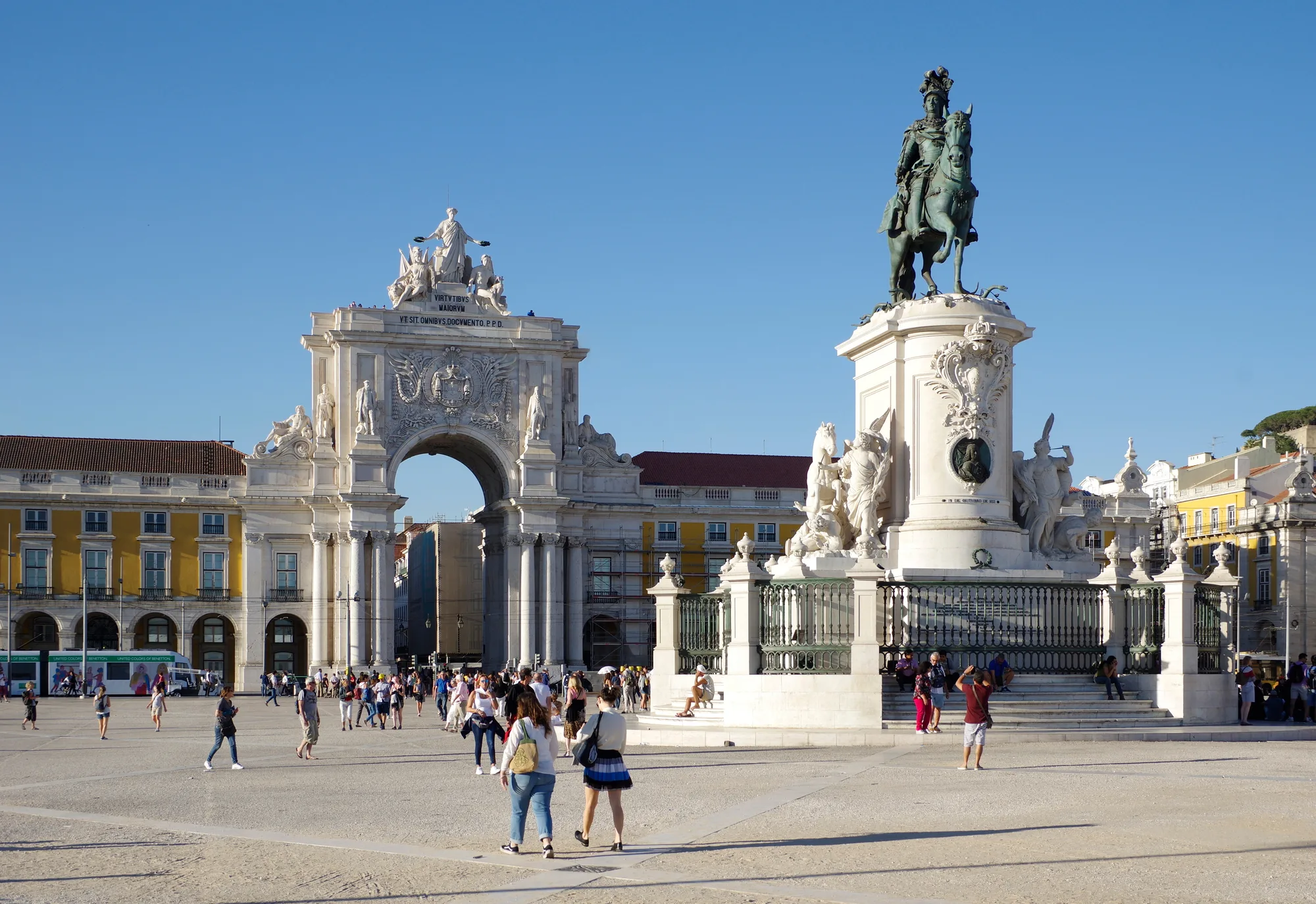
Landmarks and squares: what to see in the centre
For such a compact area, Baixa and Chiado pack in a lot of Lisbon’s greatest hits. At the river end sits Praça do Comércio (Terreiro do Paço), the grand arcaded square that was the city’s ceremonial gateway from the water; from it, the triumphal Arco da Rua Augusta opens onto the pedestrian Rua Augusta, which runs straight up through the grid. Inland you reach Rossio (Praça de Dom Pedro IV) with its wave-patterned cobbles, and neighbouring Praça da Figueira — both classic Baixa meeting points.
Up in Chiado, the highlights shift from squares to culture and ruins. The roofless Carmo Convent, its Gothic arches left open to the sky after the 1755 earthquake, is one of the city’s most evocative sights and a quiet reminder of the disaster that reshaped everything below. The Santa Justa Lift, a wrought-iron elevator from the early 1900s, connects the Baixa level up to the Carmo terrace and doubles as a viewpoint. Chiado’s streets also hold historic cafés, theatres and the bronze statue of the poet Fernando Pessoa outside a famous café.
You don’t need to tick all of these off. They’re close enough that they string together naturally on a single walk — square, arch, lift, convent, café — so let the geography do the planning and stop wherever catches you.
- River end: Praça do Comércio + the Arco da Rua Augusta onto Rua Augusta.
- Central squares: Rossio (wave cobbles) and Praça da Figueira.
- Chiado: the roofless Carmo Convent, the Santa Justa Lift, historic cafés.
- It all links on one easy walk — follow the streets, not a checklist.
Getting around and a few practical notes
This is the easiest part of Lisbon to reach and move through. The Baixa-Chiado metro station (on both the Blue and Green lines) sits right under the neighbourhood with exits at the Baixa level and up in Chiado, and Rossio and Restauradores stations are a short walk away. Most of central Lisbon is genuinely walkable from here, and the Santa Justa Lift or the Glória funicular handle the climbs out toward Bairro Alto when you don’t feel like the stairs.
Because Baixa is the busiest tourist core, it’s also where you’ll meet the most crowds, the most aggressive restaurant touts on Rua Augusta, and the highest pickpocket risk in packed spots and on Tram 28. None of it is alarming — just keep bags zipped and step a street or two off the main drag for better-value food and calmer cafés. Rua Augusta and the squares are liveliest midday; early morning is lovely and quiet if you want clean photos and space.
- Baixa-Chiado metro (Blue + Green lines) sits right under the area.
- Walkable to most of central Lisbon; use the lift/funicular for the climbs.
- Busiest tourist zone — mind bags in crowds and ignore street touts.
- Early morning is calm and photogenic; midday is liveliest.


