Quick take
- Praça do Comércio is Lisbon’s big riverfront ‘arrival moment’ — flat, bright, and easy to enjoy.
- Go early for calm (and clean photos), or at golden hour for warm light over the Tagus.
- Pair it with Rua Augusta for a classic downtown walk into Baixa’s grid.
- For a fast, central viewpoint, climb the Rua Augusta Arch right on the square.
- It’s a perfect ‘flat hour’ between hill neighborhoods — let your legs recover here.
- If you like bite-size museums, the Lisbon Story Centre sits right beside the square.
Why this square belongs on every first trip
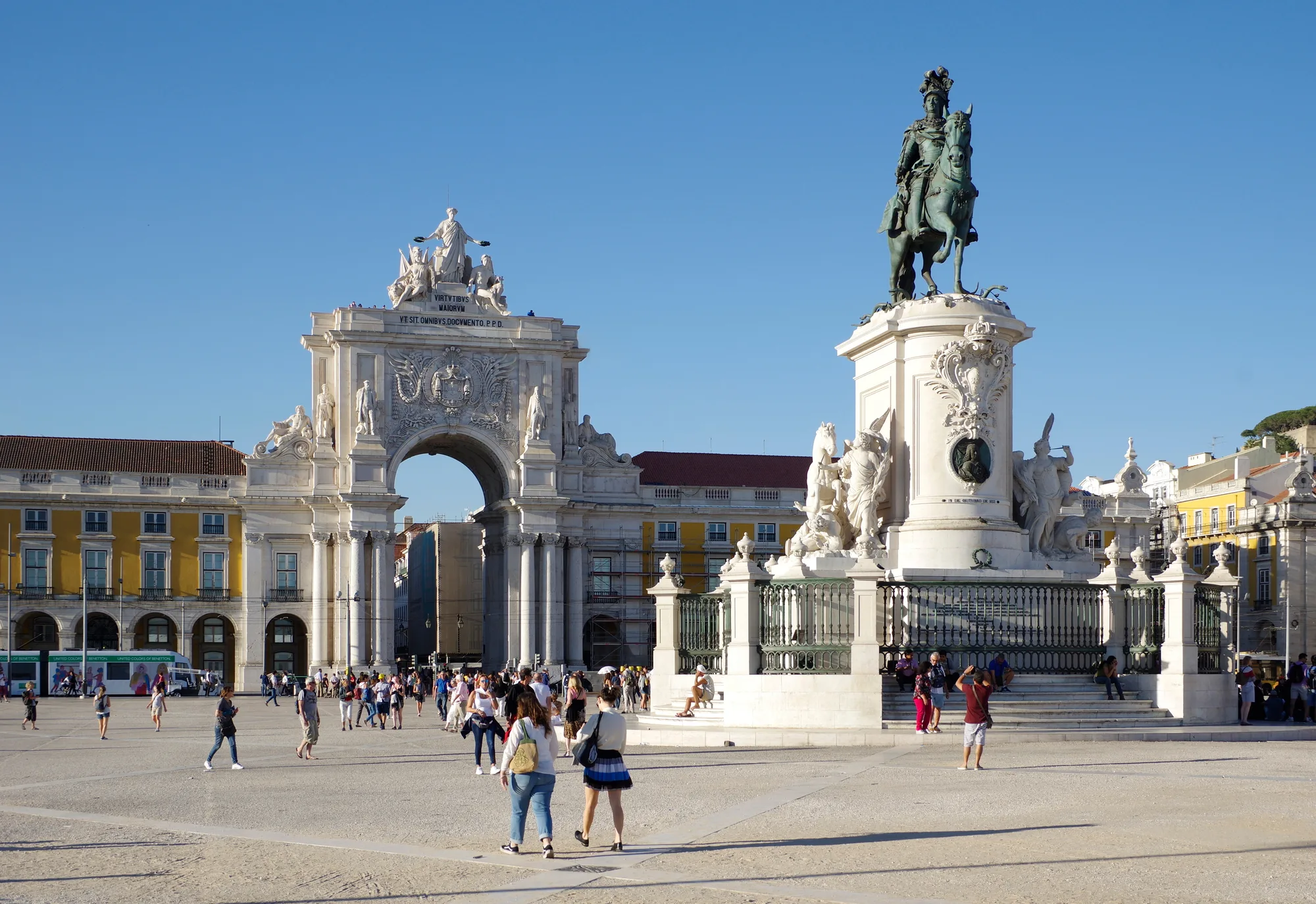
Praça do Comércio (also known as Terreiro do Paço) is Lisbon’s grand opening scene: a wide, elegant square that meets the Tagus with big-sky light. It’s a place to breathe, orient, and remember that Lisbon is a river city as much as it’s a hill city.
Even if you spend only 20 minutes here, it helps your trip: the square anchors downtown, connects naturally to Baixa’s walking grid, and makes a gorgeous starting point for your first ‘Lisbon loop’.
- Best for: first-day orientation, river light, and a low-effort stroll.
- Works well between hills: come here after Alfama/Graça or before Chiado evenings.
 Baixa & Chiado guideTurn the square into a beautiful central walking loop.
 Walking routesCentral loops that feel scenic without heavy hills.
Sources
- Visit Lisboa: Praça do Comércio ↗
Visitor overview and context for Lisbon’s iconic riverfront square.
Best time to go (light, space, vibe)
Praça do Comércio is at its best when it feels spacious. Early morning gives you the calm version: clean lines, soft light, and room to actually enjoy the scale. Later in the day, it becomes more social — which can be great, as long as you’re not trying to take ‘empty square’ photos.
If you’re in a romantic mood, aim for golden hour. The light turns warm, the river starts to glow, and the whole square feels like a scene instead of a sightseeing stop.
- Best for photos: early morning or weekday golden hour.
- Best for atmosphere: late afternoon into evening (especially on warm days).
- Quick tip: if the square feels busy, walk five minutes and it calms down fast.
Sunset in LisbonPlan golden hour so your day ends beautifully, not randomly.First time in LisbonA simple planning philosophy for a calm, romantic trip.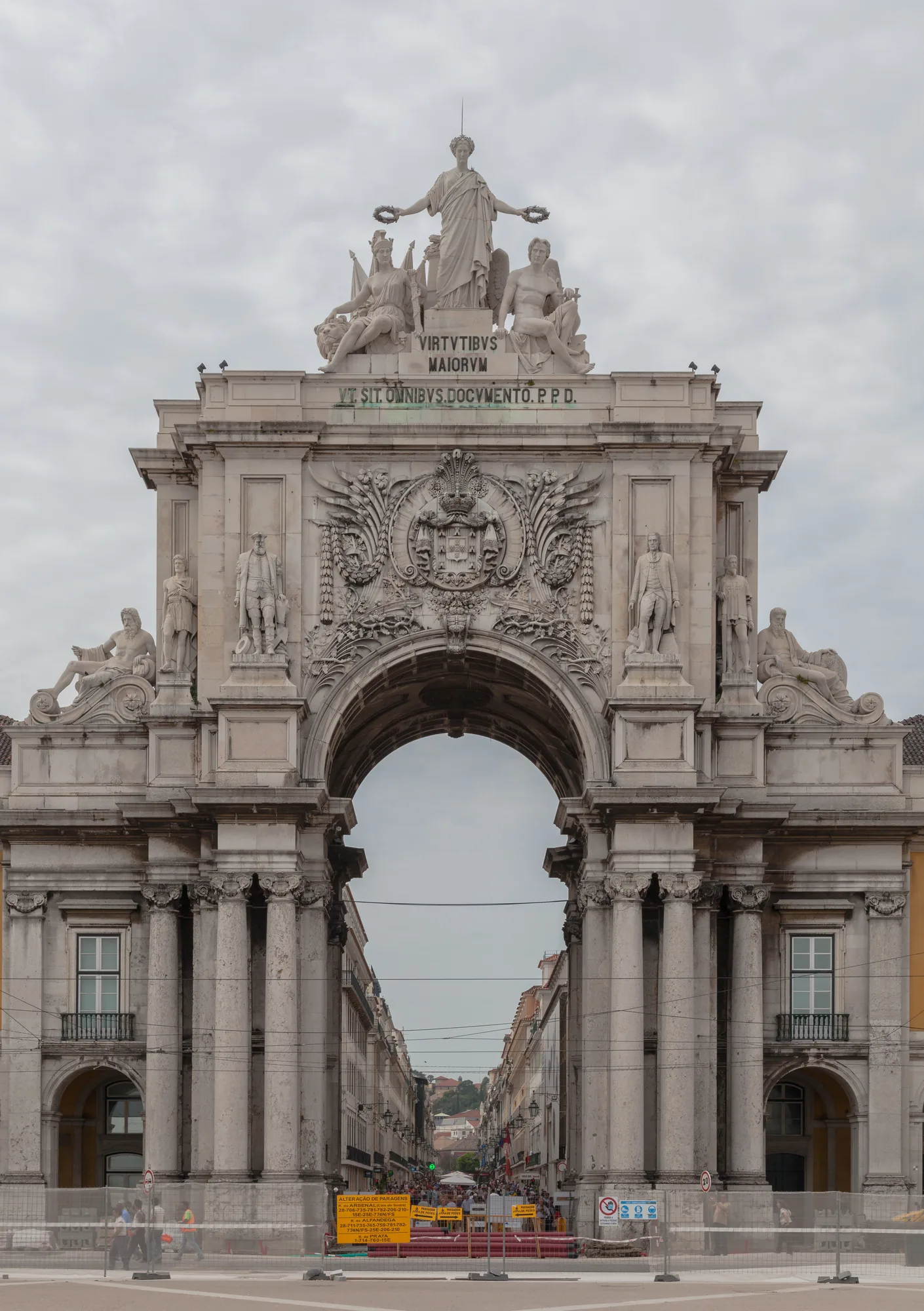
A simple downtown loop (no hills, lots of Lisbon)
If you want an easy ‘Lisbon without stairs’ loop, use the square as your start. From Praça do Comércio, stroll up Rua Augusta into Baixa’s grid, detour for a café, then use one smart shortcut (Santa Justa Lift, or a gentle uphill lane) to reach Chiado level.
This loop is perfect on Day 1: it gives you orientation, cafés, and a central viewpoint option — without burning energy you’ll want later in Alfama or at sunset.
- Start: Praça do Comércio riverfront pause.
- Walk: Rua Augusta → Baixa grid streets.
- Shortcut: Santa Justa Lift (if the line is reasonable) to Carmo/Chiado.
- Finish: Chiado browsing → golden hour by the river or a nearby miradouro.

A bit of history (why the square is so grand)
Praça do Comércio is grand for a reason: this was the site of the Ribeira Palace, the royal residence on the waterfront, until the 1755 earthquake and the tsunami and fires that followed destroyed it along with much of the city. Its older name, Terreiro do Paço — ‘Palace Yard’ — still echoes that lost royal court, which is why many locals call it that today.
When the Marquis of Pombal led the rebuilding, he reimagined the space as a deliberate statement: a vast, symmetrical, arcaded square opening directly onto the Tagus, framing the river as the city’s front door. At its centre stands the equestrian statue of King José I, and on the north side the triumphal Arco da Rua Augusta crowns the entrance to the downtown grid. The whole composition is a piece of Enlightenment-era city planning — order and openness rising from catastrophe.
Knowing this makes the square read differently. The scale isn’t just for show; it’s the architecture of a capital rebuilding its confidence after disaster, with the river — Lisbon’s historic link to the world — placed firmly at the heart of the design.
- Site of the royal Ribeira Palace until the 1755 earthquake destroyed it.
- Old name Terreiro do Paço (‘Palace Yard’) is still widely used.
- Rebuilt by the Marquis of Pombal as a symmetrical, river-facing showpiece.
- Centrepiece: the statue of King José I; gateway: the Arco da Rua Augusta.
What’s on the square and right around it
The square works as a hub, not just a photo stop. The Arco da Rua Augusta can be climbed for a quick rooftop view over the grid and the river. Tucked under the arcades you’ll find cafés and the historic Martinho da Arcada, one of Lisbon’s oldest, along with the small Lisbon Story Centre, a compact museum that’s an easy way to get the city’s backstory before you explore. The Lisbon Welcome Centre and tourist information also sit here, which makes it a logical first stop on day one.
Step a few metres in any direction and you’re into the rest of central Lisbon. North up Rua Augusta lies the full Baixa grid and Rossio; east along the riverfront you can stroll toward the Cais das Colunas — the two marble columns and river steps at the water’s edge that are the square’s most romantic corner. The riverfront walkway continues in both directions for an easy, flat stroll.
Because it’s right on the water, this is also a transport node: ferries to the south bank leave from the nearby Terreiro do Paço terminal, and the Baixa-Chiado and Terreiro do Paço metro access points are close. That makes the square a natural place to start or end a day, or to launch a Tagus crossing.
- On the square: the climbable Arco da Rua Augusta and the Lisbon Story Centre.
- The Cais das Colunas (marble columns + river steps) is the prettiest corner.
- Tourist information and the Welcome Centre make it a good day-one base.
- Ferries to the south bank leave from the Terreiro do Paço terminal nearby.
 Lisbon Story CentreA short museum on the square for first-day context.Cristo Rei & the south bankCross the Tagus by ferry from beside the square.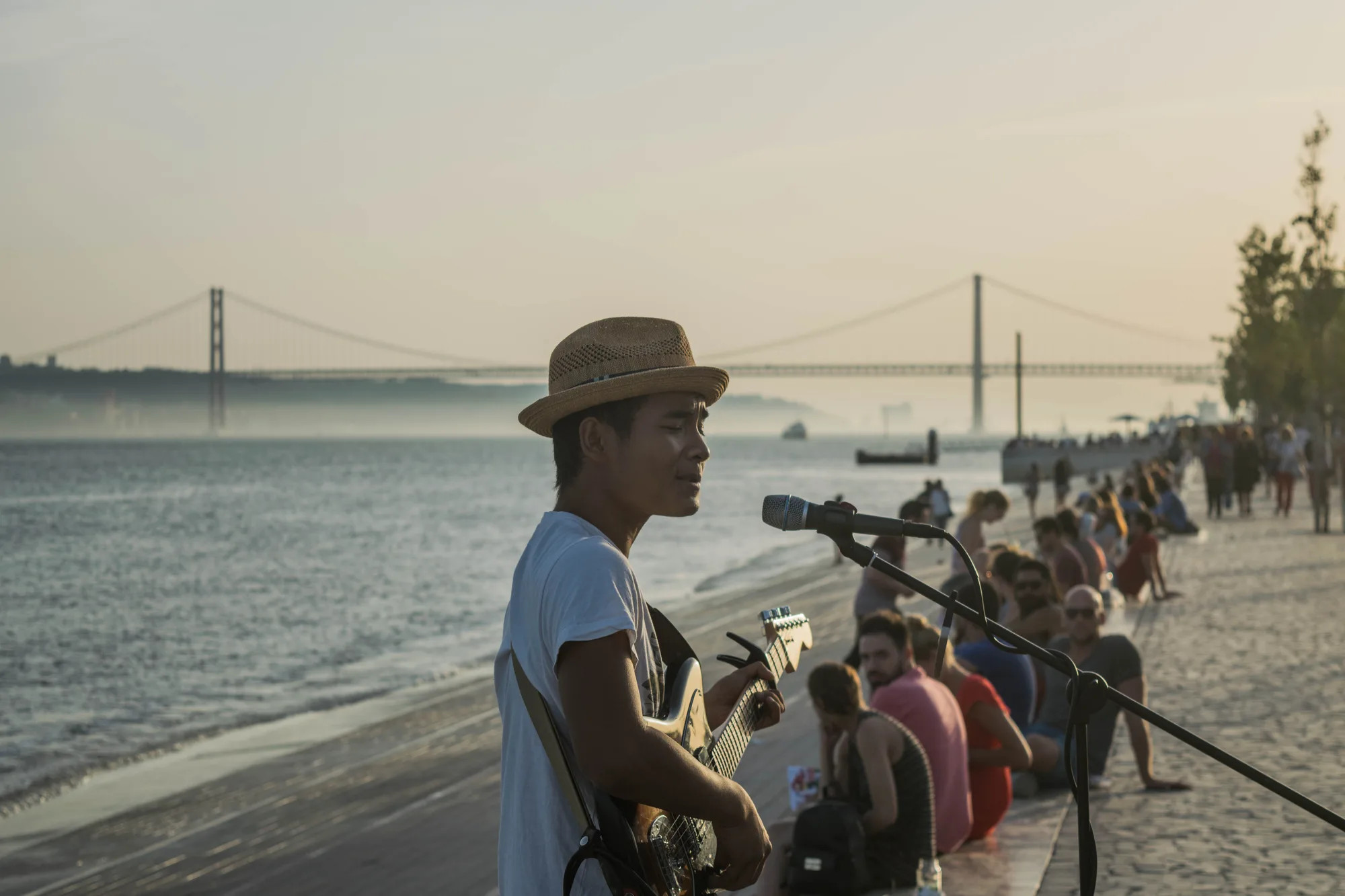
Quick answers for first-timers
How long do you need? As a stop, fifteen to thirty minutes is plenty to take in the scale, the statue and the river; longer if you climb the arch or add the Story Centre. Is it free? Yes — the square itself costs nothing, and only the arch terrace and the museum carry a fee. The riverfront, the columns at the water’s edge, and a coffee under the arcades are all free pleasures.
Is it safe? Yes, it’s a busy, well-trafficked public space, though as with any crowded tourist hub you should keep an eye on bags and ignore anyone hawking sunglasses or pushing a quick deal. When’s the best time? Early morning for empty-square photos and calm; late afternoon and golden hour for warm light and atmosphere. It’s genuinely lovely at both ends of the day, so let your schedule decide.
- Time needed: 15–30 minutes as a stop; longer with the arch or museum.
- Cost: the square is free; only the arch terrace and Story Centre charge.
- Safe and busy — just mind bags and brush off street hawkers.
- Best light: early morning (calm) or golden hour (warm and atmospheric).

Map: Praça do Comércio and nearby icons
Tap a pin to see what each spot is best for — then build a short loop that fits your energy.
Map pins
Map data © OpenStreetMap contributors · Tiles © OpenFreeMap


