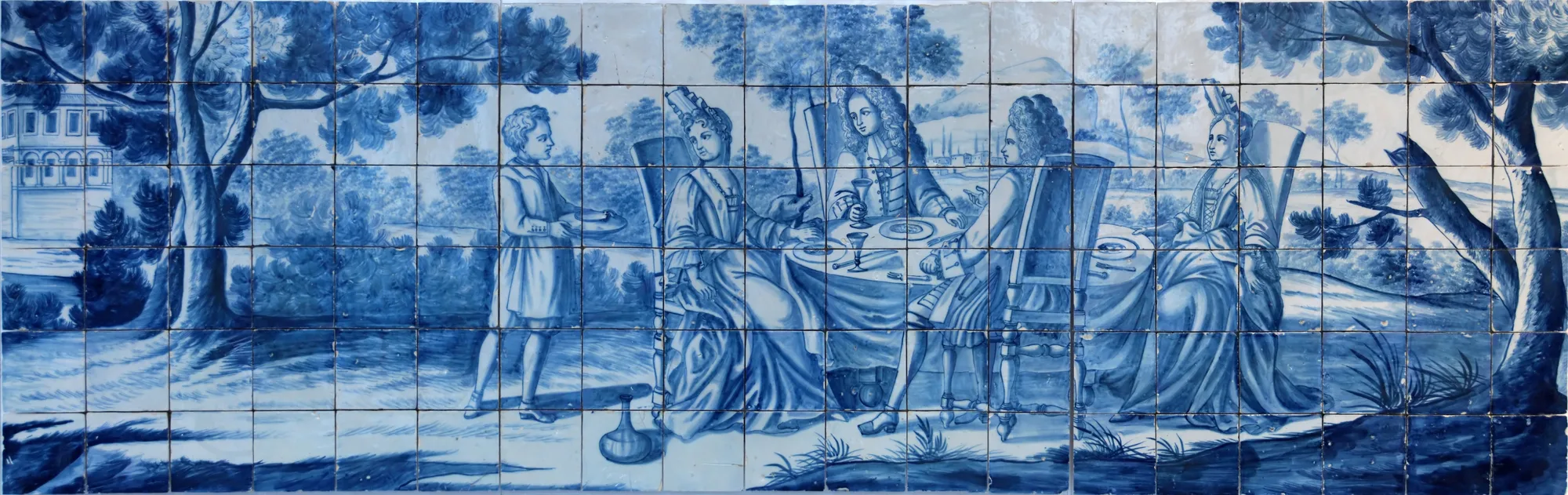
Quick take
- Azulejos are Lisbon’s visual language: façades, staircases, courtyards, and quiet surprises.
- You’ll see your best tiles while walking — especially in older hill neighborhoods.
- The National Azulejo Museum is closed for a major renovation (reopening expected in 2026 — check the official site) — plan a tile walk + a tile-rich monument instead.
- The city itself is the gallery: look up, slow down, and let patterns lead you.
- Photograph respectfully and avoid touching fragile, historic surfaces.
- Tile-inspired souvenirs are best when they’re locally made (not mass-produced clichés).
What are azulejos (and why Lisbon feels like a museum)
Azulejos — Portugal’s iconic painted tiles — are one of the reasons Lisbon feels so textured. They’re not only decoration; they’re storytelling, pattern, light, and a kind of everyday public art.
The best way to enjoy tiles is to slow down and look up. A five-minute pause can turn an ordinary street into your favorite memory.
- Look for tiles on: façades, staircases, churches, fountains, courtyards, and entryways.
- Blue-and-white is classic, but you’ll also see greens, yellows, and bold modern patterns.


Where to see tiles in Lisbon (neighborhood-first)
You don’t need a checklist — you need the right neighborhoods. Older areas tend to have the most historic façades; elegant districts often have refined patterns and quieter streets.
- Alfama + Graça: old-Lisbon lanes, textured walls, and tile surprises on steep streets.
- Baixa + Chiado: more polished facades and elegant details as you wander cafés and shops.
- Estrela + Lapa: calmer streets where you can slow down and notice craftsmanship.
 Alfama guideOld Lisbon wandering with maximum atmosphere.
 Estrela guideA greener, calmer pace with elegant architecture.
National Azulejo Museum (closure note + what to do instead)
The Museu Nacional do Azulejo is normally Lisbon’s tile deep dive — but it’s currently closed for a major renovation, with reopening expected in 2026 (check the museum’s official updates before planning a visit).
The good news: you can still have an incredible tile-focused Lisbon day without the museum. Build a ‘tile walk’ through older neighborhoods, then add one tile-rich historic stop in the hills.
The best format is still the same: one cultural anchor + slow wandering. Don’t stack more museums — let the city be the gallery.
- Note: the Azulejo Museum is closed for renovation, with reopening expected in 2026 (verify on the official site).
- Do instead: tile walk → one tile-rich monument → café pause → golden hour.
- Pair with: Alfama/Graça for atmosphere, or Estrela/Lapa for calmer streets.
 São Vicente de ForaA classic old-Lisbon stop with beautiful tiles and viewpoint energy nearby.Alfama guideOld Lisbon wandering where tile surprises happen naturally.Estrela guideA calmer, greener district where you can slow down and notice details.Museums shortlistA curated approach: one or two museums, not ten.
Sources
- Museu Nacional do Azulejo (official) ↗
Official Museu Nacional do Azulejo site — visiting info and works/closure updates.
Buying tile-inspired souvenirs (the good way)
Lisbon has no shortage of tile-themed gifts — some charming, some mass-produced. The best souvenirs are the ones that feel like Lisbon without feeling like a joke.
Look for locally made ceramics, tile prints, or small home objects that you’ll actually use.
- Best approach: buy fewer, better pieces you’ll keep for years.
- Avoid anything that looks like it was made to be forgotten in a drawer.

A short history (why Lisbon is covered in tiles)
The word azulejo comes from the Arabic ‘al-zillīj’, meaning a polished stone, and the tradition arrived in the Iberian peninsula through Moorish craft before Portugal made it entirely its own. Early Portuguese tiles drew on geometric Hispano-Moresque patterns; by the seventeenth and eighteenth centuries, blue-and-white panels — influenced in part by imported Chinese porcelain and Dutch Delftware — were being produced on a grand scale, telling religious stories, historical scenes and decorative narratives across whole walls of churches and palaces.
The 1755 earthquake, which levelled much of central Lisbon, gave tiles a new, practical role in the rebuilding: in the rational Pombaline reconstruction they were used widely, and later the cladding of entire building façades in tile became a distinctly Portuguese habit — partly decorative, partly weatherproofing against Atlantic damp. That layering of centuries is why a single Lisbon street can mix Moorish-derived geometry, baroque blue-and-white storytelling, and bold twentieth-century patterns, sometimes on neighbouring buildings.
- ‘Azulejo’ derives from Arabic; the craft entered Iberia via Moorish influence.
- Blue-and-white narrative panels flourished in the 1600s–1700s.
- After the 1755 earthquake, tiling whole façades became a Portuguese signature.
 Baixa & ChiadoThe Pombaline grid rebuilt after the 1755 earthquake.MuseumsHow to fit one cultural anchor around a tile-focused day.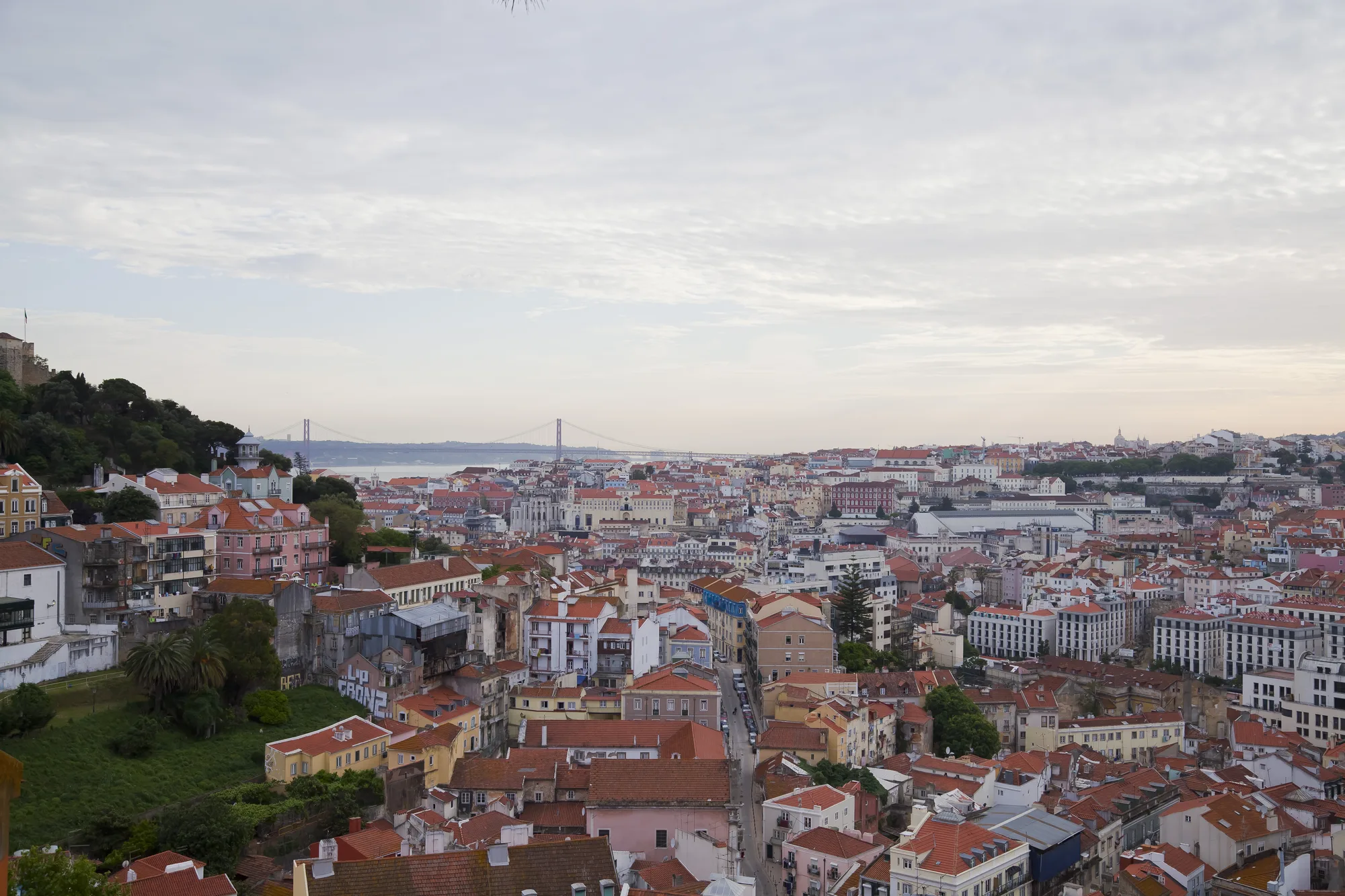
Tile-rich stops you can actually visit
With the National Azulejo Museum closed for renovation (reopening expected in 2026 — verify on its official site before planning around it), the best approach is to see tiles where they live, in buildings still in use. The Sé (Lisbon Cathedral) and the great monastery churches carry historic tilework; São Vicente de Fora, on the Alfama–Graça hill, is especially known for its extensive blue-and-white panels, and many ordinary churches and palaces across the centre hold panels worth a pause. Even Metro stations are a tile gallery in their own right, with stations decorated by Portuguese artists — a free, sheltered way to see modern azulejo design.
Beyond the obvious sights, the real pleasure is the everyday: tiled house fronts in Alfama, Graça, Estrela and Lapa; entrance halls and staircases glimpsed through open doors; fountains and street corners. Treat it as a slow scavenger hunt rather than a checklist. As always with specific sites, hours and access change, so confirm anything you plan to enter before you set out.
- São Vicente de Fora and the cathedral hold notable historic tilework.
- Several Metro stations are decorated by Portuguese artists — a free, indoor option.
- The best tiles are everyday: façades, staircases and fountains in the old quarters.
- The Azulejo Museum’s reopening and any site hours are worth confirming before you rely on them.
How to build a tile-focused day
The mistake is to treat tiles as a single ‘attraction’ to be ticked off; the reward comes from weaving them through a normal day of walking. Start with one tile-rich cultural anchor — a church such as São Vicente de Fora, or a Metro station or two if you’re moving anyway — then let the rest of the day be slow wandering through neighbourhoods where façades carry the best work. Old, atmospheric quarters like Alfama and Graça reward looking up at house fronts and staircases; the more refined streets of Estrela and Lapa show off elegant patterns at a calmer pace.
A few habits make it better. Walk with your eyes up, because much of the finest tilework is at first-floor height or framing a doorway. Photograph from the public street rather than stepping into private entrances or courtyards uninvited, and never touch fragile historic surfaces. And keep it to one cultural anchor plus wandering rather than stacking museums — Lisbon itself is the gallery, and the city does the work if you simply slow down and notice.
- Anchor on one tile-rich church or a Metro station, then wander.
- Alfama/Graça for atmospheric façades; Estrela/Lapa for refined, calmer streets.
- Look up — the best tilework is often at first-floor height or around doorways.
- Shoot from the public street; don’t touch fragile historic surfaces.


