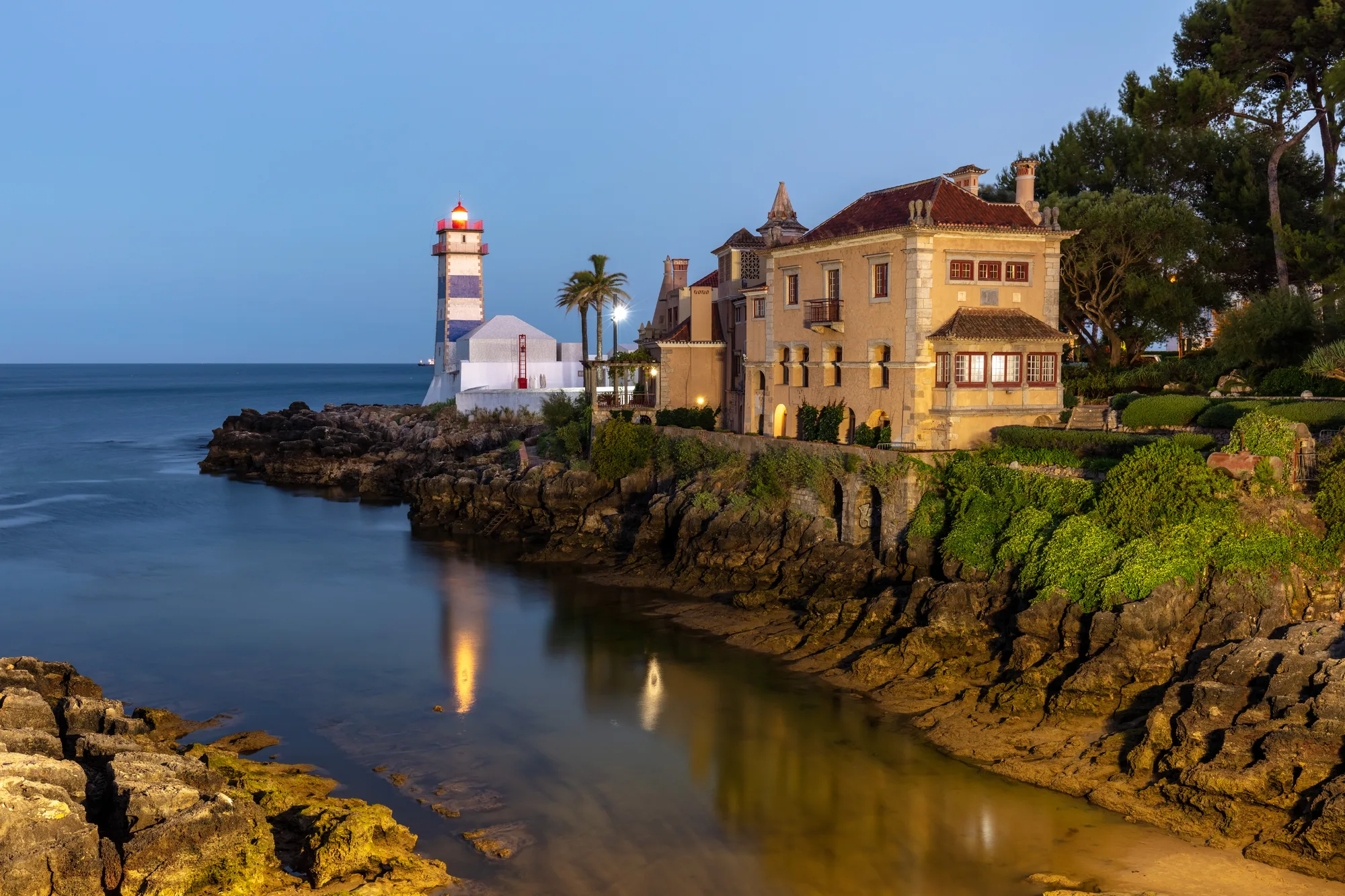
Quick take
- Cascais is the calmest “classic” day trip: simple logistics, big payoff.
- Getting there: CP coastal train from Cais do Sodré, roughly 40 minutes, €2.55 single.
- Do a beach + promenade day, not a rushing museum day — Cascais is for ease.
- Go early for quieter beaches; return at golden hour if you want sunset light.
- Pair with a long lunch and a slow walk to the sea cliffs.
- Perfect after a hill-heavy Lisbon day.
- If you want extra drama, add a coastal walk or a bike segment.
Why Cascais is the easiest day trip from Lisbon
Cascais is the day trip you choose when you want a vacation day inside your city break. It’s coastal, walkable, and relaxing — and it doesn’t require complex shuttles or heavy planning. The train from Cais do Sodré drops you a short walk from the town and the sea, so there’s no second leg to figure out once you arrive.
If you’re traveling as a couple, Cascais is also effortlessly romantic: ocean air, long promenades, and a natural ‘slow’ pace.
- Choose Cascais for: coast, beaches, relaxed walking, simplicity.
- Choose Sintra for: palaces, gardens, dramatic scenery (and more planning).
How to get to Cascais from Lisbon
The classic route is the train from Lisbon’s waterfront side (Cais do Sodré) to Cascais. It’s straightforward — and part of the experience: the ride traces the riverfront and then the coast as you leave the city behind.
Comboios de Portugal’s Cascais route description highlights how ‘linear’ the trip is: Cais do Sodré → river stops like Alcântara‑Mar, Belém, and Algés → seaside stops like Carcavelos and Estoril → Cascais. The whole run takes roughly 40 minutes, with frequent departures through the day.
CP lists a single (one-way) adult fare of €2.55, loaded onto a reusable navegante contactless card (a one-off €0.50). There’s no return discount, so two singles is normal. Because it’s simple, Cascais is also easy to time: go early for beach calm, or go midday for lunch-and-walk pacing.
- Start point: Cais do Sodré (Lisbon); roughly 40 minutes, frequent service.
- Single (one-way) adult fare: €2.55 (CP), on a reusable navegante card (€0.50).
- Bring a layer for the ocean breeze, even in warmer months.
- Optional move: stop in Belém/Algés on the way if you want a riverside half-day (only if you have time).
 Cais do Sodré guideThe Lisbon hub that connects to coastal trains and waterfront evenings.
 Belém guideA classic riverside half-day you can pair with the coastal train line.
 Getting around LisbonHow transit fits into day-trip planning.Lisboa CardA sightseeing pass that may include transport — verify current coverage.
Sources
- CP: Lisbon urban train prices (official) ↗
Official fare table — the €2.55 single covers the Cascais line.
- CP: Cascais Line (Urban Services Lisbon) ↗
Official route description and stations served on the Cascais line.

A simple Cascais day plan (beach + promenade + long lunch)
Cascais is best when you keep it simple: arrive, wander the town, choose a beach moment, walk a scenic stretch, and let lunch take time. This is the antidote to Lisbon’s hills and lines.
If you want a classic “Cascais feeling” day: start with a beach or coastal walk, then settle into a slow lunch, then do a final promenade stroll before heading back.
- Morning: arrive, grab coffee, choose a beach moment.
- Midday: long lunch and town wandering.
- Afternoon: promenade walk + optional cliff viewpoint.
- Return: easy Lisbon evening — dinner and a gentle sunset walk.

Optional add-ons: Boca do Inferno and Praia do Guincho
If you want more ‘Atlantic drama’ than the town beaches alone, add one extra stop. Boca do Inferno is the classic cliff formation near Cascais, and Guincho is the wide, windy beach famous for surf and kite energy.
These add-ons are best when you keep your main plan calm: do one add-on, not five. Cascais is still a recovery day trip — don’t turn it into another checklist.
- Best combo: town + promenade + one add-on (Boca do Inferno or Guincho).
- Wind reality: Guincho can feel cooler than Lisbon — bring a layer.

When Cascais is the better choice than Sintra
If you’re short on time, traveling with kids, or simply want a low-stress day, Cascais often wins. Sintra can be magical — and it can also be a lot. Cascais is consistently pleasant with minimal friction.
A good strategy for longer trips is to do both: Sintra for the iconic ‘wow’, Cascais for the recovery day.
- Choose Cascais if you want: calm, ease, and beach time.
- Choose Sintra if you want: palaces, gardens, and big scenic drama.

What to do in Cascais town (beyond the beach)
Cascais grew from a fishing village into an elegant seaside resort once Portuguese royalty made it their summer escape in the 19th century, and that history still shows in its pretty marina, tiled mansions, and easy, walkable center. Even on a beach-focused day, leave time to wander the old streets and the waterfront: it’s the kind of town where the pleasure is in strolling, browsing, and stopping for a long, slow lunch rather than ticking off sights.
If you want light structure, the town has small museums and gardens, a marina to walk around, and an easy seafront promenade that links beaches and viewpoints. Families do well here too — calm town beaches, flat walking, and a relaxed pace. The trick is to resist turning Cascais into a checklist; its whole appeal is that it asks nothing of you except to slow down.
- A former royal summer resort — elegant streets, a marina, and tiled mansions.
- Walkable center: browse, stroll, and take a long lunch.
- Light structure: small museums, gardens, and a seafront promenade.
- Family-friendly: calm town beaches and flat walking.
Timing your Cascais day (and the coastal walk)
Because the train runs frequently along the coast, Cascais is forgiving on timing — but the day still has a best shape. Go early if you want quiet town beaches and the cleanest light; go later if you’d rather have a long lunch and stay for sunset, which is lovely from the seafront. Either way, the journey itself is part of it: the line traces the river and then the open Atlantic, so grab a window seat on the sea side.
For a bit more drama, the stretch of coast west of town toward Boca do Inferno (a dramatic cliff formation) and on to the wide, windswept Praia do Guincho is a classic add-on by foot, bike, or a short ride. Guincho is noticeably breezier and cooler than sheltered Lisbon, so bring a layer. Keep the add-on singular, though — Cascais works best as a recovery day, not another packed itinerary. Verify current train and any local-transport schedules before you go.
- Frequent trains make timing forgiving — early for calm beaches, later for sunset.
- Sit on the sea side of the train for the coastal views.
- Optional add-on: Boca do Inferno cliffs and windy Praia do Guincho (bring a layer).
- Keep it to one add-on — Cascais is a recovery day. Verify schedules officially.
