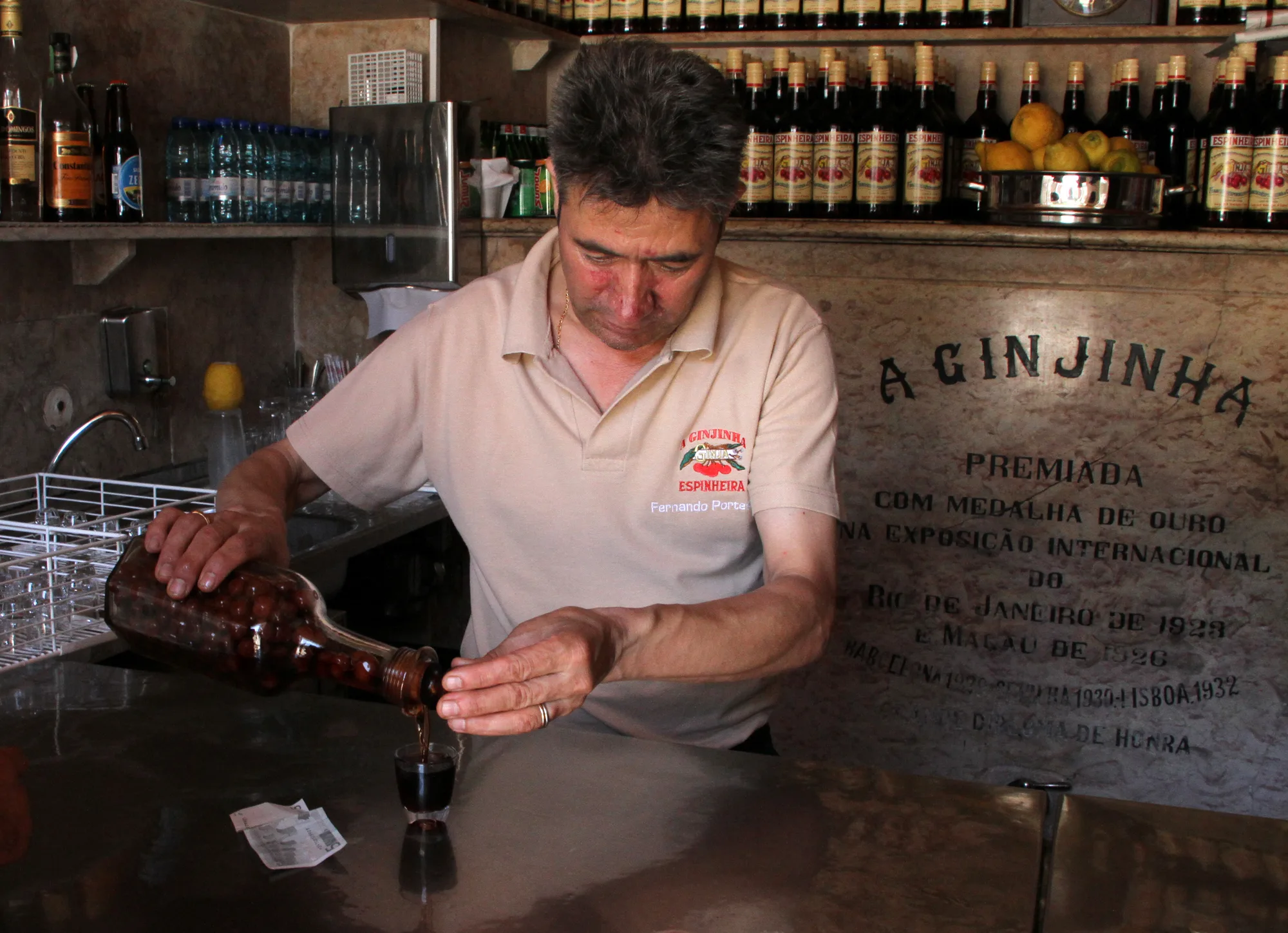
Quick take
- Ginjinha is Lisbon’s tiny ritual: a small glass, a quick pause, a sweet hit.
- Order it with or without the cherries (both are classic).
- Treat ginjinha as a ‘moment’ between walking and dinner — not the whole plan.
- Baixa/Chiado is the easiest area for a first ginjinha stop.
- Pair it with dessert and a short evening walk for the perfect vibe.
- If you’re traveling as a couple, it’s an easy shared tradition to start.
What is ginjinha?
Ginjinha (often shortened to ginja) is a Portuguese cherry liqueur that’s deeply tied to Lisbon’s drinking culture. It’s usually served in a small glass — sweet, warming, and quick.
It’s not meant to be complicated. Think of it like Lisbon’s version of an espresso stop: small, fast, and strangely memorable.
How to order ginjinha (simple and correct)
Ordering ginjinha is wonderfully low-pressure. You’re basically choosing one thing: cherries or no cherries. Everything else is detail.
- With cherries: slightly more ‘traditional bar’ vibe, with fruit in the glass.
- Without cherries: cleaner and a little lighter.
- Sip slowly — it’s small, but it can be stronger than it looks.


A perfect ginjinha night (tiny ritual, big memory)
Here’s the best way to do it: choose one neighborhood loop, stop for ginjinha, then finish with dinner or dessert. Keep the walking short and the mood slow.
- Baixa/Chiado walk → ginjinha stop → dessert → short viewpoint moment.
 Baixa & Chiado guideThe easiest ‘night walk’ area for first-timers.
 Portuguese dessertsTurn the night into a sweet crawl, not a bar crawl.
When ginjinha fits best in your trip
Ginjinha is perfect on nights when you want something memorable but not heavy. It’s also a great ‘reset’ after a day trip or a long walking day — a small reward that doesn’t require energy.
- Best nights: after a sunset walk, before a relaxed dinner.
- Skip it if: you’re already tired and just want to go home — keep nights easy.
What it’s made of and where the tradition comes from
Ginjinha is made by infusing ginja — sour Morello-type cherries — in aguardente (a Portuguese grape spirit) with sugar, and often a hint of cinnamon or a clove, left to steep until the spirit takes on the cherries’ deep red colour and sweet-tart flavour. The result is sweet, warming and stronger than its small glass suggests. It’s long been associated with Lisbon, where tiny hole-in-the-wall ginjinha bars near the central squares have served it over the counter for generations; the town of Óbidos, north of the city, is also famous for its version, sometimes served in an edible chocolate cup.
The cherries themselves are central to the tradition. When you order ‘com elas’ (with them), a couple of boozy cherries go in the glass to eat afterwards; ‘sem elas’ (without) gives you just the liqueur. Neither is more correct — it’s purely preference, and trying it both ways across a trip is part of the fun. As with any specific bar, the most famous spots can be touristy and busy, so don’t expect a hidden secret; expect a quick, cheerful, very Lisbon ritual.
- Sour ginja cherries infused in grape spirit with sugar (often cinnamon/clove).
- Sweet, warming and stronger than the small glass suggests.
- ‘Com elas’ = with cherries to eat after; ‘sem elas’ = liqueur only.
- Strongly tied to Lisbon’s central squares; Óbidos is famous for it too.
 ÓbidosThe walled town known for its own celebrated ginja.Food & drink overviewWhere ginjinha sits in the wider Lisbon eating-and-drinking picture.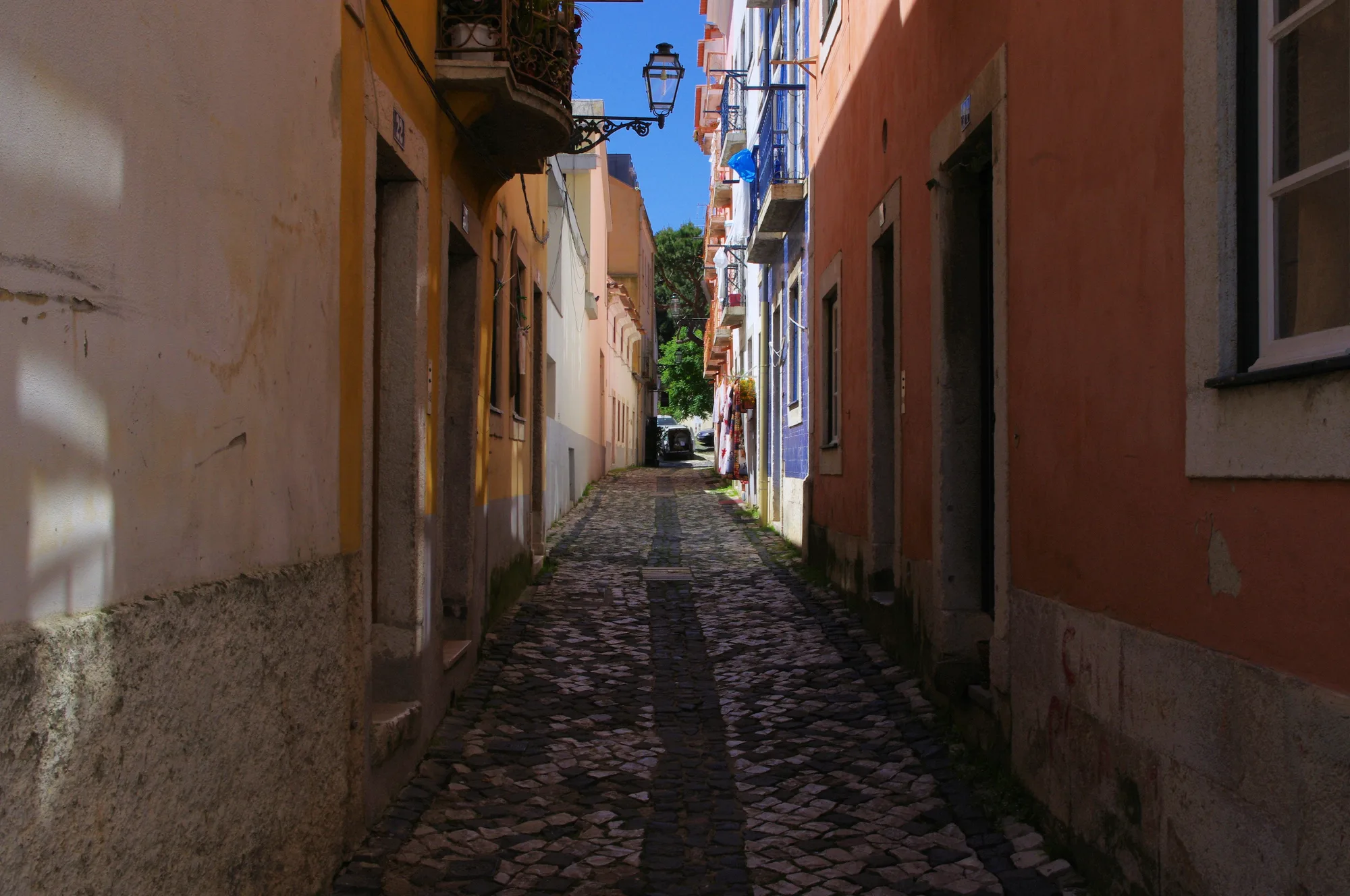
Where and when to have your first one
The classic place to try ginjinha is at one of the tiny standing bars around the central squares of the Baixa — near Rossio and the streets fanning off it — where it’s served fast over a counter to a mix of locals and visitors. You don’t sit, you don’t linger: you order, you’re handed a small glass, you drink it standing, and you move on. That’s the whole experience, and it’s genuinely part of the city’s street life rather than a manufactured one.
It works best as a punctuation mark in your evening rather than a destination. The natural moments are just before dinner as an aperitif, or just after as a tiny digestif, ideally folded into a Baixa or Chiado night walk. Because it’s small, cheap and quick, it’s also an easy shared tradition for couples or friends — one round, a photo, and on you go. Sip it rather than shooting it; it’s sweeter and stronger than it looks, and the point is the pause, not the buzz. Treat any specific bar as worth a quick check that it’s still trading, since the smallest old spots do change.
- Classic setting: tiny standing bars around Rossio and the Baixa squares.
- Order, drink standing, move on — it’s a quick street ritual, not a sit-down.
- Best as an aperitif or digestif folded into a Baixa/Chiado night walk.
- Sip, don’t shoot — it’s sweeter and stronger than it appears.

Pairings, variations and fitting it into your trip
Ginjinha plays beautifully with Lisbon’s sweet tradition, which is why it slots so naturally into an after-dinner moment. It sits well after a pastel de nata or alongside the city’s heavier almond-and-egg pastries, and it makes a fitting cap to a petiscos or seafood dinner. If you want to turn it into a small ritual, a short ‘sweet crawl’ — a ginjinha counter, then a pastry stop, then a slow walk — is a far gentler and more memorable evening than a bar crawl, and it suits couples and friends equally.
There are variations worth trying as you travel. The classic Lisbon version is served in a small glass at a standing counter; the walled town of Óbidos, an easy day trip north, famously serves its ginja in a little edible chocolate cup, which is worth seeking out if you go. You may also see it offered chilled or at room temperature, and with or without the cherries — all simply preference. Keep portions sensible, since it’s sweet and deceptively strong, and treat it as a charming punctuation to your Lisbon evenings rather than the main event. As with any small old bar, a quick check that a specific spot is still open never hurts.
- Pairs with pastéis de nata and Lisbon’s almond-and-egg pastries.
- Build a ‘sweet crawl’ — ginjinha, a pastry, a slow walk — instead of a bar crawl.
- Try the Óbidos version in an edible chocolate cup on a day trip north.
- Sweet and deceptively strong — keep portions sensible and sip slowly.
The historic ginjinha counters
Ginjinha is one Lisbon specific that hasn't changed in generations, so here it is safe to name the institutions. A Ginjinha (also called Espinheira), a tiny standing-room counter on Largo de São Domingos just off Rossio, has poured the cherry liqueur since 1840 and is where the drink-at-the-counter ritual began. A few doors away, on Rua das Portas de Santo Antão, Ginjinha Sem Rival has been the friendly rival since 1890.
The ritual is the same at both: ask for a small glass, com or sem (with or without) a boozy cherry in the bottom, knock it back standing on the pavement, and move on. It costs little and takes two minutes — the perfect pause before dinner or between sights. Hours can vary, but these counters have kept much the same rhythm for well over a century.
- A Ginjinha / Espinheira (Largo de São Domingos): the original counter, pouring since 1840.
- Ginjinha Sem Rival (Rua das Portas de Santo Antão): its neighbour and rival since 1890.
- Order com or sem — with or without a cherry — and drink it standing at the counter.
Portuguese dessertsThe sweets that pair with a glass of ginjinha.Baixa & Chiado guideThe downtown area around Rossio and the ginjinha counters.Sources
- A Ginjinha — Lojas com História ↗
Heritage listing for the Largo de São Domingos counter (est. 1840).


