Quick take
- Ride Tram 28 once for the experience — then switch to walking at your own pace.
- Best time to ride: early (ideally the first hour or two of service), especially on weekdays.
- Most crowded window: late morning through mid‑afternoon, especially in peak season.
- Tram 28 passes through some of Lisbon’s most atmospheric neighborhoods.
- If you hate crowds, skip it and do the same hills on foot.
- Use trams as ‘theatre’, not as your only transport plan.
- A great alternative is a viewpoint + a scenic walk instead.
What Tram 28 is (and why people love it)
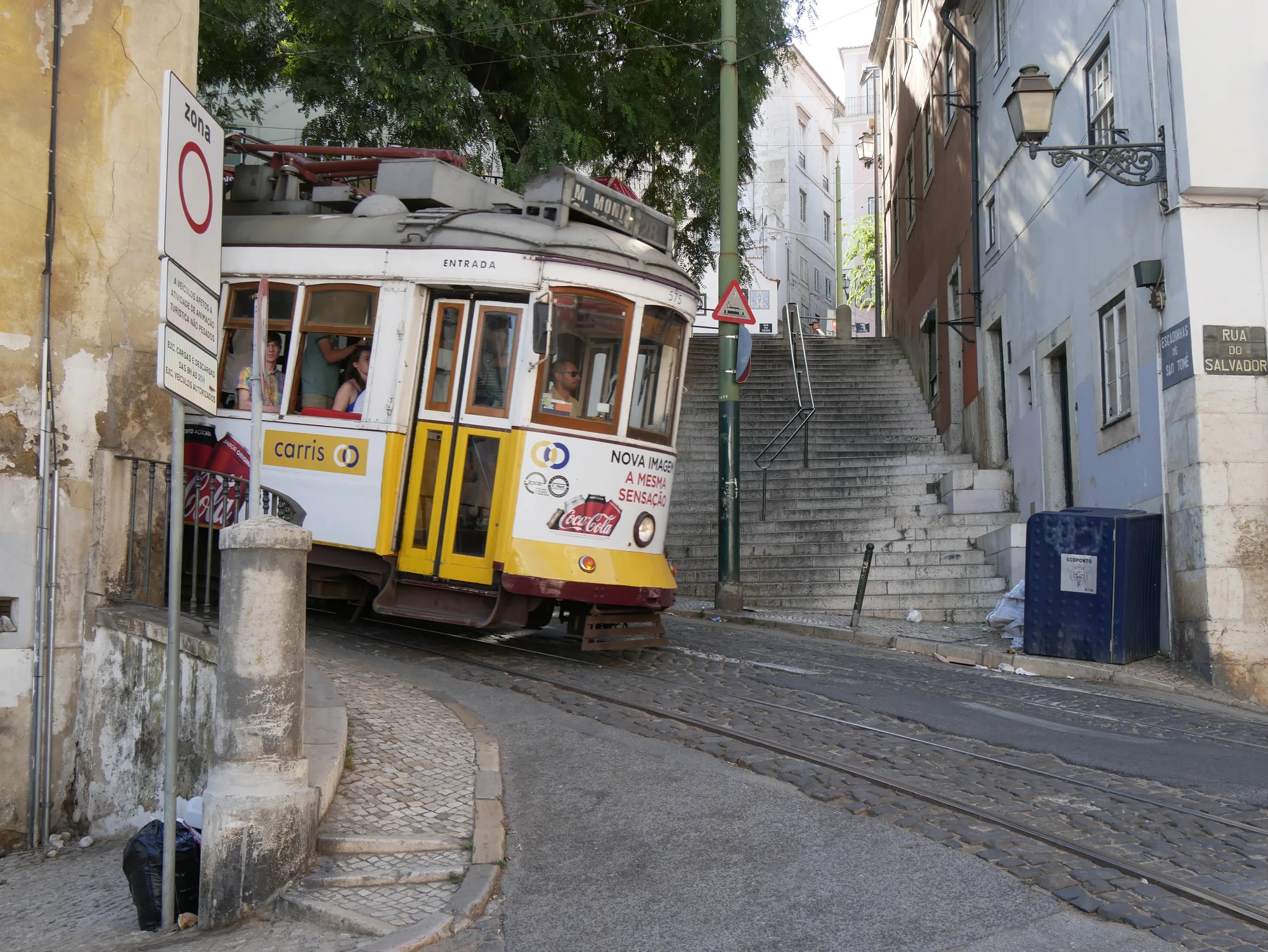
Tram 28 is part transport, part moving viewpoint. It rattles through historic districts and compresses a lot of Lisbon atmosphere into a short ride.
It’s iconic for a reason — but it’s also popular, which means timing matters if you want it to feel fun instead of stressful.

Best time to ride Tram 28 (how to avoid the worst crowds)
Tram 28 is at its best when it feels like a charming city ride — not a theme-park line. The secret is not a magic month or a perfect day; it’s choosing a time window when locals are commuting and tourists are not yet fully stacked into the route.
If the tram looks packed, don’t force it. Ride a different day, ride a shorter segment, or walk the same streets with more control.
- Best window: early morning, especially weekdays (calmer queues, more breathing room).
- Second-best window: later evening (good atmosphere, but watch return logistics).
- Worst window: late morning to mid‑afternoon in peak season and on weekends.
- Couple-friendly strategy: ride one short scenic segment, hop off, then do a viewpoint + neighborhood walk.
Service updates and route reality (check Carris)
Carris operates Lisbon’s Tram 28E. Because it runs through narrow, historic streets, service can change with works — and sometimes the endpoints shift temporarily.
If you encounter a shortened route, a detour, or a service interruption, don’t treat it as a failure — treat it as a cue to ride one scenic segment and then walk the neighborhoods instead. Tram 28 is a vibe; Lisbon still works beautifully without it.
- Line name on official signage: 28E (Carris).
- If service is shortened or disrupted: switch to a walking route and enjoy the same streets with more control.
- Stay alert in crowds; keep phones and bags secure.
 Walking routesTram atmosphere, but at your own pace (and without the crush).
 Safety in LisbonCrowded transit is where basic pickpocket awareness matters most.
 Estrela guideA calmer neighborhood that pairs well with a tram segment.
How to ride Tram 28 without hating it
The best Tram 28 strategy is simple: go early, keep expectations realistic, and treat it as one small chapter of your day — not the whole story.
- Go early for a calmer ride.
- Ride it once — don’t spend hours chasing the ‘perfect’ tram moment.
- If it’s too crowded, pivot to walking and enjoy Lisbon on your own terms.
The best way to “do” Tram 28: ride a segment, then walk
Tram 28 is most fun when it’s a connector, not a quest. The classic approach is to ride one scenic segment through the old districts, then hop off and explore on foot — you’ll get the same streets with better photos, better pace, and fewer crowd headaches.
If the route is shortened the day you’re there, this strategy still works: ride whatever segment is running, then build the rest of the experience with viewpoints and walking.
- Plan: one tram segment → one neighborhood wander → one viewpoint → dinner.
- If you’re traveling as a couple: treat the tram as the ‘setup’, not the whole date.

Neighborhoods Tram 28 connects (great pairing ideas)
Tram 28 passes near several classic districts. The best way to use it is to ride once, then pick one neighborhood to explore on foot afterward.
- Graça + Alfama: old-hills Lisbon and viewpoints.
- Baixa: the flat downtown grid for orientation and cafés.
- Estrela: calmer, greener Lisbon with garden energy.
Graça guideViewpoints and old-hills atmosphere.Estrela guideA calmer district that’s perfect after a tram ride.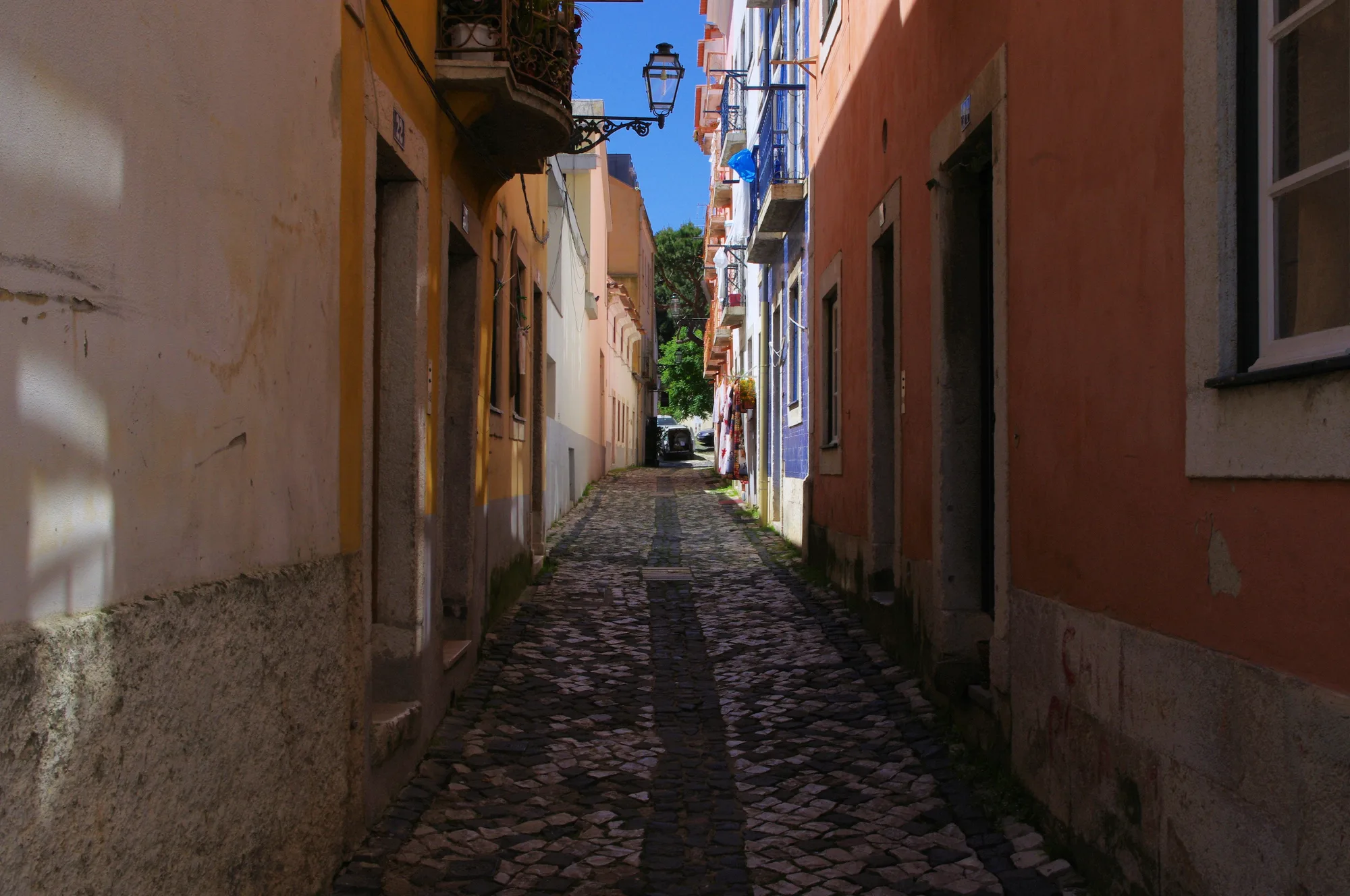
Best alternatives (if you skip Tram 28)
Skipping Tram 28 doesn’t mean skipping Lisbon. You can build a better day with viewpoints, walking, and one small classic ‘shortcut’ (like Santa Justa, if it’s running) — without fighting crowds.
- Do: viewpoint + old-Lisbon walk + a café stop.
- Or: take a different tram line for the experience, then walk.
The route, end to end (what you actually see)
Tram 28 is famous because of where it goes, not how fast it goes. The line threads across the city between the area around Martim Moniz and the western neighbourhoods (toward Campo de Ourique / Prazeres), and along the way it climbs and twists through some of Lisbon’s most atmospheric districts: the Graça and Alfama hills, past the cathedral (Sé), through the downtown grid, up to Chiado and the Estrela area. It’s essentially a greatest-hits tour of the old city on rails.
The little yellow cars themselves are part of the appeal — these are the historic ‘Remodelado’ trams, vintage in feel, with wooden interiors and just enough rattle to make the hills feel earned. The route is steep and tight, which is exactly why a modern bus couldn’t replicate it and why the experience feels special even when it’s crowded.
Because it covers so much, you don’t need to ride the whole thing. Pick a scenic segment — the climb through Graça and Alfama is the classic — ride that, then get off and explore on foot. You’ll see the best parts and skip the slow, packed middle.
- Runs roughly between the Martim Moniz area and the western neighbourhoods (Campo de Ourique / Prazeres).
- Passes Graça, Alfama, the Sé (cathedral), the downtown, Chiado, and Estrela.
- The cars are the historic yellow ‘Remodelado’ trams — vintage, wooden, characterful.
- Ride one scenic segment (the Graça–Alfama climb is the highlight), then walk.

Other scenic trams (and how fares work)
Tram 28 isn’t the only historic line. If it’s mobbed or disrupted, Lisbon has other vintage routes that share the same charm with fewer crowds — and one modern line that’s genuinely useful. The classic move is to treat any of them as a short scenic ride rather than a way to get somewhere quickly.
On fares: you can pay onboard, but it’s usually cheaper to travel with a reusable transit card loaded with credit or a day pass (the same card works across the metro, buses, funiculars, and the Santa Justa lift). Validate (tap) when you board. Prices and the exact onboard surcharge change over time, so check current details rather than relying on a remembered figure.
- Tram 12 — a small historic loop through the Alfama/Graça area, often calmer than the 28.
- Tram 24 — a restored line running up toward Campolide via Príncipe Real and the Bairro Alto edge.
- Tram 15E — the modern line out to Belém along the river (great for the monuments).
- Pay with a reusable card (cheaper than onboard) and validate when you board.
- Fares and onboard surcharges change — verify current prices before you ride.


