
Quick take
- Best first trip length for most people: 3 days (center + old hills + Belém).
- 2 days is enough for a weekend if you stay central and keep the plan tight.
- 4 days is the sweet spot if you want one day trip (Sintra or Cascais).
- 5–7 days is where Lisbon becomes a base: slow mornings, gardens, and two calm day trips.
- Lisbon’s hills change everything — trip length should match walking energy, not just a wish list.
- If you leave space for golden hour daily, the trip will feel longer (in a good way).
The quick answer (pick your number)
If the question is simply “how many days in Lisbon is enough?”, the best answer is usually 3. It gives you the classic Lisbon trio without rushing: central elegance, old-hills atmosphere, and a riverfront icon day.
Everything beyond that is about style. Add days if you want day trips, slower mornings, and time to enjoy Lisbon’s best feature: unhurried evenings.
- 2 days: weekend taste (central + old hills).
- 3 days: classic first trip (center + old hills + Belém).
- 4 days: classic + 1 day trip (Sintra or Cascais).
- 5 days: classic + day trip + a slow/modern reset day.
- 7 days: slow Lisbon + 2 day trips + gardens + long meals.
How to choose your trip length (the Lisbon decision tree)
Trip length isn’t only about attractions — it’s about energy. Lisbon is steep, and that changes how much you can enjoy in a day.
Ask these questions and the right number usually becomes obvious.
- Want one day trip? Plan 4+ days (Sintra or Cascais fits best then).
- Hate crowds and queues? Add a day so you can spread out and start earlier.
- Traveling as a couple? Add a day for sunset rituals and slow dinners (that’s the romance layer).
- Traveling with kids or reduced mobility? Add a day for shorter walking blocks and easier pacing.
2 days in Lisbon (weekend pace)
Two days is enough for a beautiful first taste — if you stay central and don’t try to do a full day trip. Think: one central loop, one old-hills day, and sunset both nights.
- Day 1: Baixa + Chiado loop → easy sunset → dinner nearby.
- Day 2: Graça viewpoints → Alfama lanes → optional fado night.
3 days in Lisbon (best first-timer choice)
Three days is the classic first trip length because it lets you keep each day coherent. You do the center, the old hills, and Belém — and you still have time for cafés and slow evenings.
- Day 1: Baixa/Chiado (orientation).
- Day 2: Alfama/Graça (old hills).
- Day 3: Belém (riverfront icons).

4–5 days in Lisbon (one day trip without stress)
If you want to do a day trip and still enjoy Lisbon, aim for four or five days. That gives you the classic city core plus one extra day to leave the city — without cramming everything into sunrise-to-midnight.
Choose your day trip based on vibe: Sintra for palaces and drama, Cascais for coast and calm.
- Day trip option A: Sintra (bigger wow, more logistics).
- Day trip option B: Cascais (simpler, breezier, more recovery-day energy).
- Extra day idea: modern riverside pacing in Parque das Nações (easy walking).
 4-day itineraryClassic Lisbon + one extra day that fits your mood.Day trips overviewHow to choose the right escape for your trip style.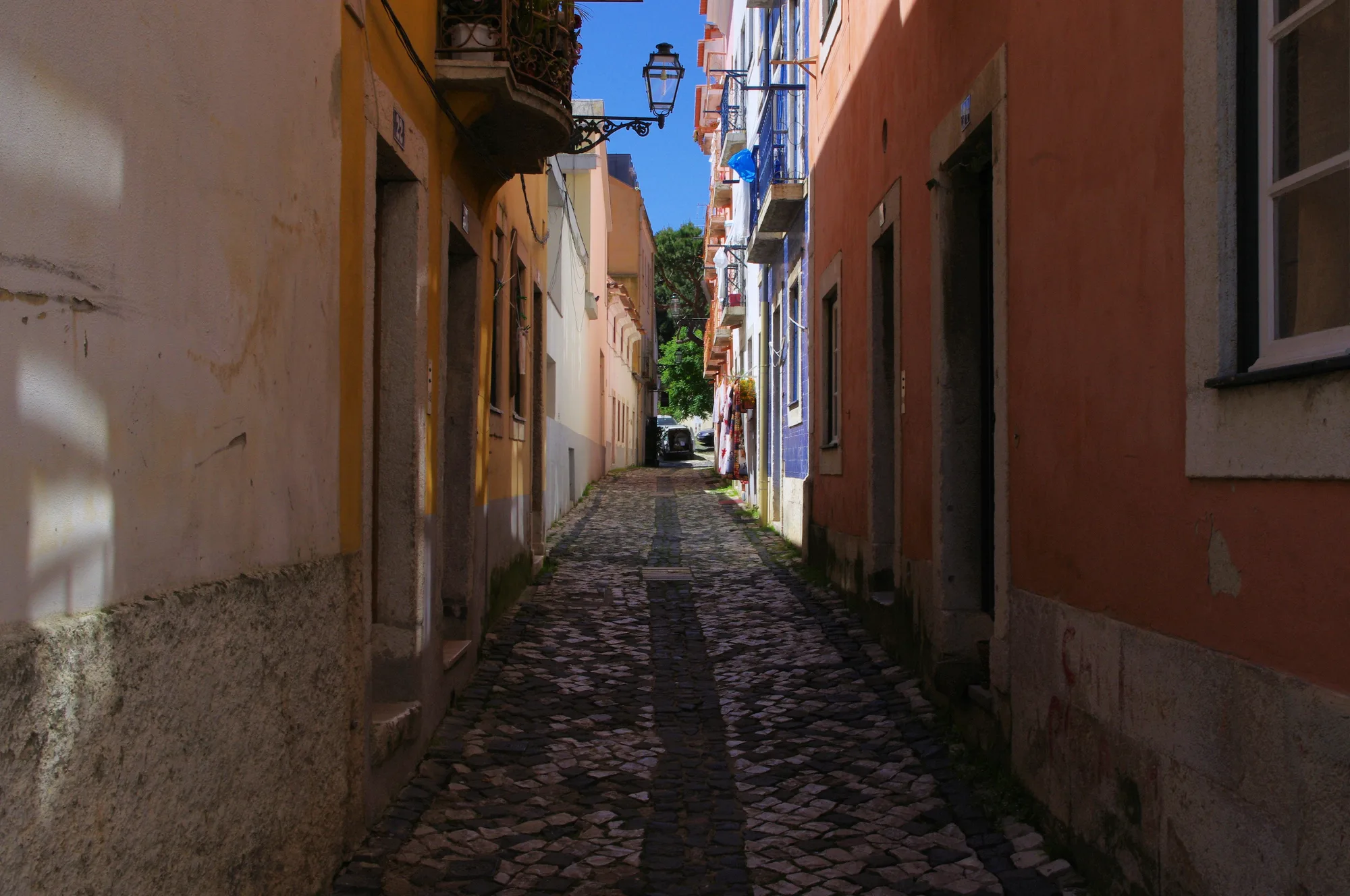
7 days in Lisbon (slow travel, romance, and breathing room)
A week in Lisbon is where the city becomes a base and the trip becomes a rhythm. You can repeat your favorite rituals — sunrise, a café you actually return to, one viewpoint you fall in love with — and still fit in two day trips without rushing.
If the goal is “feel Lisbon,” not “finish Lisbon,” a week is perfect.
- Do: 2 day trips max (one ‘wow’, one ‘calm’).
- Do: one ‘garden day’ (Príncipe Real/Estrela/Lapa) and one modern reset day.
- Don’t: schedule big hills every day — spread them out.
Common mistake: adding too many day trips
The most common planning error is treating Lisbon like a base for daily escapes. Day trips are great — but they take energy, time, and logistics. One is perfect on a shorter trip. Two can be great on a longer trip. Beyond that, Lisbon itself starts to disappear.
A good rule: if you’re already tired by day two, stay in the city and plan one perfect Lisbon sunset instead.
- 2–3 days: usually no day trip (or a very light half-day across the river).
- 4–5 days: one day trip is ideal.
- 6–7 days: two day trips can work if you keep other days lighter.
Why Lisbon takes longer than the map suggests
The honest reason trip length matters so much here is physical. Lisbon is built on hills above the Tagus, and the distances that look trivial on a map turn into climbs, stairs, and stretches of uneven calçada (the city’s patterned stone paving) in real life. A ‘ten-minute walk’ between two pins can mean a steep ascent in the sun, which is why an itinerary that would be relaxed in a flat city becomes a forced march here if you pack it too tightly.
The 1755 earthquake is part of the story: it flattened much of the centre, which was rebuilt as the orderly, walkable Pombaline grid of Baixa, while the oldest district, Alfama, largely survived as a tangle of lanes that climb toward the castle. That contrast is the whole planning challenge — easy flat zones next to gorgeous-but-demanding old hills. Add the heat in summer and the early sunsets in winter, and you have a city where ‘how many days’ is really a question about pace, not a checklist of sights.
So the right number of days is the number that lets you do one neighbourhood cluster well per day, leave room for a long lunch and a sunset, and not feel like you’re commuting across the city. Everything below is built around that idea.
- Map distances hide climbs, stairs, and uneven stone — plan for slower walking.
- Flat Baixa grid vs. steep old Alfama is the core pacing challenge.
- Heat (summer) and early sunsets (winter) shrink how much fits in a comfortable day.

What one good Lisbon day actually looks like
It helps to picture the unit you’re multiplying. A well-paced Lisbon day usually has one main neighbourhood cluster, one ‘interior’ anchor (a museum, a market, a long lunch), and one golden-hour finish — not five scattered landmarks. You start higher and walk downhill where you can, so gravity is on your side; you let coffee and a pastel de nata be part of the plan rather than an interruption; and you end at a miradouro or the riverfront as the light softens, then eat nearby.
Concretely, a classic ‘old hills’ day might run: ride or climb up to São Jorge Castle or a Graça viewpoint in the morning while it’s cool, drift down through Alfama’s lanes, take a long lunch, rest in the heat of the afternoon, and return for a sunset at a west-facing miradouro before dinner. That single, coherent day delivers more of Lisbon’s feeling than three half-finished neighbourhoods crammed together — and it’s why three days of these is the sweet spot for most first trips.
- One cluster + one interior anchor + one golden-hour finish per day.
- Start high and walk down; build coffee and lunch into the rhythm.
- End at a viewpoint or the riverfront, then eat nearby — don’t commute on tired legs.
 ViewpointsChoosing one miradouro to anchor each evening.
 Things to doThe clusters that make coherent daily plans.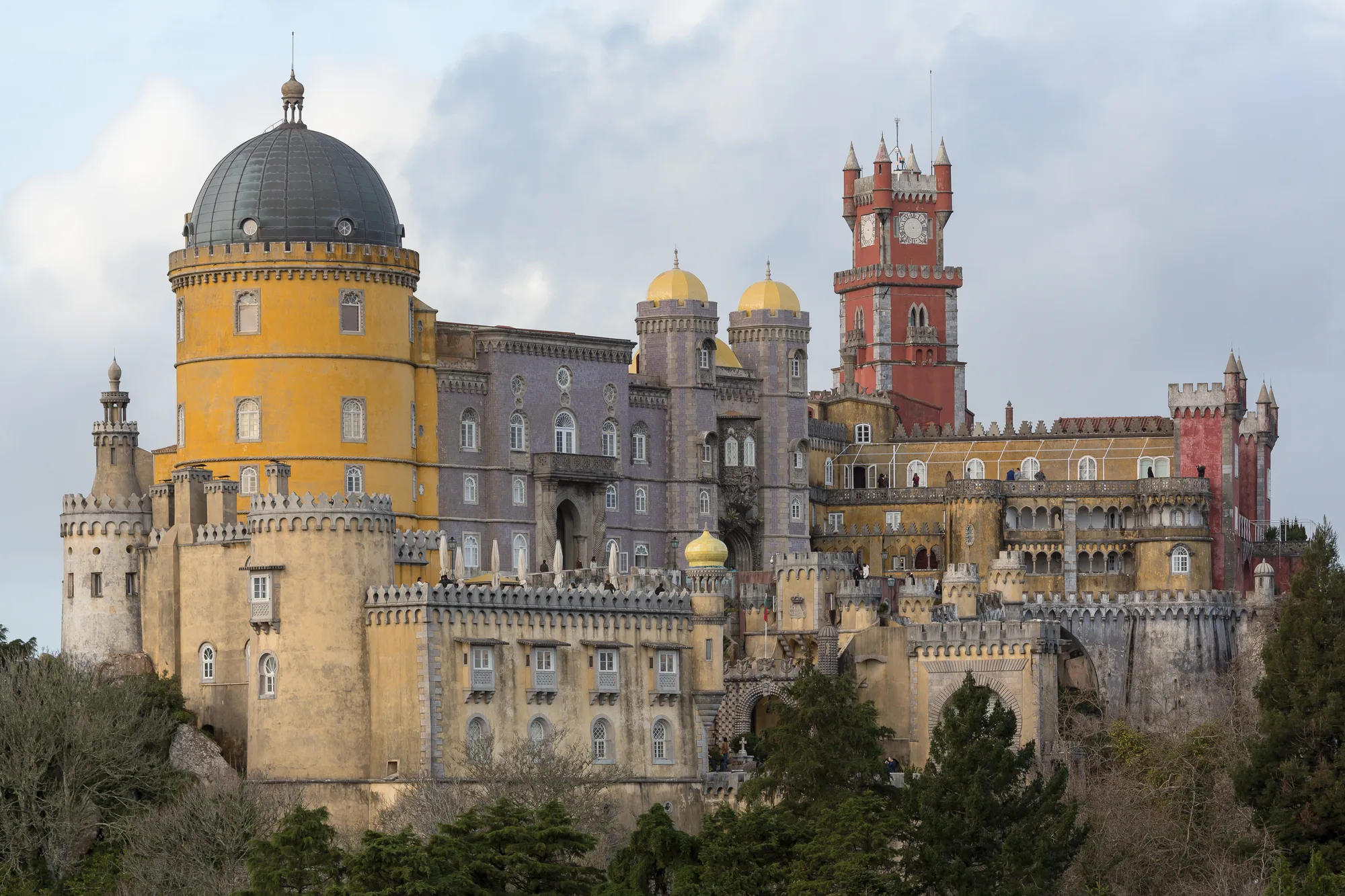
Build your own length (a simple decision tree)
Rather than memorising a fixed plan, you can assemble the right trip from a handful of ‘day types’ and stop when the count matches your style. Think of Lisbon as four core city days plus optional add-ons. The core days are: a central day (Baixa/Chiado), an old-hills day (Alfama/Graça), a riverfront day (Belém), and a modern/slow day (Parque das Nações or a garden neighbourhood). The optional add-ons are day trips and pure rest days.
Start with the three classic core days, then layer on based on what you want. Want one excursion? Add a day for Sintra or Cascais — that’s four. Want a slower pace, more coffee, and a modern reset? Add the fourth core day — that’s five. Travelling as a couple and want sunset rituals and long dinners? Add a rest day. Travelling with kids or with reduced mobility? Add a day so each day can be shorter. The number falls out of the choices instead of being guessed.
- Core days: central, old hills, riverfront, modern/slow.
- Add-ons: day trips and rest days — each one is +1 day.
- Start at 3 core days, then add for excursions, slow pace, or easier daily blocks.

How a day trip changes the maths
The most common reason people underestimate trip length is the day trip. Sintra, Cascais, and other escapes are reached by CP suburban train (no car needed, though timetables and fares are worth a glance before you go), but even an ‘easy’ day out is a full day: travel each way, a few hours on the ground, and tired legs by evening. It doesn’t add to your Lisbon time — it replaces a Lisbon day. That’s why a two-day trip almost never has room for a real day trip, and why four to five days is the comfortable point to fit one in without cannibalising the city itself.
The trips also differ in cost and effort. Sintra is the big ‘wow’ but the more demanding logistically: it gets crowded, the sights are spread across hills, and rushing it is a classic mistake — go early, pick two or three sites, and keep the day coherent. Cascais is the gentle one: a short, scenic coastal train and a walkable town, more ‘recovery day’ than expedition. As a rule of thumb, plan no day trip on a two- to three-day visit (or at most a short half-day across the river), one day trip on four to five days, and at most two on six to seven — keeping the other days lighter so the city doesn’t disappear behind the excursions.
- A day trip replaces a Lisbon day, it doesn’t add one.
- Sintra: the ‘wow’, but crowded and demanding — go early, keep it to a few sites.
- Cascais: the easy coastal recovery day, reachable by train without a car.
Does the season change how many days you need?
Yes — more than people expect. In high summer, heat and crowds slow you down: you lose the middle of the day to shade, the popular sights compress, and an extra day buys back the comfort of early starts and unhurried afternoons. In winter, the issue is daylight: sunset arrives early, so each ‘outdoor’ day is shorter and you’ll naturally lean on indoor anchors like museums and long lunches. Either way, the same itinerary feels fuller and more tiring than it would in the gentle shoulder seasons.
Spring and autumn are the easiest seasons to pack a lot into a day — comfortable walking, long soft light, fewer crowds than peak summer — so a tight three- or four-day trip works beautifully then. If you’re visiting in July or August, or in the short days of December and January, consider adding a day to keep the pace humane. For the durable month-by-month picture, the season overview is the steadier reference than any single forecast.
- Summer: heat and crowds slow you down — an extra day buys comfort.
- Winter: short days shrink each outdoor day — lean on indoor anchors.
- Spring and autumn pack the most into a day; tight plans work best then.
Where to base yourself for your trip length
Trip length and base interact. On a short two- to three-day visit, centrality wins: stay in Baixa or Chiado so you waste no time getting to the core, the walking is flat-ish, and transit links are easy. The shorter the trip, the more a convenient, well-connected base effectively lengthens it — every minute not spent commuting is a minute in the city.
On a longer trip, you can afford to trade a little centrality for character and calm. Garden-quiet neighbourhoods like Príncipe Real or Estrela reward a five- to seven-day stay with a slower, more livable rhythm, while still being a short ride from the sights. Whatever the length, choose a base for its pace and how easily you can get home at night — not purely for its distance to a list of attractions. A good base turns a steep city into an easy one.
- Short trips: stay central (Baixa/Chiado) — convenience effectively adds time.
- Longer trips: trade a little centrality for calm (Príncipe Real, Estrela).
- Always choose a base for pace and easy returns, not just distance to sights.
Quick answers: how many days for…?
A few common situations, answered directly. These assume the ‘one cluster a day’ pace described above — adjust upward if you want a slower trip or you’re visiting in peak heat or deep winter.
- A first trip, see the essentials: 3 days (center + old hills + Belém).
- A weekend / city break: 2 days, stay central and keep the plan tight.
- First trip + one day trip (Sintra or Cascais): 4 days.
- A relaxed trip with a day trip and a slow/modern day: 5 days.
- A couples or slow-travel trip with two day trips and rest days: 7 days.
- Just Sintra and the city, no rush: 4 days lets you give Sintra its own full day.

