
Quick take
- Day 1 is for Baixa/Chiado and an easy sunset near the river.
- Day 2 is for old Lisbon: Alfama + viewpoints + (optional) fado night.
- Choose one iconic moment (Tram 28) and one calm one (a garden or café).
- Keep lunch simple and let evenings be slow — that’s Lisbon.
- If you arrive Friday night, do a short river walk and an early dinner.
- If you leave Sunday late, add Belém for a half-day (flat and iconic).
How this weekend itinerary is built
Two days in Lisbon is enough for a beautiful first taste — if you plan in clusters. This itinerary avoids cross-city bouncing and uses the city’s natural strengths: walkable central areas, atmospheric old lanes, and golden-hour viewpoints. The logic is geographic: Lisbon sits on hills above the Tagus, so Day 1 stays low and central, and Day 2 climbs into the old eastern hills, with the flat river always close as a reference point.
Your goal isn’t to “see everything.” Your goal is to leave loving the rhythm: coffee, walking, light, and long evenings. A weekend is too short for a day trip to Sintra or Cascais (each is a full day in itself) and too short to stack every monument — so this plan trades coverage for coherence, and it’s better for it.
Use it as a flexible frame, not a fixed schedule. Swap pieces for weather and energy: do the open riverside on the clearer day, save museums or markets for rain, and let at least one café stop run long. That restraint is exactly what makes a Lisbon weekend feel restful instead of rushed.
- One main area per day.
- One sunset plan per day.
- One intentional night (optional).

Day 1: Baixa → Chiado → sunset near the river
Start in the central core while your legs are fresh and your sense of direction is still forming. Baixa is the readable grid — its orderly streets were laid out after the 1755 earthquake in the “Pombaline” style, which is why this part of the city feels so different from the tangled old lanes around it. Walk it down to the river at Praça do Comércio, the grand open square that frames the Tagus, and through the Arco da Rua Augusta back into the shopping streets.
From Baixa, climb gently into Chiado — the café-and-culture layer, full of bookshops, terraces, and old coffee houses. You can climb the historic Santa Justa lift or simply walk up; either way, Chiado is where a long coffee or a glass of wine turns the day from sightseeing into Lisbon. From here Bairro Alto is a short stroll uphill for later.
Finish with a viewpoint or riverside golden hour, then a slow dinner nearby. The miradouro at Santa Catarina (with its Adamastor statue) looks west over the river and is an easy, atmospheric first-day sunset. This is the day that makes Lisbon feel easy.
- Morning: Baixa plazas + central wandering.
- Afternoon: Chiado cafés + browsing streets.
- Golden hour: a miradouro near the river.

Day 2: Alfama + Graça viewpoints + evening atmosphere
Day two is for old Lisbon texture: Alfama lanes, viewpoints, and the sense that the city is older than your itinerary. Alfama is Lisbon’s oldest district, draped beneath the Castelo de São Jorge — it largely survived the 1755 earthquake, which is why its lanes still twist the medieval way, full of staircases, tiled façades, laundry lines, and tiny squares.
The easy way to do it is to start high and let gravity work. Begin with a Graça viewpoint — Senhora do Monte is one of the highest and quietest — then drift downhill through Graça and into Alfama rather than climbing late when you’re tired. Pause at the Sé (Lisbon’s cathedral) on the lower edge, and keep one long café or lunch block built in; Alfama is better savoured than checked off.
If you want one classic night experience, make it fado — Lisbon’s soulful song, UNESCO-listed intangible heritage, born in the bars of Alfama and Mouraria. Choose one intimate venue, go once, and only if the mood fits your trip.
- Start high: viewpoints first, then drift downhill.
- Wander slowly in Alfama; don’t turn it into a checklist.
- Optional: fado night as your intentional evening highlight.

Optional add-on: Belém if you have extra time
If your weekend includes a third half-day (late Sunday departure, early Friday arrival), Belém is the best add-on. It’s flatter, iconic, and built around riverfront walking — strung out along the Tagus a few kilometres west of the centre, reachable by tram, bus, or the Cascais-line train from Cais do Sodré.
Belém is where Lisbon shows its Age of Discoveries face: the Jerónimos Monastery and the Belém Tower are both UNESCO World Heritage, and the riverside Padrão dos Descobrimentos and the modern MAAT museum bracket a wide, walkable waterfront. The classic half-day is simple — one monument done early (don’t try to enter all of them), a long river walk, and the famous pastel de nata with an espresso. Keep it to a few hours and you’ll still have energy for the rest of your day.
 Belém guideUNESCO monuments + river light + a perfect half-day route.
 Pastel de nata ritualThe most satisfying Belém pairing: coffee + pastry + time.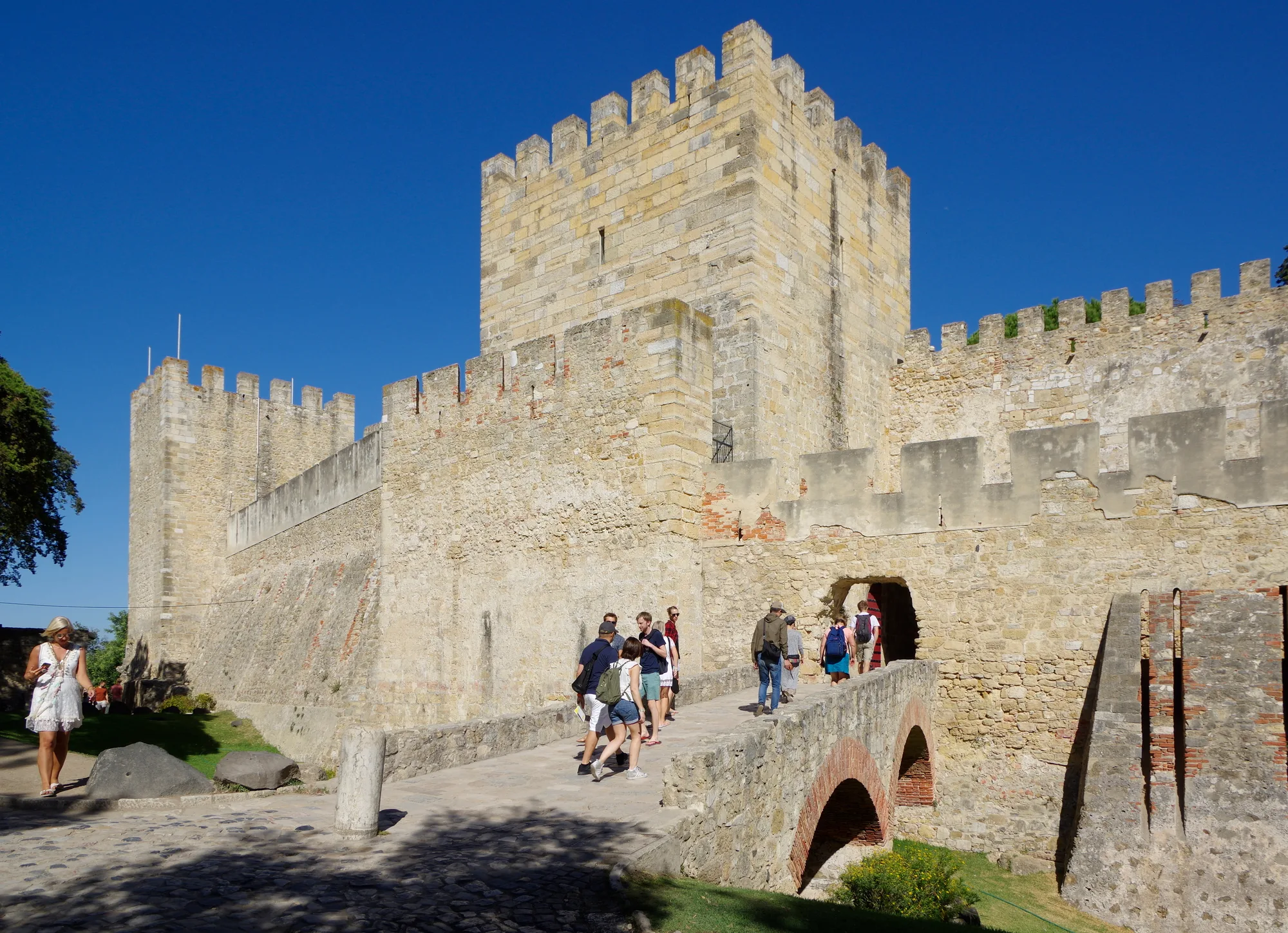
The Friday-night arrival (and a calm first evening)
Most weekend trips begin with a Friday-evening flight, so your real first night is short. Resist the urge to “start the itinerary” — instead, settle in and let the city introduce itself slowly. Drop your bags, find your nearest café or square, and take a short orientation walk while it’s still light.
If you’re staying centrally, walk down toward the Tagus. The riverfront around Praça do Comércio and Ribeira das Naus is flat, open, and a gentle way to feel the scale of Lisbon without committing to hills on a tired body. Have an early, unhurried dinner nearby rather than chasing a “best” restaurant across town — the goal on night one is calm, not coverage.
Note Lisbon’s rhythm: locals eat late, and many kitchens get busier from around 20:00. If you’re jet-lagged or hungry early, eat early — petiscos (small plates) and a glass of wine make a low-effort first meal that still feels like Lisbon.
- Keep Friday light: orientation walk + early dinner near your base.
- Walk the flat riverfront rather than tackling Alfama’s stairs on arrival.
- If you land late, plan your last-mile transport before you leave the airport.

Getting around on a weekend (walk, tram, metro)
For two days you don’t need a car, and you rarely need more than your feet plus a few short hops. Lisbon’s historic core is compact but steep, so the smartest move is to let the metro and funiculars do your climbing and to walk the downhill, scenic stretches.
The Metro (roughly 06:30 to 01:00 — confirm current hours before a late night) is fast and flat, useful for crossing the city or returning to your base when your legs are done. The historic trams, funiculars (Glória, Bica, Lavra) and the Santa Justa lift exist precisely to spare you the worst hills. Tram 28 is the famous scenic line; treat it as one short ride, not transport you rely on, and watch your pockets — it’s a known target for pickpockets.
If you’ll use public transport more than a couple of times, a rechargeable Viva Viagem / Navegante card is usually simpler and cheaper than single paper tickets. Fares change, so top up modestly and check current pricing rather than budgeting from old numbers.
- Walk downhill, ride uphill: use funiculars, the Santa Justa lift, and the metro to climb.
- Tram 28 = one scenic ride, early or late to dodge the worst crowds.
- A rechargeable transit card beats single tickets if you ride more than twice.
If you only have a Saturday and a Sunday departure
Many “weekends” are really one full day plus two half-days. If Sunday is a travel day, front-load the experiences you’d most regret missing onto Saturday, and keep Sunday for one flat, iconic finish.
A clean version: Saturday is your big day — central Lisbon in the morning, old Lisbon and viewpoints in the afternoon, and one intentional evening (a slow dinner, or fado if the mood fits). Sunday morning, before your flight, is for Belém: it’s flat, monumental, and easy to do in a few hours if you start early and don’t try to enter every monument.
Don’t schedule a day trip into a two-day visit. Sintra or Cascais each deserve their own day, and squeezing one in usually means spending your weekend in transit. Save them for a longer trip and let Lisbon itself be enough.
- Front-load Saturday; keep Sunday flat and iconic.
- Belém is the best pre-flight half-day: monuments, river light, a pastel de nata.
- Skip day trips on a 2-day visit — they eat the weekend in travel time.
 Lisbon in 2 daysA fuller two-day breakdown if your weekend is back-to-back full days.Day tripsWhere Sintra and Cascais fit best (usually a longer trip).
Eating well in two days (without overthinking it)
You won’t fix Lisbon’s whole food scene in a weekend, so aim for variety rather than a checklist: one pastry ritual, one seafood or petiscos meal, and one slow sit-down dinner. That trio covers most of what makes eating here memorable.
Start the day the Lisbon way — an espresso (um café) standing at the counter and a pastel de nata, ideally still warm. For lunch, petiscos (Portuguese small plates) let you taste widely without a heavy commitment; for dinner, grilled fish, bacalhau (salt cod, prepared in countless ways), or a tasca-style meal are classic. A market food hall is a low-stress backup when you can’t decide.
Reserve only the one dinner you truly care about and keep the rest casual. Avoid the most touristy stretches at peak times — a few streets off the main squares usually means better food and calmer tables.
- Aim for one pastry, one petiscos/seafood meal, one slow dinner.
- Espresso at the counter + a warm pastel de nata is the classic Lisbon morning.
- Book the one dinner that matters; keep other meals spontaneous.
Where to base yourself for a weekend
On a two-day trip, your base is half the experience — the right neighbourhood means less commuting and more Lisbon. For most first-timers, Baixa or Chiado is the easiest choice: central, flat-ish, and walkable to dinner, with metro on the doorstep when your legs give out. You’re close to everything in this itinerary and never far from a taxi or funicular.
If you’d rather sleep somewhere quieter and still central, look at Príncipe Real, Estrela, or Lapa — leafy, calmer, and a short ride or walk from the action, which suits couples and light sleepers. Alfama and Graça are the most atmospheric (waking up among the old lanes is special) but they’re steep; plan a taxi or ride share for the climb home at night, especially after a late dinner.
Wherever you stay, note Lisbon’s hills before you book: a short distance on the map can be a long climb in reality. Pick a base that matches your appetite for stairs.
- Easiest first-timer base: Baixa or Chiado (central, walkable, well connected).
- Quiet-but-central: Príncipe Real, Estrela, or Lapa.
- Most atmospheric but steep: Alfama or Graça — budget for taxis uphill at night.
When to go, and what to expect on a weekend
Lisbon is a year-round weekend city, but the season shapes the pace. Spring and autumn are the sweet spots — warm, bright, long golden hours, and manageable crowds. Summer brings the warmest weather and the busiest streets (Tram 28, viewpoints, and Belém get crowded; start early). Winter is mild by European standards but can be rainy, which is when Lisbon’s cafés, museums, and markets earn their keep.
Whatever the season, two patterns hold: mornings are calmer than afternoons at the popular sights, and the river light around sunset is the city’s most reliable highlight. Build your weekend around those two truths — early at the busy places, golden hour at a viewpoint — and the rest takes care of itself.
A few weekend realities worth knowing: many sights and restaurants are busiest at lunch and dinner, locals eat dinner late, and pickpocketing is a genuine nuisance on Tram 28 and at crowded viewpoints, so keep valuables zipped and close. None of this should worry you — Lisbon is a relaxed, welcoming city — but a little awareness keeps a short trip smooth.
- Spring/autumn = the sweet spot; summer is warmest and busiest; winter is mild but can rain.
- Go early at popular sights; save golden hour for a viewpoint.
- Keep valuables secure on Tram 28 and at crowded miradouros.
Weekend in Lisbon FAQ
A few questions come up again and again for a two-day trip. Short answers below; deeper guides are linked throughout.
- Is two days enough for Lisbon? For a first taste, yes — you can see the central core, old Lisbon, and (if you stretch) Belém. It’s not enough to add a day trip.
- Should I ride Tram 28? Once, for the experience — early morning or late evening, and watch your belongings. Otherwise walk the same hills at your own pace.
- Do I need to book anything in advance? Generally just the one dinner or fado night you care most about, plus timed entry for a marquee monument in peak season. Keep the rest flexible.
- Is Lisbon walkable for a weekend? Yes, but it’s hilly — bring shoes with grip and use the metro and funiculars to skip the steepest climbs.
- Which neighbourhood should I stay in for a short trip? Baixa or Chiado for ease and central walking; Príncipe Real, Estrela or Lapa for quiet that’s still close in.
- What about the weather? Spring and autumn are ideal; summer is warmest and busiest; winter is mild but can be rainy, so have an indoor backup (museum, market, café).
- Is Lisbon expensive for a weekend? It’s generally affordable by Western European standards, especially food and transport — spend on a couple of good meals and keep the rest free (viewpoints, walks, riverfront).


