
Quick take
- Day 1: Baixa/Chiado + sunset near the river.
- Day 2: Alfama + viewpoints + optional fado night.
- Keep lunch flexible and dinner slow — Lisbon isn’t meant to be rushed.
- Use transport to skip the least scenic climbs.
- Choose one iconic moment (Tram 28) if it matters to you — not as a requirement.
- If you have energy, add a short Belém moment as a bonus (but don’t force it).
The two-day Lisbon skeleton
Two days is the sweet spot for a first Lisbon taste: you can do the central elegance and the old-lane atmosphere without feeling like you ran through the city. The trick on a short trip is restraint — Lisbon’s seven hills punish anyone trying to bounce across town, so each day is anchored to one zone and one mood rather than a long checklist.
Build it as two distinct moods: ‘easy and elegant’ on day one (the flat Pombaline grid of Baixa, the cafés of Chiado, a riverside sunset), then ‘old and textured’ on day two (the lanes of Alfama under the castle, two or three miradouros, and an optional fado night). If you have a third evening or a long second afternoon, a short Belém run is the natural bonus — but treat it as optional, not obligatory.
Where you sleep matters more than usual on a two-day trip, because it decides how much you climb before the day even starts. A base in Baixa, Chiado, or Cais do Sodré keeps both days within a short walk or one tram ride; a base up in Alfama or Graça is atmospheric but means hauling luggage up cobbled slopes.
- Day 1 = flat and central: Baixa grid, Chiado cafés, a river or miradouro sunset.
- Day 2 = high and old: Graça viewpoints, downhill through Alfama, optional fado.
- Don’t split a single zone across both days — keep each day geographically tight.


Day 1: central Lisbon done right
Start in Baixa, the flat downtown grid rebuilt on a strict plan after the 1755 earthquake. Begin at Praça do Comércio on the river, walk up pedestrian Rua Augusta under its triumphal arch, and let yourself get pleasantly lost between the parallel streets. This is the easiest orientation walk in the city — no real climbing, and every cross-street eventually hits a square.
Drift up into Chiado, Lisbon’s elegant café-and-bookshop quarter, where the climb toward Bairro Alto is gentle. Treat coffee and a pastel de nata as part of the plan, not a detour: the city’s rhythm is built around stopping. From Chiado you can ride the Santa Justa lift (or just admire it and skip the queue), and you’re a short walk from the Carmo Convent ruins, left roofless by the earthquake as a deliberate memorial.
Save golden hour for a viewpoint. Miradouro de Santa Catarina (the Adamastor terrace) faces the river and the 25 de Abril bridge and is an easy walk from Chiado; if you’d rather stay low, the riverfront at Ribeira das Naus and Cais do Sodré is flat and breezy. Either way, dinner should be slow — petiscos (Portuguese small plates) and a glass of vinho verde are the right register for the first night.
- Praça do Comércio → Rua Augusta arch → wander the Baixa grid (flat, ~1–2 hrs).
- Chiado: cafés, the Carmo ruins, the Santa Justa lift, a slow lunch.
- Golden hour: Santa Catarina (Adamastor) miradouro or the flat riverfront.
- Dinner: petiscos in Cais do Sodré or Bairro Alto, kept unhurried.
Day 2: Alfama + viewpoints + evening atmosphere
Day two is the textured one. Start high and let gravity do the work: take a taxi, bus, or Tram 28 up to Graça, see the Miradouro da Senhora do Monte (the highest of the classic viewpoints) and the Miradouro de Graça, then drift downhill on foot through Alfama’s tangle of stairways toward the river. Going downhill through Alfama rather than up is the single biggest comfort upgrade on this day.
Alfama is the oldest neighbourhood, the part of the city that survived the 1755 earthquake largely intact, and it rewards slow wandering over ticking off sights. The anchors, if you want them, are the Sé (Lisbon Cathedral), the Miradouro de Santa Luzia and the adjacent Portas do Sol terrace, and — for a quieter panorama — the National Pantheon and São Vicente de Fora nearby. If your two days fall on a Tuesday or Saturday, the Feira da Ladra flea market spreads out behind São Vicente.
Keep the evening for atmosphere. Alfama and Mouraria are the birthplace of fado, and one intimate fado dinner is the classic Lisbon night — book ahead and favour a smaller house over a tourist set-menu hall. If fado isn’t your thing, a slow dinner with the lanes emptying around you does the same job. This is the evening the city feels most like itself.
- Start high in Graça (Senhora do Monte + Graça miradouros), walk downhill.
- Anchors in Alfama: the Sé, Santa Luzia + Portas do Sol, the National Pantheon.
- Tue/Sat: the Feira da Ladra flea market behind São Vicente de Fora.
- Evening: one intimate fado house — book ahead, skip the big set-menu halls.
 Alfama guideRoutes, viewpoints, and a calmer way to wander.
 Castelo de São JorgeIf you want the castle, time it early to beat the queues and heat.Fado in LisbonHow to plan one great night (and keep it intimate).Where to eat in AlfamaHonest tascas over tourist menus.
Optional add-on: a half-day in Belém
If your trip stretches to a long second afternoon or a slow third morning, Belém is the obvious add-on. It sits west along the river and is easy to reach by tram 15E or train from Cais do Sodré in about 15–20 minutes. The cluster is tight: the Manueline Jerónimos Monastery and the Belém Tower (both UNESCO World Heritage), the Monument to the Discoveries, and the original Pastéis de Belém custard-tart house, all within a riverside walk.
Belém works best as a self-contained block rather than something squeezed onto an Alfama day — the two are at opposite ends of the city. Go early to beat the Jerónimos queue, or buy timed tickets in advance, and check current hours on the official monuments site before you go.
- Reach it: tram 15E or the Cascais-line train (~15–20 min from Cais do Sodré).
- The tight cluster: Jerónimos, Belém Tower, Discoveries monument, Pastéis de Belém.
- Go early for Jerónimos, or pre-book timed tickets to skip the line.


Where to base yourself for two days
On a two-day trip, your base is a pacing decision more than a comfort one — it sets how much climbing bookends each day. The most efficient choice is the flat centre: Baixa, Chiado, or Cais do Sodré. From there, day one happens on your doorstep and day two is a short tram, bus, or taxi ride up to Graça before you walk back down. You waste almost no time in transit, which matters when you only have two days.
Alfama and Graça are gorgeous places to wake up, with the lanes quiet before the day-trippers arrive, but they come with a cost on a short trip: cobbled slopes with luggage, fewer late-night transport options, and a longer haul whenever you want to be somewhere flat. They suit travellers who prize atmosphere over efficiency and who travel light. Príncipe Real and Avenida are calmer, leafier alternatives a little uphill from the centre, well connected by Metro and a good fit if you want quiet evenings.
Wherever you stay, prioritise being within a short walk of a Metro station or a tram stop. On two days you’ll lean on transport to skip the least scenic climbs, and a base that strands you a steep ten minutes from the nearest line quietly eats your time.
- Most efficient: Baixa / Chiado / Cais do Sodré — flat, central, well connected.
- Most atmospheric: Alfama / Graça — beautiful but steep, harder with luggage.
- Calm alternative: Príncipe Real / Avenida — leafy, quiet, Metro-served.
- Whatever you pick, stay near a Metro or tram stop.

Getting between the two zones
The two days connect easily, but knowing the options keeps the trip smooth. From the centre up to Graça and the top of Alfama, the simplest route is a short bus or taxi/rideshare; Tram 28 covers the same ground scenically but is often standing-room-only and a known pickpocket spot, so treat it as an experience rather than reliable transport. Within Alfama itself, almost everything is on foot — and downhill, if you started at the top.
The Metro is fast and cheap for longer hops (and the easiest way back from a late dinner), running roughly 06:30 to 01:00; after the last trains a taxi or rideshare is the fallback. For the optional Belém add-on, tram 15E from Praça da Figueira or the Cascais-line train from Cais do Sodré both work in about 15–20 minutes. A rechargeable Viva Viagem / Navegante card covers Metro, trams, buses, and the funiculars on one tap — load it once and stop thinking about single tickets. Fares change, so check current prices on the operators’ sites.
- Centre → Graça/Alfama: short bus or taxi; Tram 28 is scenic but crowded.
- Within Alfama: on foot, downhill if you can plan it that way.
- Late return: Metro runs ~06:30–01:00; after that, taxi or rideshare.
- One rechargeable Viva Viagem / Navegante card covers Metro, trams, buses, funiculars.
 Getting around LisbonMetro, trams, and walking — what’s worth it and when.Viva Viagem cardThe one card that covers most of the network.Tram 28 guideHow to ride it sanely (or why to skip it).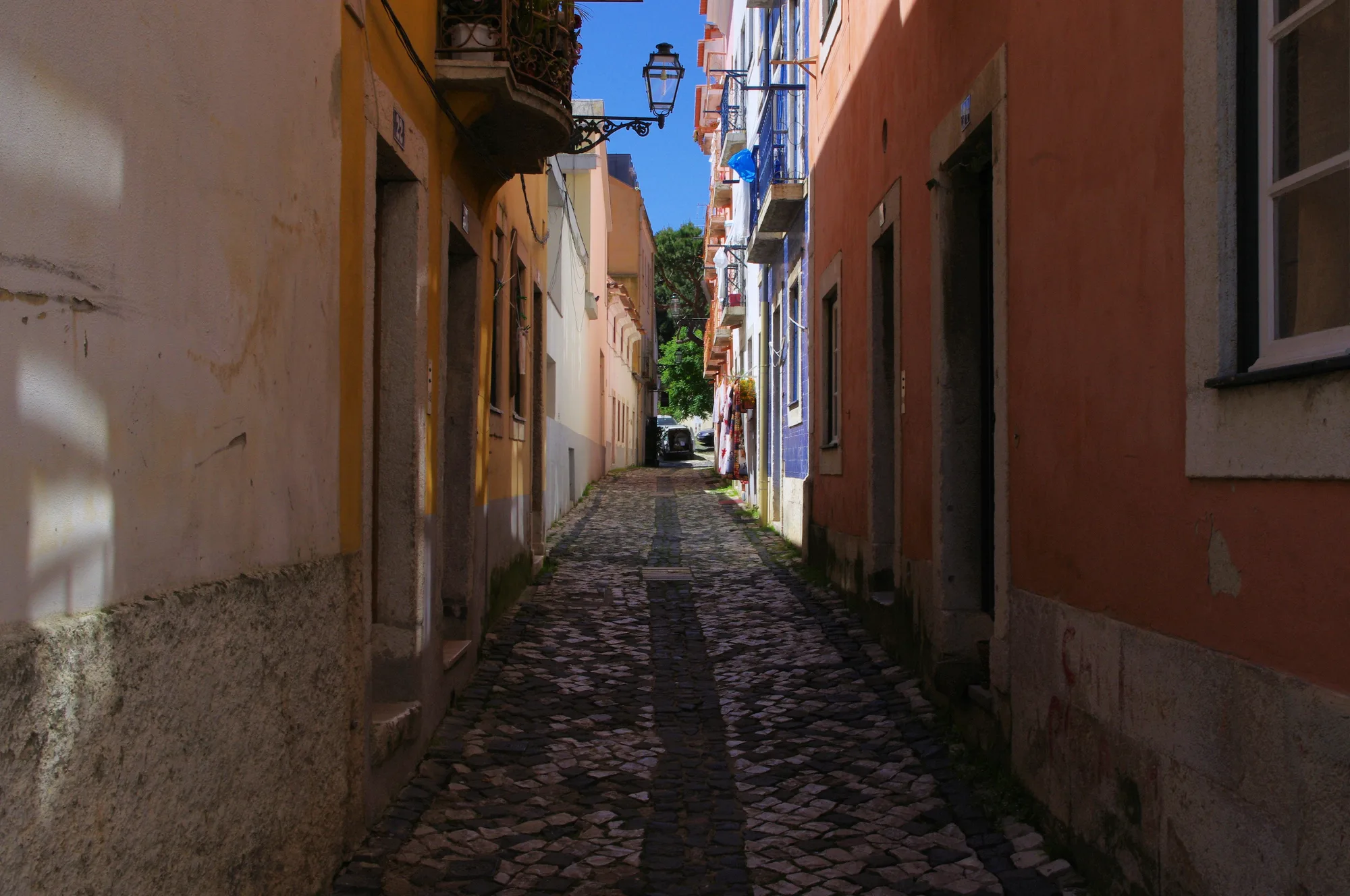
Two themed variations on the same skeleton
The two-day skeleton — flat and central on day one, high and old on day two — bends easily to a mood. For a romantic version, weight the days toward golden hour and slow meals: a Príncipe Real and Chiado afternoon on day one ending at the Santa Catarina terrace with a drink, then a day two that climbs to the Senhora do Monte miradouro for the widest view before an Alfama fado dinner. The structure is identical; you simply linger longer at the viewpoints and book the better table.
For a food-led version, build the days around eating. Day one: a market breakfast or a pastel de nata crawl, lunch as petiscos in Cais do Sodré or at the Time Out Market, and a tasca dinner in Bairro Alto. Day two: a long, late lunch in Alfama, a ginjinha stop, and an evening of seafood. You’ll still walk the same hills and see the same anchors — Baixa, Chiado, Alfama — but the day is organised by appetite rather than sights.
For travellers with kids, keep the same two zones but shorten the climbs and add one big-hit attraction: the riverside flatness of Belém or Parque das Nações (with the Oceanário) makes an easy half-day, and the funiculars and the Santa Justa lift turn transport itself into the fun part. The lesson across all three is the same: the geography stays fixed, the theme is just where you spend your time.
- Romantic: lean into golden-hour miradouros, slow meals, and a fado night.
- Food-led: organise both days around markets, petiscos, tascas, and seafood.
- With kids: keep the two zones but add Belém or the Oceanário and ride the lifts.
Common two-day mistakes (and how to adapt)
The classic two-day mistake is trying to add Sintra. It’s the most tempting day trip in Portugal, but Sintra is a full, hilly day on its own — bolting it onto a two-day city trip means you see neither Lisbon nor Sintra properly. If Sintra is non-negotiable, accept that you’re planning a three-day trip and drop a city day instead.
The second mistake is over-scheduling. Lisbon’s pleasure is in the lingering — a long café stop, an unplanned miradouro, a slow dinner — and a packed checklist turns the hills into a chore. Build each day around one or two anchors and leave the rest loose. If the weather turns, swap an outdoor block for an indoor one: a museum, a market hall, a long lunch. If you arrive tired, shorten day one to just Baixa and a sunset and let day two carry the texture.
Finally, don’t treat Tram 28 or the castle as obligations. The castle is a fine viewpoint but queues and heat can sour it; go early or skip it for a free miradouro. The point of two slow days is to leave Lisbon wanting to come back, not to have ticked every box.
- Don’t squeeze in Sintra on two days — it needs its own day.
- Anchor each day to one or two things; keep the rest flexible.
- Bad weather: swap an outdoor block for a museum, market, or long lunch.
- Skip the castle queue for a free miradouro if time is tight.
Two-day FAQ
Is two days enough for Lisbon? It’s enough for the classic shape — central elegance plus the old hills — but not for Lisbon plus Sintra plus the beaches. If a day trip to Sintra is a must, you’re really planning a three-day trip; on a true two-day visit, keep it to the city.
Should I ride Tram 28? Only if the experience matters to you. The famous route is scenic but often packed and pickpocket-prone; many travellers prefer to walk the same hills and ride one short hop for the novelty. Treat it as an optional moment, not a requirement.
Do I need to book anything in advance? For two days, the two things worth pre-booking are a fado dinner (the good small houses fill up) and timed entry to Jerónimos if you add Belém. Everything else can stay flexible — which is the point of a slow Lisbon trip.
- Two days = the city core; add Sintra only if you have a third day.
- Tram 28 is optional — scenic but crowded; guard your pockets.
- Pre-book: a fado dinner, and Jerónimos timed entry if you do Belém.
Where it is
Pastéis de Belém
The iconic Belém bakery (often busy). Best as a Belém add-on after Jerónimos/riverfront.
Map pins
Map data © OpenStreetMap contributors · Tiles © OpenFreeMap
Where it is
Time Out Market Lisboa (Mercado da Ribeira)
A central food hall inside Mercado da Ribeira — best off-peak for a calmer, more enjoyable visit.
Map pins
Map data © OpenStreetMap contributors · Tiles © OpenFreeMap

