Quick take
- A quieter ‘wow’ in the historic hills — great if you like architecture and big views.
- Pairs perfectly with São Vicente de Fora (tiles) and Feira da Ladra (browse).
- Go earlier for a calmer feel; later light can be gorgeous but busier.
- It’s one of the easiest ways to get a panoramic moment without a long viewpoint hunt.
- Treat it as a short, satisfying stop — then wander old Lisbon on foot.
- Combine with a golden-hour miradouro and a slow dinner for a perfect day arc.
Why the Pantheon is worth it
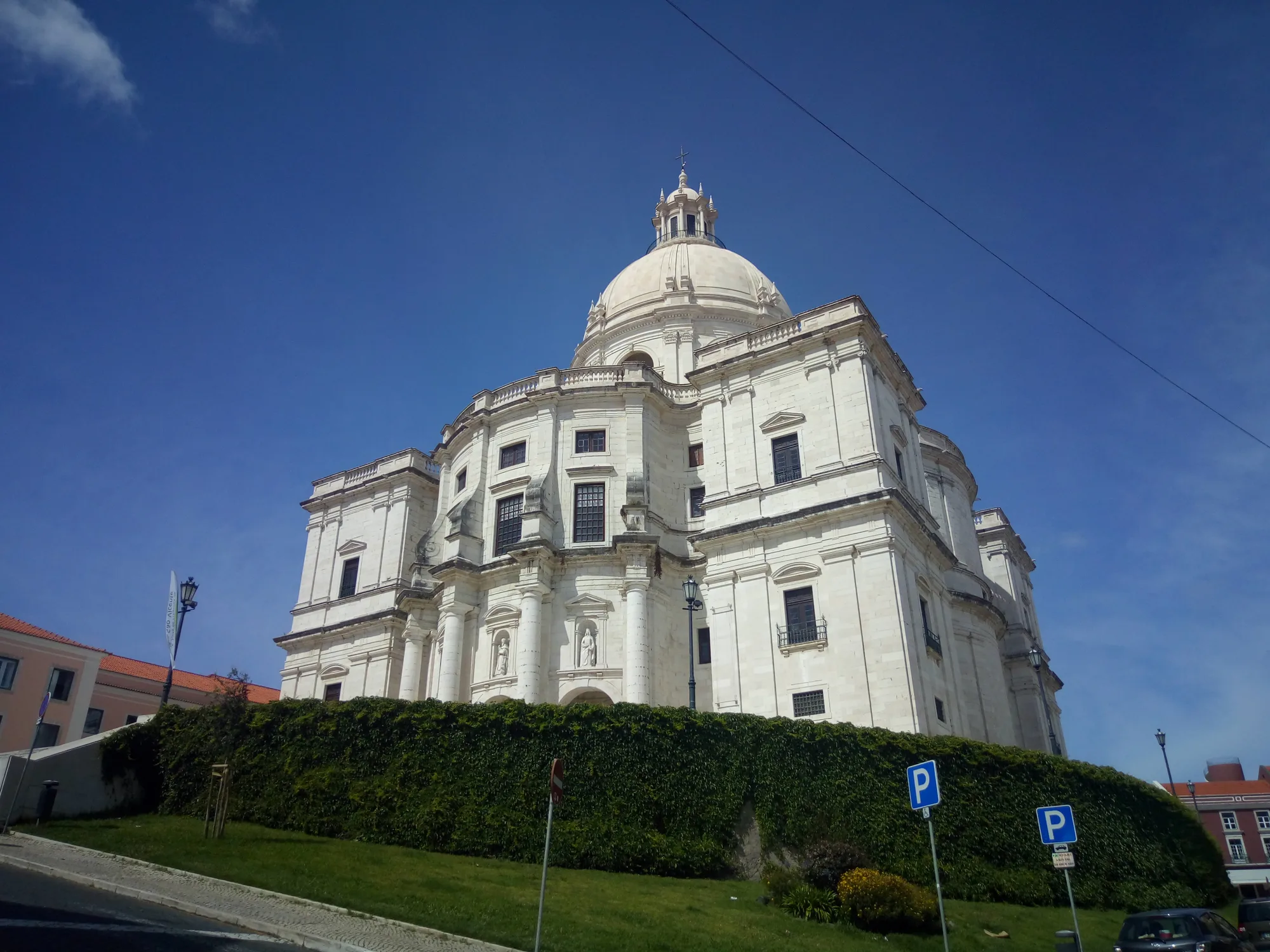
The National Pantheon is a beautiful pause in an area that can otherwise feel like nonstop wandering. It’s a place to slow down, look up, and get one of those ‘Lisbon makes sense now’ perspective moments.
It also fits a very specific Lisbon need: a big view without turning your day into a viewpoint mission. You can pair it with one other hill stop and still keep the day easy.
- Best for: architecture lovers, calm travelers, and anyone who wants a panoramic moment.
- Perfect pairing: Pantheon → São Vicente → Alfama lanes → sunset plan.
 São Vicente de ForaA tile-rich monastery nearby that pairs perfectly with the Pantheon.
 Alfama guideOld lanes and atmosphere just downhill from this hill zone.
Sources
- Museus e Monumentos de Portugal: National Pantheon ↗
Official visitor information for the Pantheon.
- Visit Lisboa: National Pantheon ↗
Visitor overview and practical context.
Best time to go (and how to keep it calm)
If you want the Pantheon to feel peaceful, go earlier. If you want warm light, go later — but don’t expect to be alone. The trick is to plan it as part of a coherent hill day so you’re not rushing or backtracking.
A simple rhythm: one hill attraction in the morning, one viewpoint at golden hour, and the rest as wandering + food.
- Calmest: earlier in the day (especially weekdays).
- Most cinematic: late afternoon light, then drift toward a sunset plan.
- Pair it with one other hill stop — not five.
 Sunset guidePick one miradouro and let it anchor the evening.
 ViewpointsIf you want a second ‘view’ moment, choose it intentionally.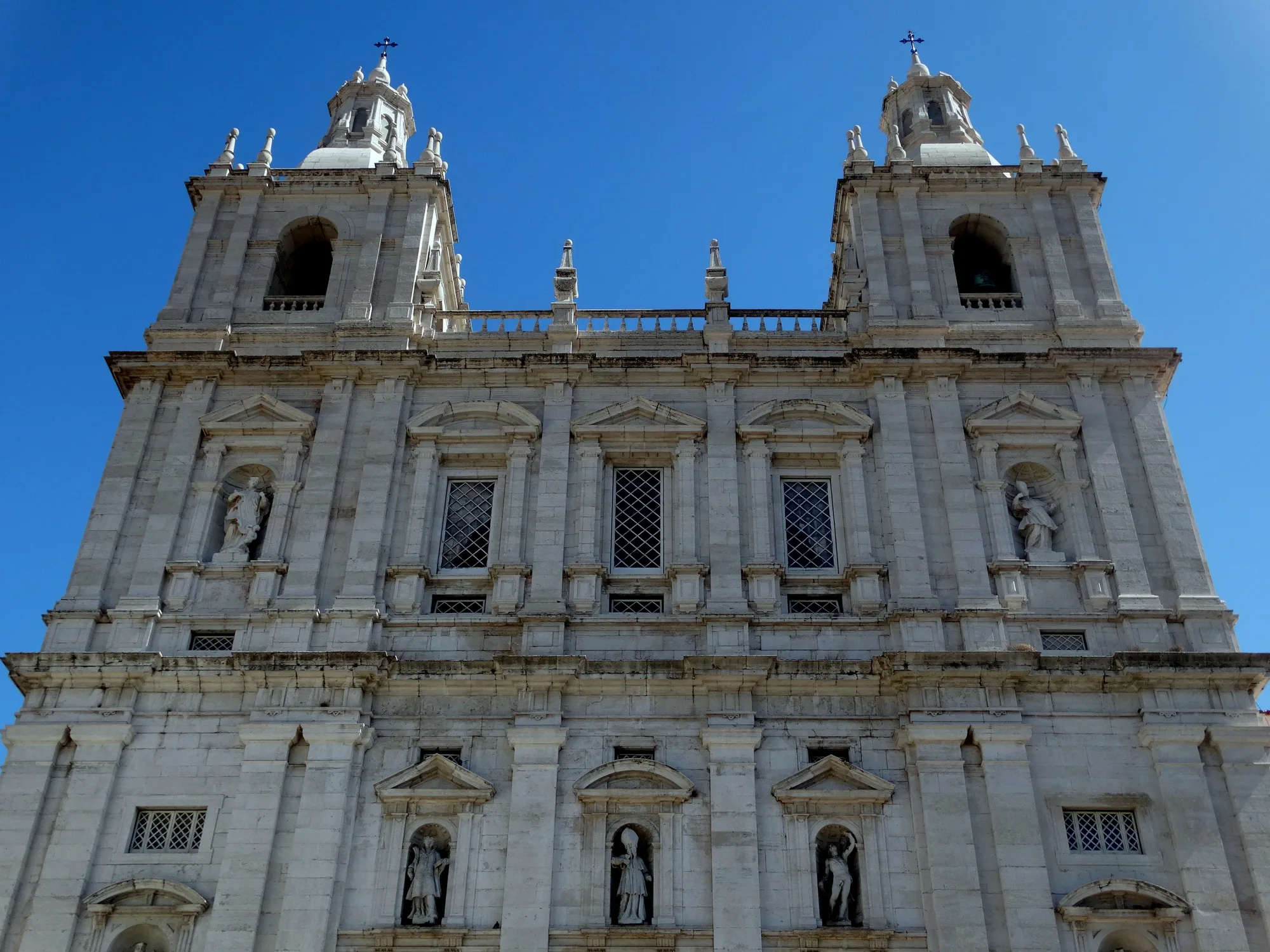
The building and its long, strange story
The National Pantheon occupies the church of Santa Engrácia, a vast, white, domed baroque building that dominates the eastern skyline of the old city. Its construction became so famously slow — begun in the 17th century and not finished until the 20th — that ‘obras de Santa Engrácia’ (the works of Santa Engrácia) entered Portuguese as a phrase for any project that drags on forever. The great dome was only completed in 1966, which is when the building took something close to its present form.
In the 20th century the church was repurposed as the National Pantheon, the official resting place for honoured Portuguese figures. Inside you’ll find the tombs and memorials of presidents, writers and cultural icons — including a memorial to the fado legend Amália Rodrigues and cenotaphs to explorers like Vasco da Gama and the poet Camões. It is, in effect, the place where Portugal commemorates the people it most wants to remember.
Architecturally, the interior is the draw: a soaring, light-filled space of coloured marble in geometric patterns, beneath that enormous dome. Even a short visit gives you a sense of grandeur quite different from the dim, ancient churches elsewhere in the old quarter.
- Set in the baroque church of Santa Engrácia, famous for taking centuries to build.
- The dome was only finished in 1966; the phrase ‘obras de Santa Engrácia’ means an endless project.
- Now Portugal’s pantheon of honoured figures (writers, presidents, Amália Rodrigues).
- Interior highlight: a marble-patterned, light-filled space under a huge dome.
The rooftop view (the part worth the climb)
The single best reason to pay the entry fee is the rooftop. A climb up through the building brings you out onto a terrace around the base of the dome, and the panorama from up there is one of the finest — and least crowded — in Lisbon. You look straight over the red roofs of Alfama, the cargo ships and ferries on the Tagus, the Vasco da Gama and 25 de Abril bridges in the distance, and the whole eastern sweep of the old city below.
Because it takes a fee and a stair climb to reach, it’s usually far quieter than the free street-level miradouros, which makes it a lovely spot to simply pause and take the city in. Bring a little patience for the stairs and steady footing, and you’re rewarded with a 360-degree view that ranks with the best in town. On a clear day, it’s worth lingering.
If you only have appetite for one ‘paid view’ on the Alfama side of the city, this is a strong candidate — you get the architecture, the pantheon, and the rooftop in a single, compact, rarely-overrun stop.
- A rooftop terrace around the dome with a near-360° panorama.
- Views over Alfama, the river, the bridges and the eastern city.
- Usually much quieter than the free street viewpoints.
- A short stair climb — steady footing helps.
Getting there, tickets, and a Monday warning
The Pantheon sits at the eastern edge of the old city, beside Campo de Santa Clara where the Feira da Ladra flea market runs on Tuesdays and Saturdays, and a short walk from São Vicente de Fora. Tram 28 and the 12E pass nearby, and several buses serve the area; the Santa Apolónia metro and train station is a downhill walk away. It folds neatly into an old-Lisbon hill morning with the market and the monastery.
Two practical notes matter here. First, the Pantheon is closed on Mondays (along with 1 January, Easter Sunday, 1 May, 13 June and 25 December), so don’t build a Monday plan around it. Second, the official adult ticket is €10 (the church is the paid attraction, with the rooftop included), and it’s open Tuesday–Sunday 10:00–18:00 in summer (April–September, last entry 17:40) and 10:00–17:00 in winter (October–March). Earlier in the day is quietest, both inside and on the roof.
- Beside the Feira da Ladra market and a short walk from São Vicente.
- Tram 28 / 12E and buses nearby; Santa Apolónia station downhill.
- Closed Mondays; adult ticket €10 (rooftop included with entry).
- Open Tue–Sun 10:00–18:00 (Apr–Sep) / 10:00–17:00 (Oct–Mar).
 Markets in LisbonFeira da Ladra, right beside the Pantheon.
 Getting around LisbonTrams, buses and the metro that reach this corner.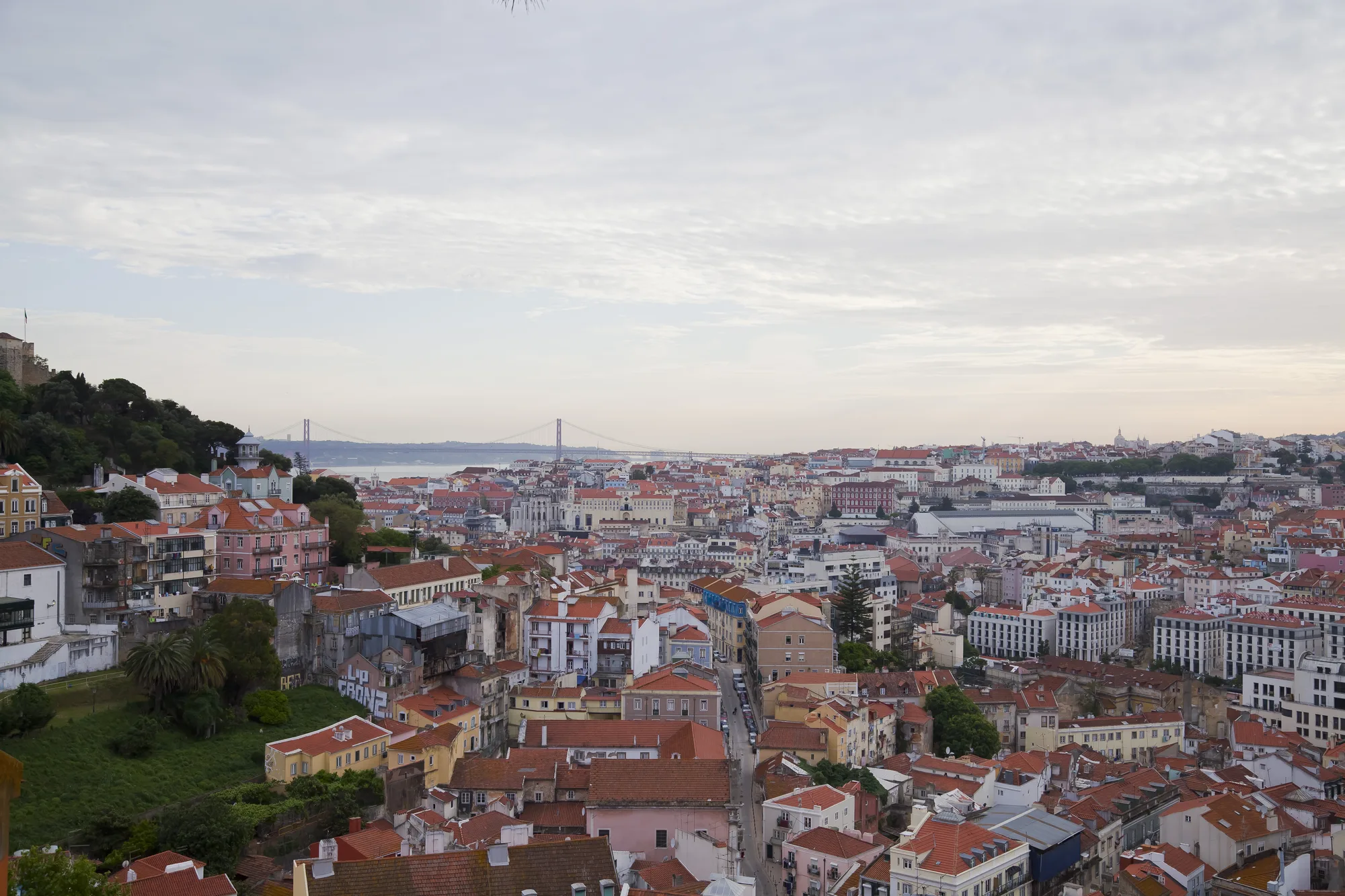
Quick answers (time, tickets, the view)
How long do you need? Allow around forty-five minutes to an hour — enough for the marble interior, the memorials and, crucially, the rooftop. Is it worth the fee? For most people the rooftop panorama alone justifies it, with the architecture and the pantheon of national figures as a bonus. Is it crowded? Far less than the free street viewpoints, which is part of its charm. Who will enjoy it most? Architecture fans, view-seekers and anyone who likes a calm, slightly off-the-beaten-track stop.
When should you go? Earlier in the day is quietest both inside and on the roof. Remember it typically closes one day a week (often Monday), and hours and prices vary by season, so check the official information before you commit a slot to it — especially if you’re trying to chain it with the neighbouring market and São Vicente for one tidy old-Lisbon morning.
- Time: 45 minutes to an hour, including the rooftop.
- The rooftop panorama alone usually justifies the entry fee.
- Quieter than the free viewpoints; great for a calm stop.
- Often shut one day a week (frequently Monday) — verify hours and prices.
Map: Pantheon + nearby old-Lisbon classics
These pins help you build a coherent hill morning: one cultural anchor, one browse stop, one viewpoint — then drift downhill.
Map pins
Map data © OpenStreetMap contributors · Tiles © OpenFreeMap


