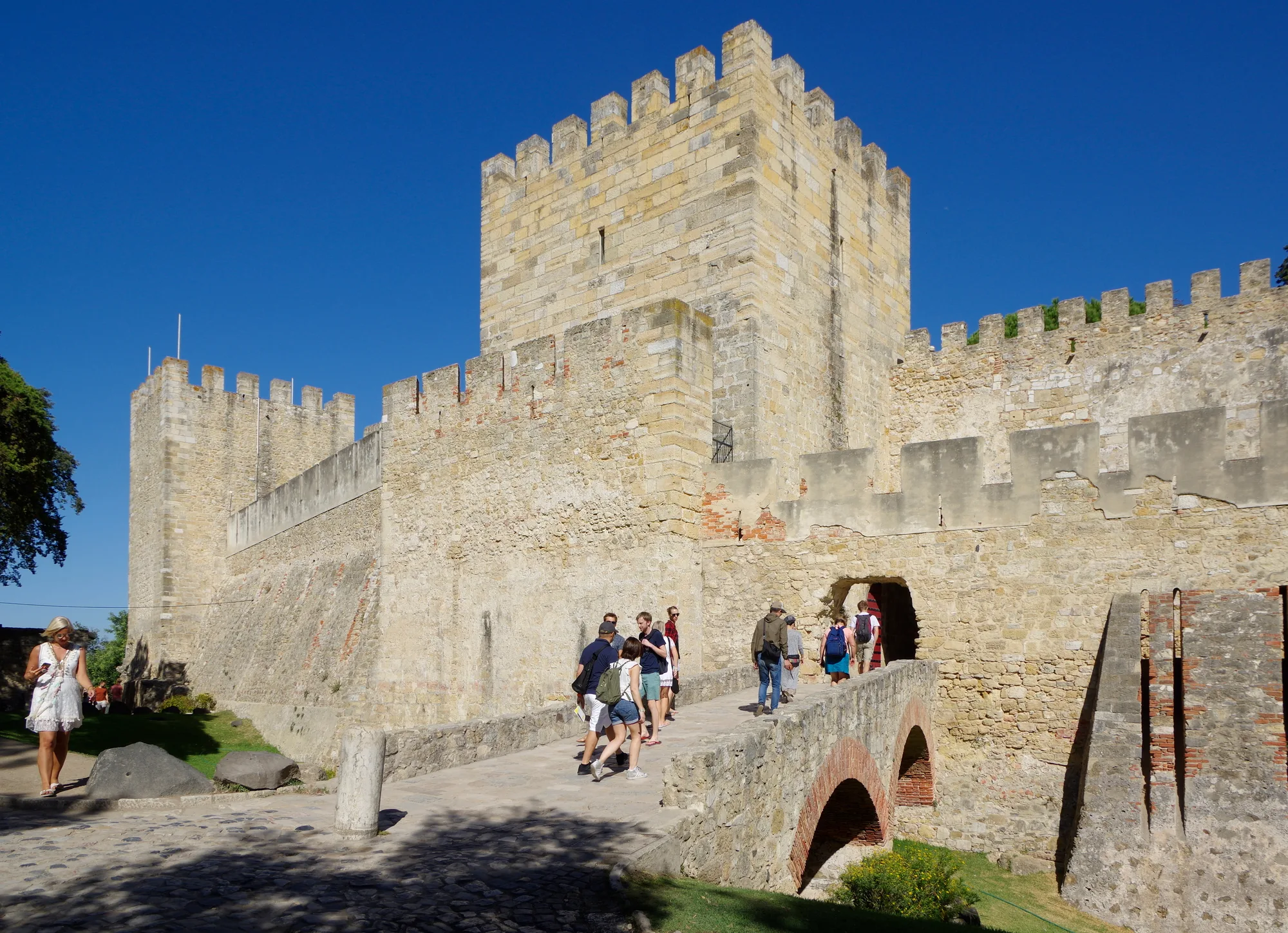
Quick take
- Castelo de São Jorge is the classic Lisbon viewpoint — do it once, do it well, then move on.
- Adult ticket €17 (free with the Lisboa Card; free for under-12s).
- Open daily ~09:00; closes 21:00 in summer (Mar–Oct) and 18:00 in winter (Nov–Feb).
- Go early if you want a calmer visit; crowds build fast on busy days.
- Treat it as a viewpoint + wander, not a ‘must spend hours’ attraction.
- Pair it with Alfama lanes on the way down — that’s where the real magic is.
- Plan your day with gravity: up first (castle), down later (wandering + dinner).
- If you’re not feeling it, skip the castle and choose a miradouro instead.
What you’ll actually get from the castle
The castle hill delivers Lisbon’s most satisfying ‘layout view’: rooftops cascading toward the Tagus, the downtown grid in the distance, and a perspective that makes the whole city click. Even people who don’t love attractions tend to love this view.
Think of the visit as two parts: (1) a big panoramic moment, and (2) a relaxed wander on the hill. If you’ve been doing steep neighborhoods all day, this is where you want to slow down — not rush.
- Best for: a classic city panorama + a slow, scenic wander.
- Ideal pairing: castle → Alfama lanes → viewpoint → dinner.
 Alfama guideA route-first plan for wandering the oldest district without burnout.
 Viewpoints guideIf you’d rather skip attractions, choose a miradouro instead.
Sources
- Castelo de São Jorge (official site) ↗
Official visitor information for the castle.
- Castelo de São Jorge: tickets (official) ↗
Current ticket prices and concessions (adult €17; free with Lisboa Card).
- Castelo de São Jorge: schedules (official) ↗
Seasonal opening hours (summer to 21:00, winter to 18:00) and closed days.
Best time to go (crowds, light, energy)
If your priority is a calmer experience, go earlier. If your priority is warm light, aim for late afternoon — but expect more people. The castle is popular because the view is genuinely good, so your best ‘crowd hack’ is timing, not attitude.
If you’re traveling as a couple, treat the castle as your ‘one big view’ moment for an old-Lisbon day — then build the rest of the day around wandering and food, not more ticket lines.
- Calmest: morning / earlier in the day.
- Most romantic light: late afternoon (but busier).
- Smart strategy: choose your castle time, then plan the downhill wander after.
Sunrise in LisbonIf you want quiet + light, sunrise is the city’s cheat code. Sunset in LisbonA golden-hour plan that doesn’t require standing in long lines.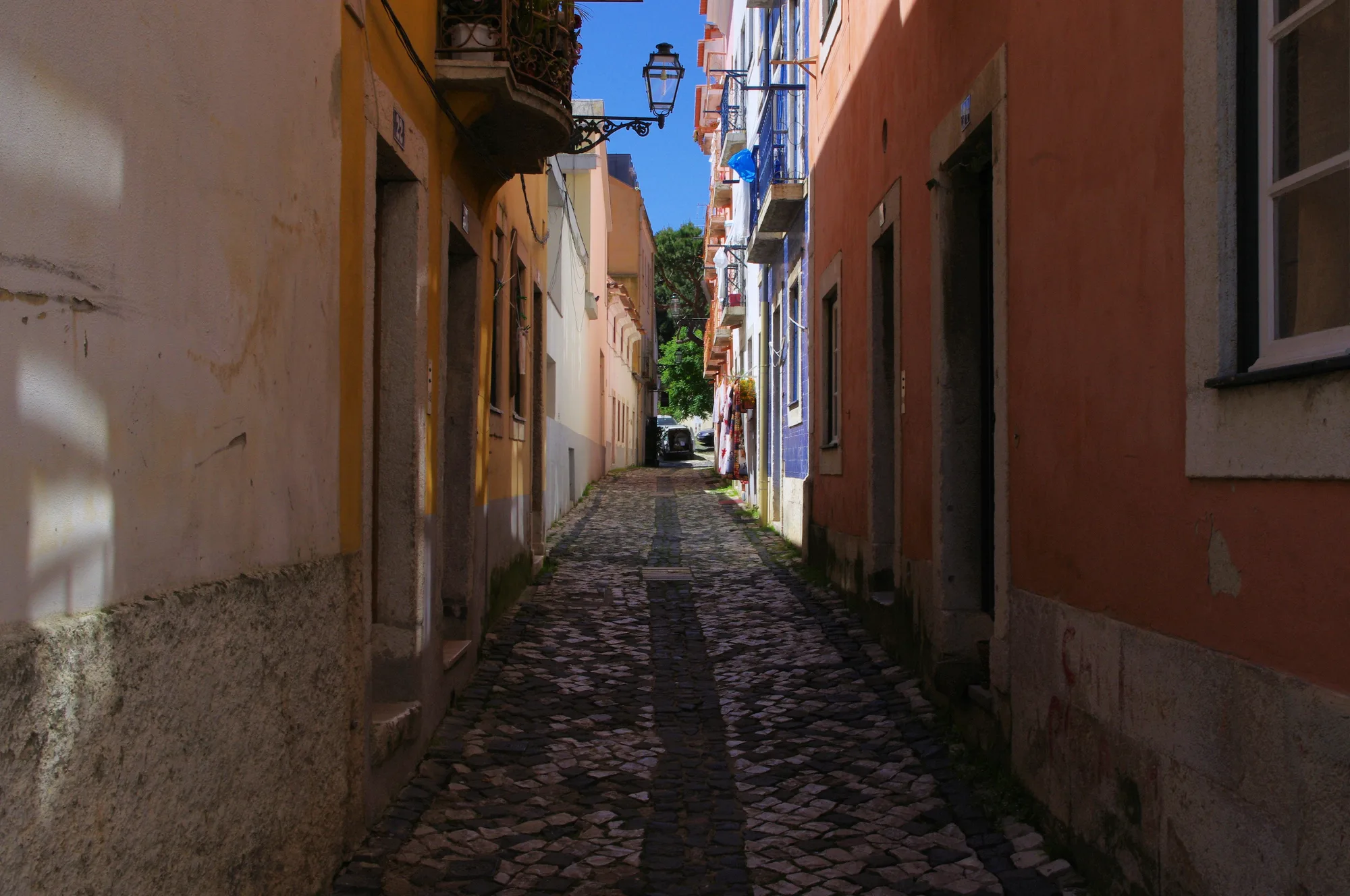
A route that works (up first, down later)
The best way to do the castle is to start uphill, then drift down through Alfama as the day softens. This keeps the climb purposeful and makes the rest of your day feel like discovery rather than effort.
If you want a perfect Lisbon night, end the day with one viewpoint and one intentional dinner — and save the rest for tomorrow.
- Start: castle hill (view + wander).
- Midday: Alfama lanes + small squares + a slow lunch.
- Late: viewpoint → dinner → (optional) fado night.
A little history (why a castle sits up here at all)
The hilltop has been fortified for a very long time. There were defences here under the Moors, and the site’s decisive moment came in 1147, when Afonso Henriques — Portugal’s first king — captured the castle from Moorish forces during the Reconquest, with the help of passing crusaders. For centuries afterward the citadel guarded the city and, for a time, housed the royal palace before the court moved down to the riverside Ribeira Palace.
The castle you walk today is largely a 20th-century restoration. Like much of Lisbon it suffered over the centuries, including damage from the 1755 earthquake, and what stands now is a careful reconstruction of the walls, towers and ramparts rather than a perfectly preserved medieval fortress. It’s named for Saint George (São Jorge), a dedication tied to Portugal’s old alliance with England.
Knowing this reframes the visit. You’re not just paying for a viewpoint — you’re standing on the spot where the city’s Christian-era story began, on the highest defensible ground above the Tagus. The ramparts, the archaeological traces, and the commanding position all make more sense once you know what they were for.
- Fortified under the Moors; taken by Afonso Henriques in 1147.
- Once held the royal palace before the court moved to the riverside.
- Today’s walls are largely a 20th-century restoration.
- Named for Saint George, tied to the old Anglo-Portuguese alliance.

What there is to do up there (beyond the view)
Most people come for the panorama, and it is the main event: a sweeping look over the Baixa grid, the river, the 25 de Abril bridge and the rooftops cascading downhill. But the grounds reward a slower visit. You can walk the ramparts and climb the towers for different angles, wander the shaded courtyards and gardens where peacocks roam, and explore the archaeological site with remains from the Moorish quarter and earlier periods. There’s also a small periscope-style camera obscura (the ‘Camera Obscura’ / Tower of Ulysses) that projects a live, moving view of the city — a quirky highlight when it’s running.
Give it more time than you’d expect from a ‘viewpoint’. An hour to ninety minutes lets you do the ramparts, the gardens and the archaeology without rushing. It’s also worth carrying water and wearing decent shoes — the ground is uneven cobbles and stone steps, and there’s little shade on the walls in midday sun.
If you’re short on time or budget, remember the view is the draw, and Lisbon has free miradouros with comparable panoramas. But the castle adds history, space to wander, and the ramparts experience that the free terraces can’t match — so it’s a fair trade for the entry fee if you have the hour to spare.
- Walk the ramparts and towers for the big panorama from several angles.
- Wander the gardens and courtyards (peacocks included) and the archaeological site.
- The camera obscura projects a live moving view of the city.
- Allow an hour or more; wear good shoes and bring water (little shade).
Viewpoints in LisbonFree miradouros if you only want the panorama. Instagrammable LisbonThe ramparts and rooftops are a photographer’s favourite.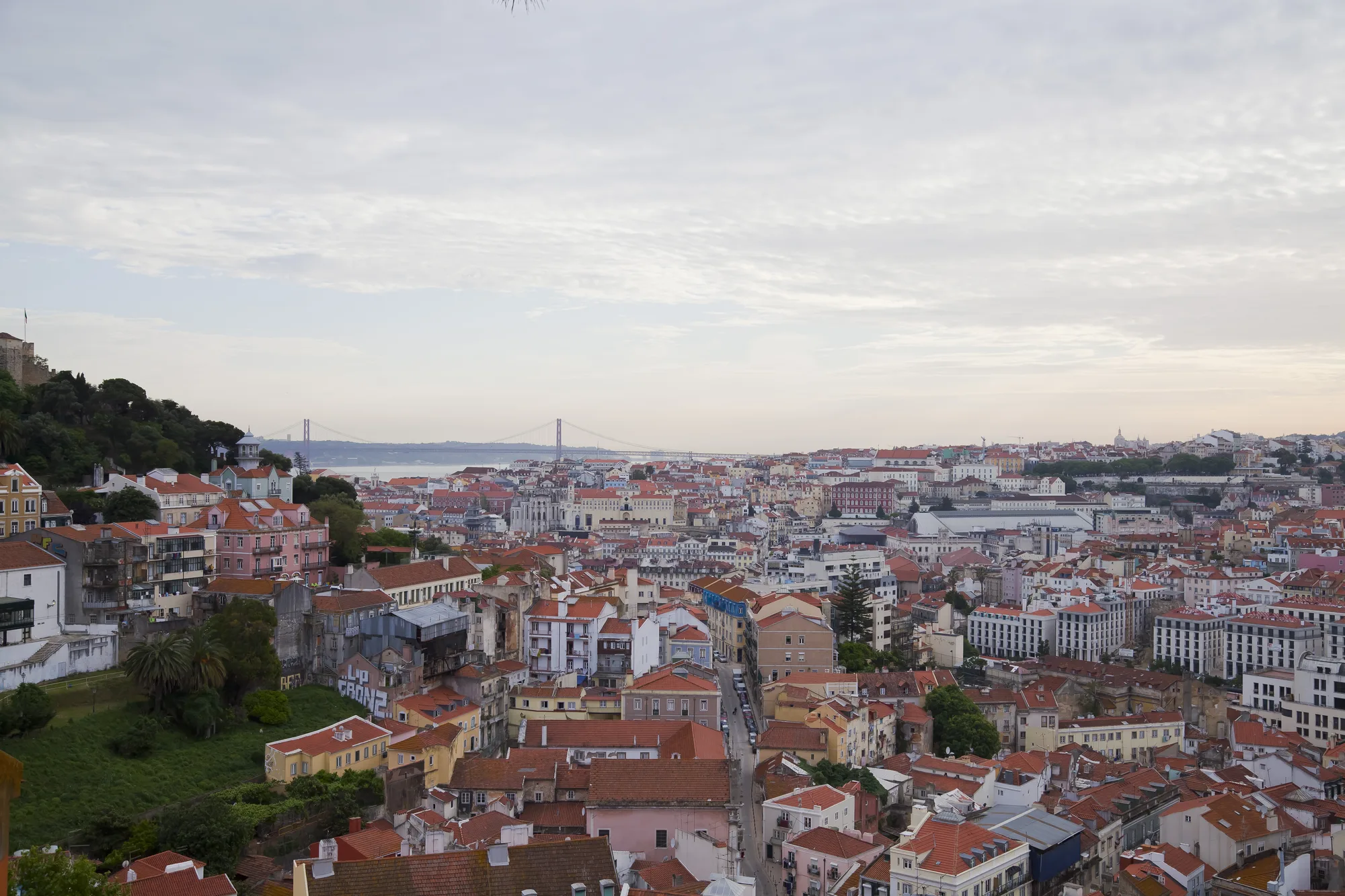
Getting up the hill (tickets and access)
The castle crowns one of Alfama’s highest points, so getting there is part of the planning. You can walk up through the old lanes — atmospheric but genuinely steep — or save your legs with help: Tram 28 climbs nearby, the small electric 12E loops the hill, and dedicated minibuses and tuk-tuks shuttle up the last stretch. There’s also a lift route through the city (via shops and connecting elevators from the Baixa side) that locals use to skip part of the climb.
The adult ticket is €17 (free with a valid Lisboa Card, and free for children under 12), and buying online in advance lets you skip part of the queue at the gate in peak season. The castle keeps long hours — open daily from around 09:00, closing at 21:00 in summer (1 March–31 October, last admission 20:30) and 18:00 in winter (1 November–end February); it closes only a handful of days a year (1 January, 1 May, and 24/25/31 December). Early morning is calmest and coolest; late afternoon gives the warmest light but the biggest crowds.
- Walk up the lanes (steep) or use Tram 28, the 12E, a minibus or tuk-tuk.
- Adult ticket €17 (free with the Lisboa Card); buy online ahead in peak season.
- Open daily from ~09:00; closes 21:00 (summer) / 18:00 (winter).
- Earliest = calmest and coolest; late afternoon = best light, most people.
Map: Castle hill + nearby classics
Use this map to keep your day coherent: castle first, then drift into Alfama and end somewhere beautiful.
Map pins
Map data © OpenStreetMap contributors · Tiles © OpenFreeMap


