Quick take
- The Sé is an easy ‘yes’ on an Alfama day: atmospheric, central, and on the natural route uphill.
- Visit early for a calmer feel — later it becomes a busy crossroads between downtown and old Lisbon.
- Pair it with a slow climb into Alfama lanes rather than rushing through as a checklist stop.
- If you’re heading to Castelo de São Jorge, the cathedral fits naturally on the way.
- It’s also a great orientation point: from here, you can go riverward, downtown, or straight into the hills.
- Treat it as a quiet pause in a very walk-heavy neighborhood.
Why the Sé is worth a stop (even briefly)
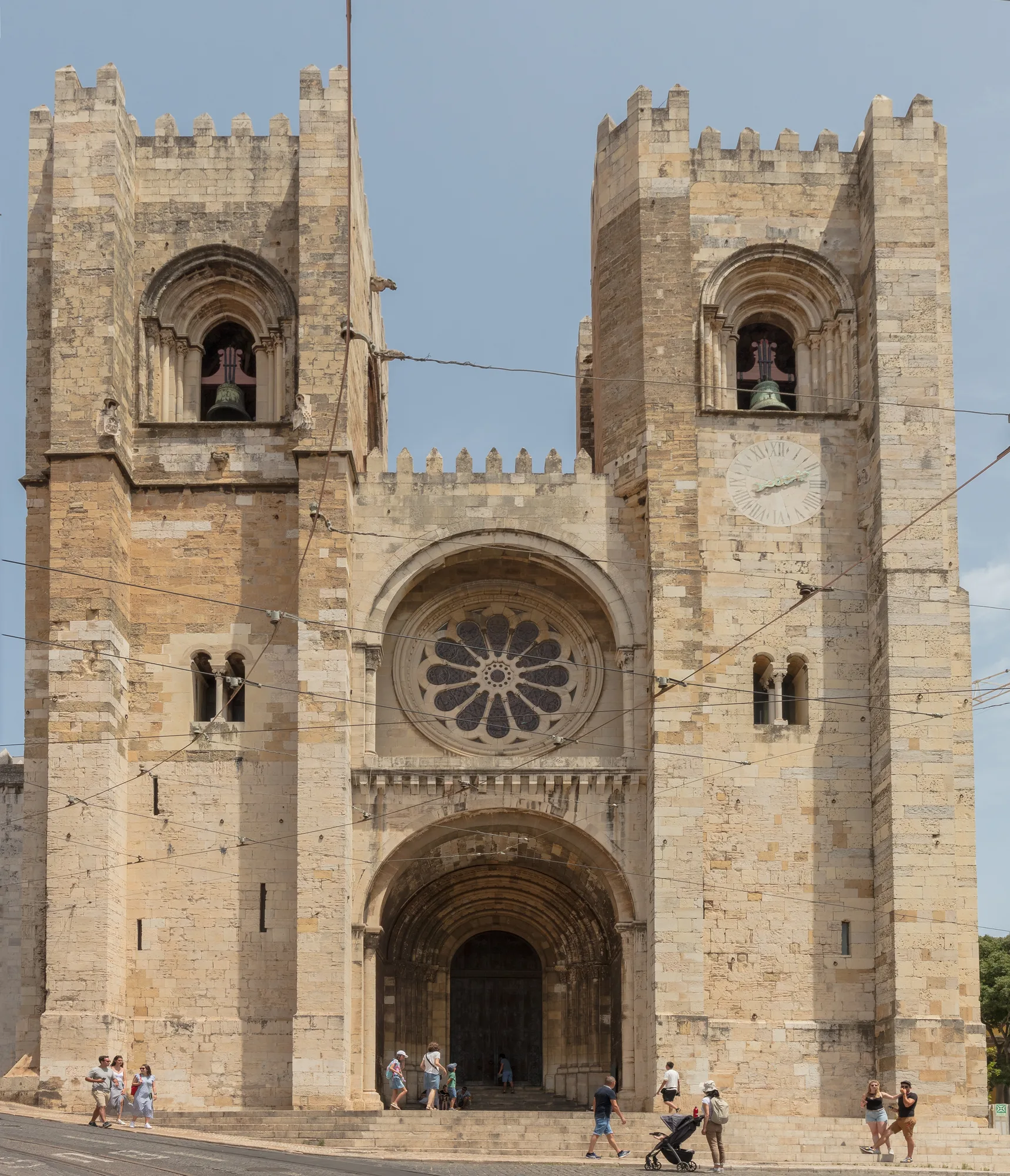
Lisbon Cathedral — the Sé — is one of those places that doesn’t need a huge plan. It’s valuable because it’s right in the city’s historic flow: the meeting point between downtown ease and Alfama’s old-lane climb.
If you’re building an Alfama day, the cathedral works as a perfect ‘threshold moment’: you step in, slow down, then step back out and start your hill wander with a calmer mood.
- Best for: a quiet pause + atmosphere on your way into Alfama.
- Pairs well with: castle hill + viewpoints + a slow dinner afterward.
 Alfama guideA route-first plan for wandering the oldest lanes without burnout.
 Castelo de São JorgeHow to time the classic castle viewpoint (and avoid the worst crowds).
Sources
- Sé de Lisboa (official site) ↗
Official cathedral information and visitor details.
- Visit Lisboa: Lisbon Cathedral (Sé) ↗
Visitor overview and practical context.
A gentle Alfama route (that doesn’t feel like work)
From the Sé, build your day as a slow climb: take a few lanes, pause for a view, then drift down later toward dinner. The goal is not to ‘cover’ Alfama — it’s to enjoy it.
If you want the postcard moment, aim for Portas do Sol. If you want a broader panorama, climb higher toward Senhora do Monte (or choose sunset there on another day).
- Start: Sé (quiet pause) → Alfama lanes.
- Midday: one viewpoint stop + a café or small lunch.
- Finish: sunset plan → simple dinner → (optional) fado night.
Viewpoints guideWhich miradouro fits your route and mood (and when to go). Walking routesA few routes that naturally fit the Sé + Alfama flow.Fado in LisbonHow to plan a night that feels intimate, not touristy.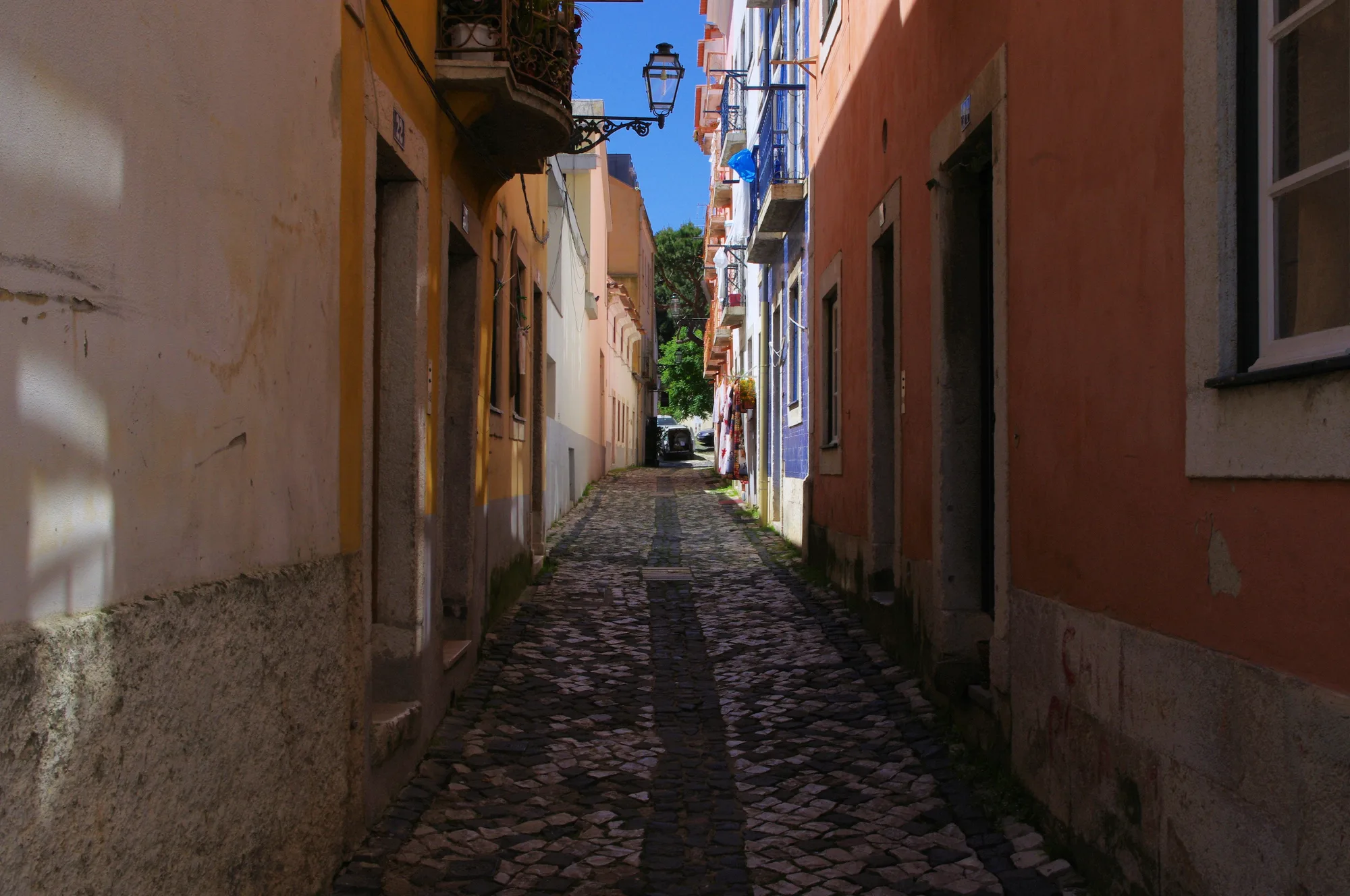
Why the Sé matters (Lisbon’s oldest church)
The Sé de Lisboa is the city’s cathedral and its oldest church, founded in 1147 — the year Lisbon was taken from Moorish rule during the Reconquest. Tradition holds it was built on the site of a former mosque, which is fitting: the building sits at the meeting point of the city’s layered history, just as the neighbourhood around it does. Its fortress-like twin towers and crenellated front give it a stout, defensive look, a reminder of the unsettled century in which it went up.
Over nearly nine centuries it has been rebuilt and reshaped many times — partly because earthquakes, including the great quake of 1755, repeatedly damaged it. The result is an architectural patchwork: a Romanesque core, Gothic additions, and later restorations layered together. That mixed character is part of its appeal; you’re looking at the physical record of Lisbon surviving and rebuilding, over and over.
You don’t need to be religious or an architecture expert to appreciate it. Even a short stop gives you a tangible link to the founding of the modern city, and it anchors the whole Alfama hill in a single, easy-to-grasp story.
- Lisbon’s oldest church, founded in 1147 after the city was retaken.
- Built on the site of a former mosque, in fortress-like Romanesque style.
- Damaged and rebuilt over centuries (including after the 1755 earthquake).
- A patchwork of Romanesque, Gothic and later restoration work.
What to look for inside (and the paid extras)
Entry to the main body of the cathedral is generally free, and for many visitors a quiet look around the dim, stony interior — the rose window, the chapels, the heavy Romanesque nave — is enough. There are also paid sections worth knowing about if you have the time and interest: the cloister, which includes an ongoing archaeological dig that has uncovered Roman, Moorish and medieval remains beneath the church, and a small treasury with religious art and artefacts.
The archaeological cloister is the most unexpected highlight — it lets you peer down through the literal layers of Lisbon’s past, from a Roman street to later structures, all in one excavation. It neatly reinforces what the building itself tells you: that this spot has been continuously important for two thousand years. If you only do one paid extra, this is the one many visitors find most rewarding.
As with all sights here, opening hours and ticket prices for the cloister and treasury can change and may differ from the free main church, so check the official information before you build a tight plan around them.
- Main church: generally free to enter — a short, atmospheric look.
- Paid extras: the cloister (with an archaeological dig) and a small treasury.
- The cloister excavation reveals Roman, Moorish and medieval layers.
- Cloister and treasury hours and prices are worth confirming before you go.
 Museums in LisbonMore of the city’s history if the cloister whets your appetite.Free things to doThe main church is one of central Lisbon’s free stops.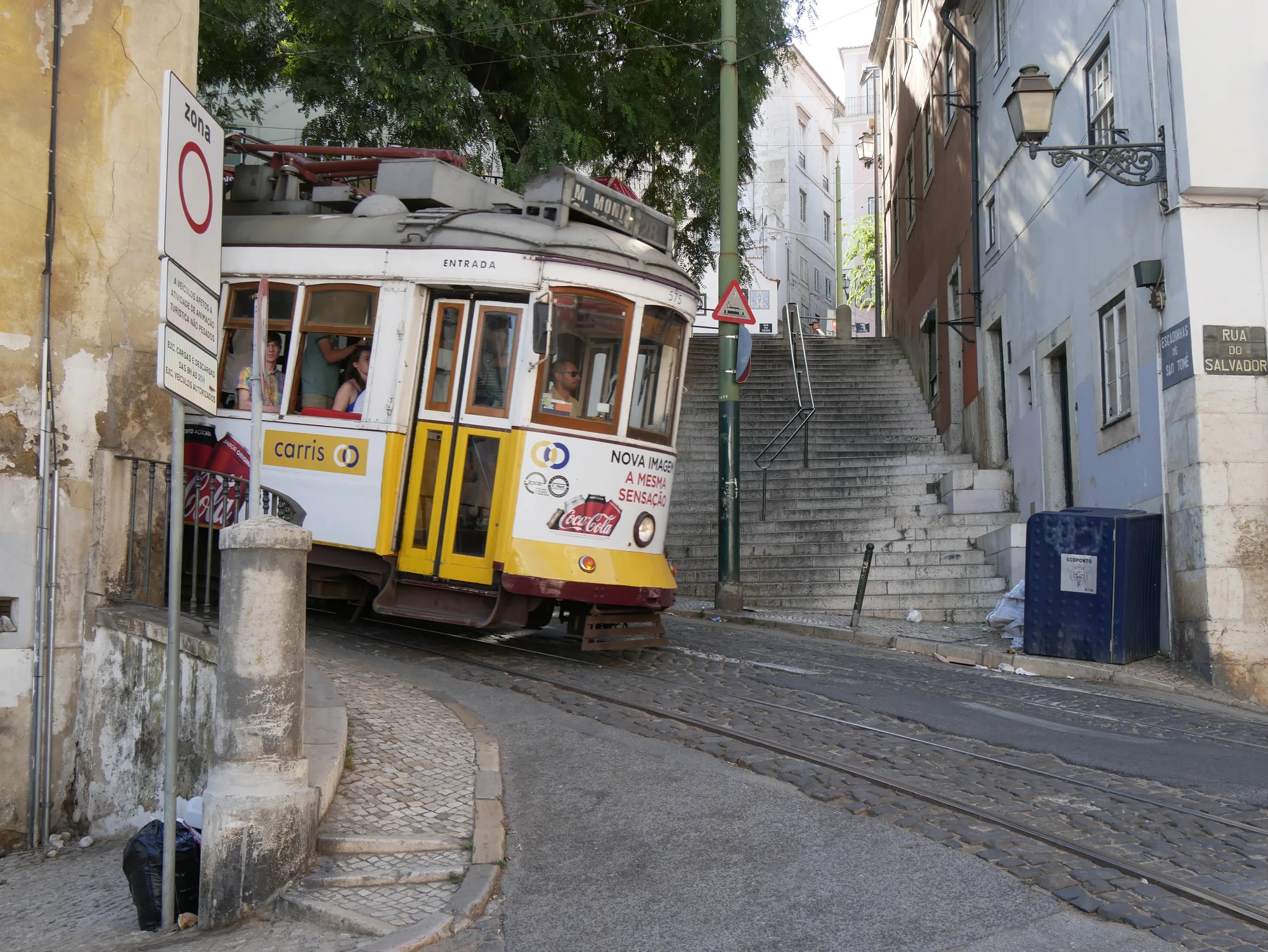
Getting there, timing, and the Tram 28 moment
The Sé sits on the lower edge of Alfama, an easy walk from Praça do Comércio and the Baixa grid — slightly uphill, but nothing like the climbs deeper in the old quarter. It’s also one of the great Tram 28 photo spots: the yellow historic tram squeezes right past the cathedral’s façade, and the combination of tram, church and narrow street is one of the most photographed scenes in Lisbon. If you ride the 28, this is a stretch to watch for (and to keep your bag close, as the tram is a known pickpocket spot).
For a calmer visit, come earlier in the day; by midday this becomes a busy crossroads between downtown and the hill, with tour groups and trams converging. As a working church it can also close to visitors during services, and hours vary, so a quick check beforehand saves a wasted detour. Modest dress is appreciated inside, as at any active place of worship.
Slot it into your route rather than making a special trip: it’s the natural ‘threshold’ between the flat centre and the climb into Alfama, so pass through on your way up to the castle and viewpoints and let it set the tone for the old-Lisbon part of your day.
- Easy walk from Praça do Comércio; the gateway between Baixa and Alfama.
- A classic Tram 28 photo spot — watch your bag here.
- Go earlier for calm; it can close during services — check hours.
- Dress modestly inside, as in any active church.

Map: Sé + castle hill essentials
These pins give you a simple ‘uphill logic’ map for an Alfama day: start at the Sé, climb to the castle, then choose a viewpoint and drift down later.
Map pins
Map data © OpenStreetMap contributors · Tiles © OpenFreeMap


