
Quick take
- Mouraria is one of Lisbon’s most layered historic areas, close to the center but distinct in vibe.
- Best for: street texture, everyday energy, and wandering without a checklist.
- Pair it with nearby old neighborhoods for a coherent walking day.
- Go in the morning for calm streets and better photo light.
- Food and small local spots are part of the experience here.
- Keep your awareness in crowds — central areas can be pickpocket-friendly.
Mouraria in one sentence
Mouraria is close to Lisbon’s core but feels different: more everyday, more layered, and more about street-level discovery than headline monuments.
It’s a great neighborhood to add when you want Lisbon to feel lived-in rather than toured.

How to explore (without getting lost-tired)
Treat Mouraria as a wandering hour: choose a direction, walk slowly, and stop when something catches your eye. This is a neighborhood where the point is texture — not volume.
Pair it with a café break and a viewpoint later so the day still has a clear payoff.
- Best timing: morning or late afternoon for softer light.
- Best pacing: one neighborhood hour, then a reset (café/park) and a viewpoint.
 CafésTurn wandering into a rhythm: walk → pause → walk.
 ViewpointsChoose one miradouro as your end-of-walk payoff.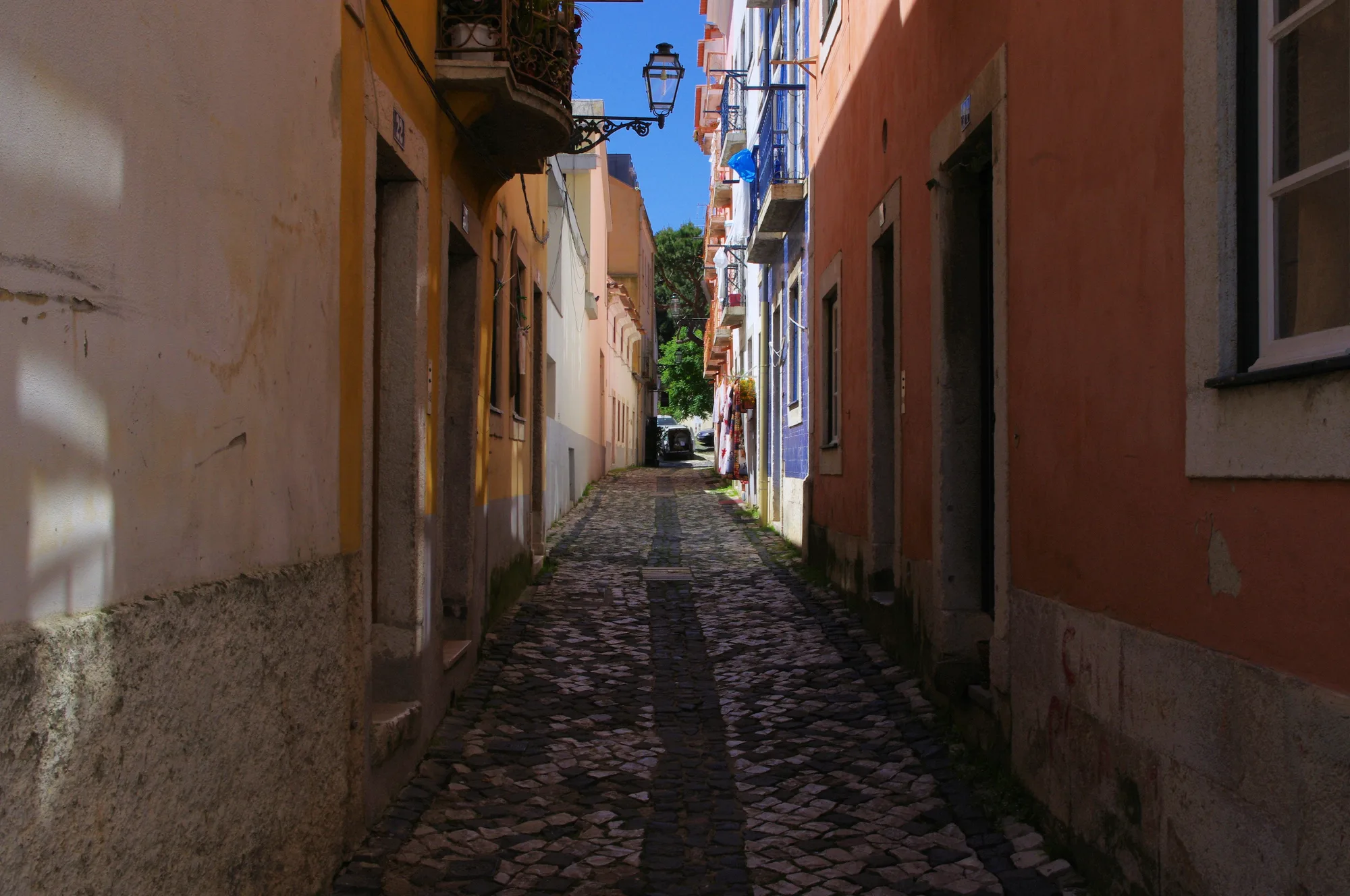
Where it fits in your Lisbon trip
Mouraria works best on a day when you’re already staying central and want to add a neighborhood that feels less ‘tour route.’ It also pairs nicely with nearby old areas for a coherent historic-streets day.


What Mouraria is — and why it matters
Mouraria sits on the slope between Martim Moniz and the Castelo de São Jorge, wedged between Baixa, Alfama, and Graça. Its name recalls the Moorish quarter established here after the Christian reconquest of Lisbon in the 12th century — making it one of the city’s oldest continuously inhabited areas. Like Alfama, much of it survived the 1755 earthquake, so the lanes still climb and twist the medieval way.
Today Mouraria is one of Lisbon’s most diverse, multicultural neighbourhoods, layered with shops, small eateries, and communities from around the world alongside long-standing Portuguese families. That mix is exactly its appeal: it feels less like a stage set for tourism and more like a real, working part of the city.
It’s also a cradle of fado. Maria Severa, the legendary 19th-century fadista, is associated with Mouraria, and the neighbourhood remains central to the story of Lisbon’s UNESCO-listed song, born in these and Alfama’s old streets.
- One of Lisbon’s oldest quarters — a former Moorish district after the 1147 reconquest.
- Today among the city’s most multicultural, lived-in neighbourhoods.
- A historic cradle of fado, alongside neighbouring Alfama.

How to reach Mouraria and walk it
Mouraria is genuinely central, which makes it easy to fold into a day. The simplest gateway is Martim Moniz square (on the green metro line), from which the neighbourhood rises toward the castle. Tram 28 also rattles past its edges, and you can walk in directly from Baixa or down from Graça.
Walk it uphill-first if your legs are fresh, or — kinder — start high near the castle or Graça and let gravity carry you down through Mouraria’s lanes toward Martim Moniz. Either way, this is a wandering neighbourhood rather than a checklist: follow the staircases, the tiled façades, and the street art, and stop when something catches your eye.
As anywhere central and crowded in Lisbon, keep valuables secure, especially around Martim Moniz and on Tram 28. Mornings and late afternoons give the softest light and the calmest streets.
- Gateway: Martim Moniz (green metro line); Tram 28 skirts the edges.
- Best done downhill from the castle/Graça toward Martim Moniz.
- A wander, not a checklist — staircases, tiles, and street art.
 Intendente & AnjosThe revitalised area just north — an easy pairing with Mouraria.Street artMouraria and its surrounds are rich in murals and tiles.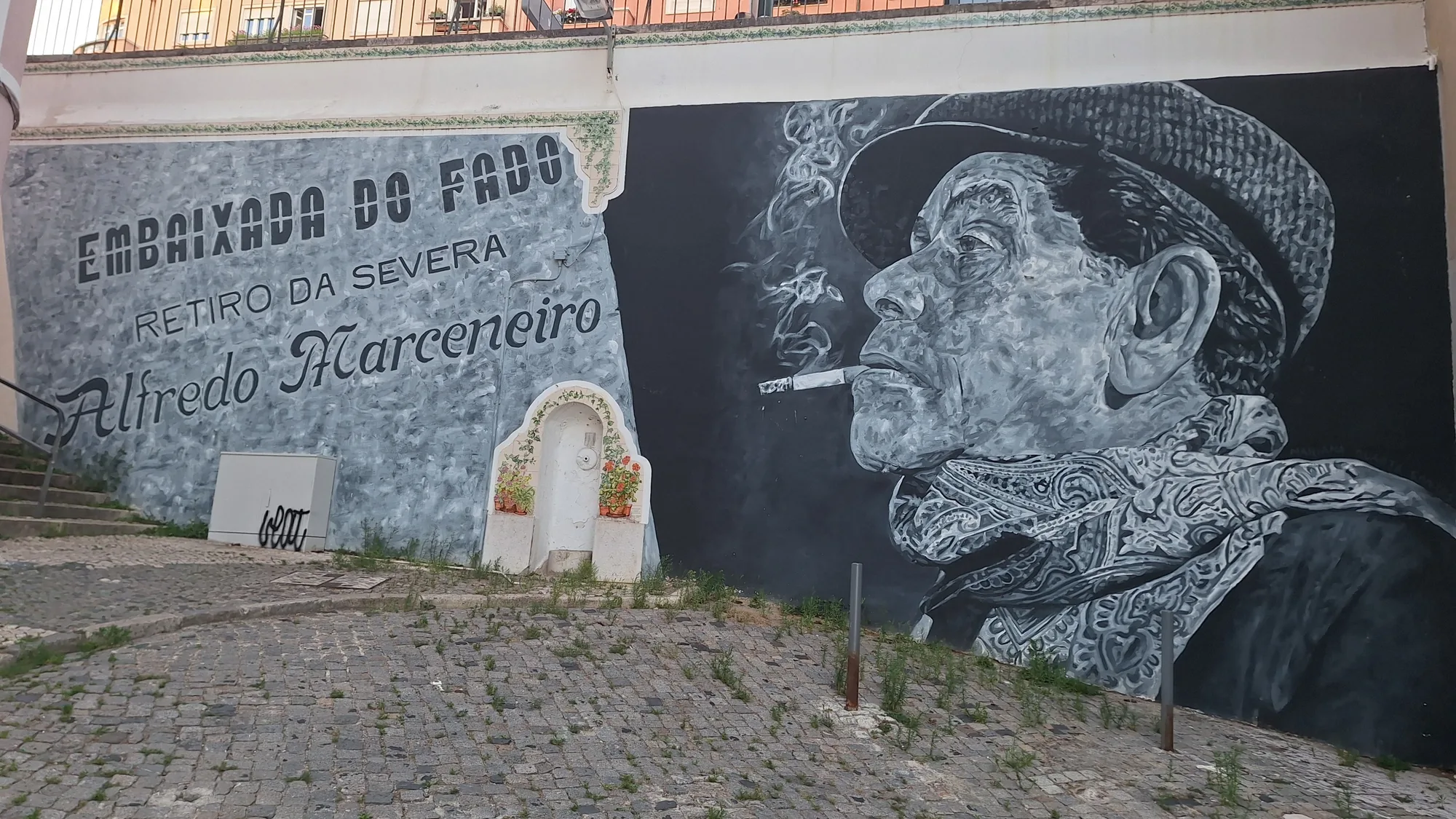
Eating in Mouraria (the real, local thing)
Food is one of the best reasons to spend time in Mouraria. Because it’s so multicultural, you’ll find everything from traditional Portuguese tascas to South Asian, African, and Chinese kitchens, often side by side and usually far better value than the tourist strips nearby. It’s a great place to eat cheaply and well.
For the classic experience, look for a small tasca doing daily plates and grilled fish, or graze on petiscos with a glass of wine. The Martim Moniz area is known for its diverse, affordable food scene. Wherever you eat, the rule is the same as across Lisbon — busy with locals is a better sign than a menu in five languages.
- A genuinely multicultural food scene — Portuguese tascas plus global kitchens.
- Strong value compared with the central tourist strips.
- Look for small, local-busy spots; graze on petiscos.
- Lunch is the easy entry point — full of options and gentler on the budget than dinner.
Best time to visit, and who Mouraria suits
Mouraria is at its most pleasant in the morning, when the light is soft, the lanes are quiet, and the day’s commerce is just waking up — ideal for a slow wander and photos. Late afternoon is good too, with golden light on the tiled façades and the dinner scene beginning to stir. The neighbourhood is lived-in rather than touristy, so it doesn’t empty out the way pure-sightseeing areas do; there’s always real life going on.
It suits curious, independent travellers who want Lisbon beyond the postcards: people who like street texture, multicultural food, and the feeling of walking through a working neighbourhood rather than a stage set. It pairs naturally with Alfama and Graça for a half-day of old-Lisbon hills, or with the revitalised Intendente and Anjos streets just to the north.
It’s less of a fit for travellers who only want headline monuments and curated, polished streets — Mouraria is rougher around the edges, and that’s precisely its character. As anywhere central, stay aware in crowds and around the busier squares, and you’ll be fine. The reward for a little open-mindedness is one of the most honest neighbourhood experiences in the city — a place where Lisbon’s history, its present-day diversity, and its everyday life all visibly overlap on the same steep street.
- Best light and calm: morning; lively golden hour in late afternoon.
- Great for: independent travellers who want real, multicultural Lisbon.
- Pair with Alfama, Graça, or Intendente/Anjos for a fuller old-Lisbon day.
- Less ideal for: travellers who only want polished, monument-focused streets.
- Genuinely central — easy to fold into a day starting from Baixa or Martim Moniz.


