Quick take
- Lisbon’s street art is best explored by neighborhood, not by chasing one mural.
- Graça, Bairro Alto edges, and the east-side warehouse districts are great starting points.
- Pair street art with a viewpoint — it’s the perfect high/low Lisbon day.
- Treat murals like you’d treat galleries: enjoy, photograph, and move respectfully.
- If it rains, focus on cafés + shorter loops rather than forcing a long walk.
- Street art days are ideal on a ‘medium energy’ day — not the first or last day.
Lisbon street art, explained simply
Street art in Lisbon feels like it belongs to the city’s texture: paint on old walls, bold color on staircases, and unexpected pieces around corners you’d never plan to visit.
The easiest way to enjoy it is to pick one neighborhood for exploring, then let the art appear as part of your walk — not as a checklist. The art tends to find you when you slow down and look around.

Best areas for street art (choose one)
Different parts of Lisbon deliver different styles. Some areas are dense and walkable; others are more ‘wander and see what happens’ — especially the warehouse districts.
- Graça + surrounding hills: street art + viewpoints + old-Lisbon atmosphere.
- Bairro Alto / Chiado edges: central, easy to pair with cafés and shops.
- Alcântara / LX Factory: creative industrial vibe with browsing and food options nearby.
- Beato + Marvila: warehouse energy, tastings, and contemporary Lisbon textures.
 Graça guideA viewpoint-first neighborhood that’s perfect for street art wandering.
 LX Factory guideA creative cluster that pairs naturally with street art exploration.
A simple self-guided street art day
Here’s the simplest format: one neighborhood loop, one café stop, one viewpoint, then dinner. That’s enough to feel like you ‘did’ street art without turning it into a mission.
- Morning: pick Graça or Bairro Alto edges for a walkable loop.
- Afternoon: shift to LX Factory or Beato/Marvila if you want the warehouse vibe.
- Golden hour: finish at a miradouro you haven’t seen yet.

Street art etiquette (quick, important)
Lisbon’s street art often lives on residential streets. Enjoy it the way you’d want travelers to enjoy your home neighborhood: with appreciation and a little care.
- Keep voices low in quiet lanes, especially early and late.
- Don’t climb walls, step into private doorways, or block sidewalks for long.
- Photograph respectfully and move on — the best loop stays light.

Why Lisbon became a street-art city
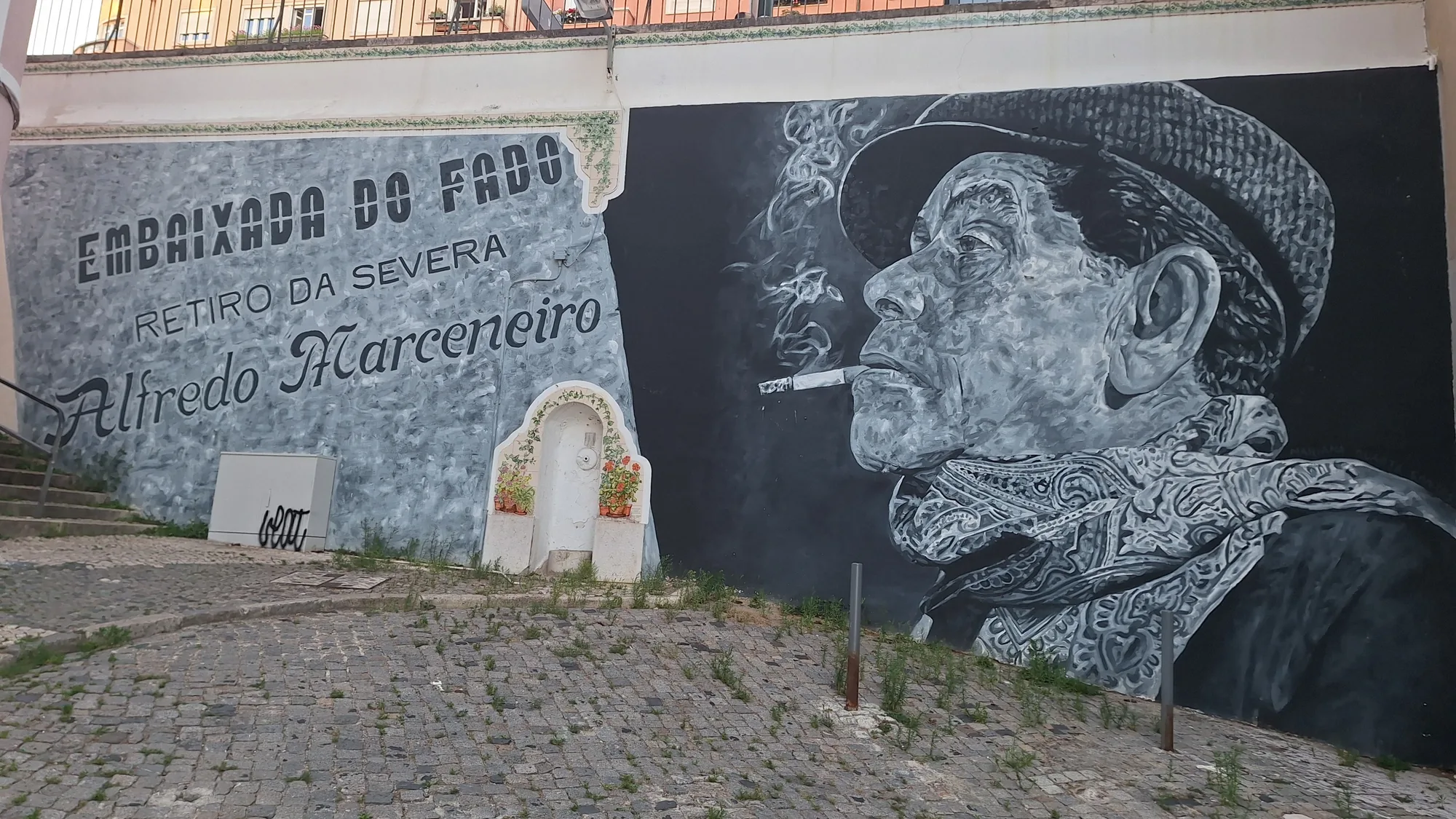
Lisbon’s reputation for street art isn’t accidental. The city has taken an unusually open, partly official approach: a municipal urban-art programme has commissioned and sanctioned large works, turning blank walls, abandoned buildings and even hoardings into a kind of open-air gallery. That has drawn both Portuguese artists and big international names, and it’s why you’ll find genuinely large, ambitious murals here rather than only tags and stickers.
The result is a scene with real range — from politically pointed pieces to playful, monumental animals and portraits — spread across the city rather than concentrated in one ‘arts district’. Some works are permanent commissions; many are temporary by nature and get painted over, which is part of the form. That impermanence is worth keeping in mind: a specific mural you’ve seen photographed may no longer be there, so treat the neighbourhood, not the single image, as the destination. It also means the scene stays alive and renewing rather than frozen, which is exactly why returning visitors find new things on streets they thought they knew, and why a guided tour by someone tracking the latest works can be worth it.
- A municipal urban-art programme has commissioned and legalised major works.
- Both Portuguese and international artists have left large-scale pieces.
- Much street art is temporary by design — murals change and disappear.
Free things to doA street-art walk is one of the city’s best no-cost days. Hidden gemsThe discovery-first mindset that suits street art.
How to find it (and a few honest practicalities)
Because the scene shifts, the best tools are current ones. There are dedicated street-art walking tours run by people who know which works are up this month, and online maps and the municipal programme’s own listings can point you toward the larger commissioned pieces. If you’d rather go it alone, simply pick a neighbourhood with a strong reputation and walk it with your eyes up — the art reveals itself.
A few practical notes keep the day pleasant. Many murals sit on residential streets and in working districts, so enjoy them the way you’d want visitors to treat your own neighbourhood: keep noise down, don’t block doorways or pavements for photos, and don’t climb on anything. Street art days work best on a medium-energy day with good weather, since they’re mostly walking and outdoors; if rain sets in, shorten the loop and lean on cafés. And remember the eastern warehouse districts involve more walking between pieces, so pace accordingly.
- Use up-to-date sources: specialist walking tours, online maps, official listings.
- Or just walk a strong-reputation neighbourhood with your eyes up.
- Be a good guest: keep quiet on residential streets, don’t block doorways or climb.
- Best on a dry, medium-energy day; the eastern districts mean more walking.
What you’ll see (the range of the scene)
Lisbon’s street art isn’t one style. At the monumental end are huge, sanctioned murals — sometimes covering entire gable walls of apartment blocks — by well-known Portuguese and international artists, the kind of pieces that anchor a photo and define a corner. Among the most recognisable local approaches is work that recycles materials into large-scale animals and figures, but you’ll also find photorealist portraits, bold political statements, and playful, surreal pieces. Lisbon’s vertical city helps: a mural on a tall blank wall can be seen from a viewpoint or a hill across the valley.
Then there’s the everyday layer — stencils, paste-ups, stickers and tags that fill the smaller surfaces of the bohemian and creative quarters. This is the more ephemeral, ground-level art that changes constantly and rewards simply walking with your eyes open. Part of the pleasure is that the two coexist: a commissioned giant on one wall, a witty little stencil around the corner. Because so much of it is temporary, the best mindset is to enjoy what’s there now rather than hunting for a specific piece you saw online, which may already be painted over.
- Monumental sanctioned murals on whole gable walls, by big-name artists.
- A recognisable local strand of recycled-material animals and figures.
- An everyday layer of stencils, paste-ups and stickers in the creative quarters.
- Much is temporary — enjoy what’s up now rather than chasing one image.
Where it is
LX Factory
A creative Alcântara complex for browsing, street art, cafés, and a modern-Lisbon afternoon vibe.
Map pins
Map data © OpenStreetMap contributors · Tiles © OpenFreeMap


