Quick take
- One of Lisbon’s best ‘reset afternoons’: green, calm, and easy on your legs.
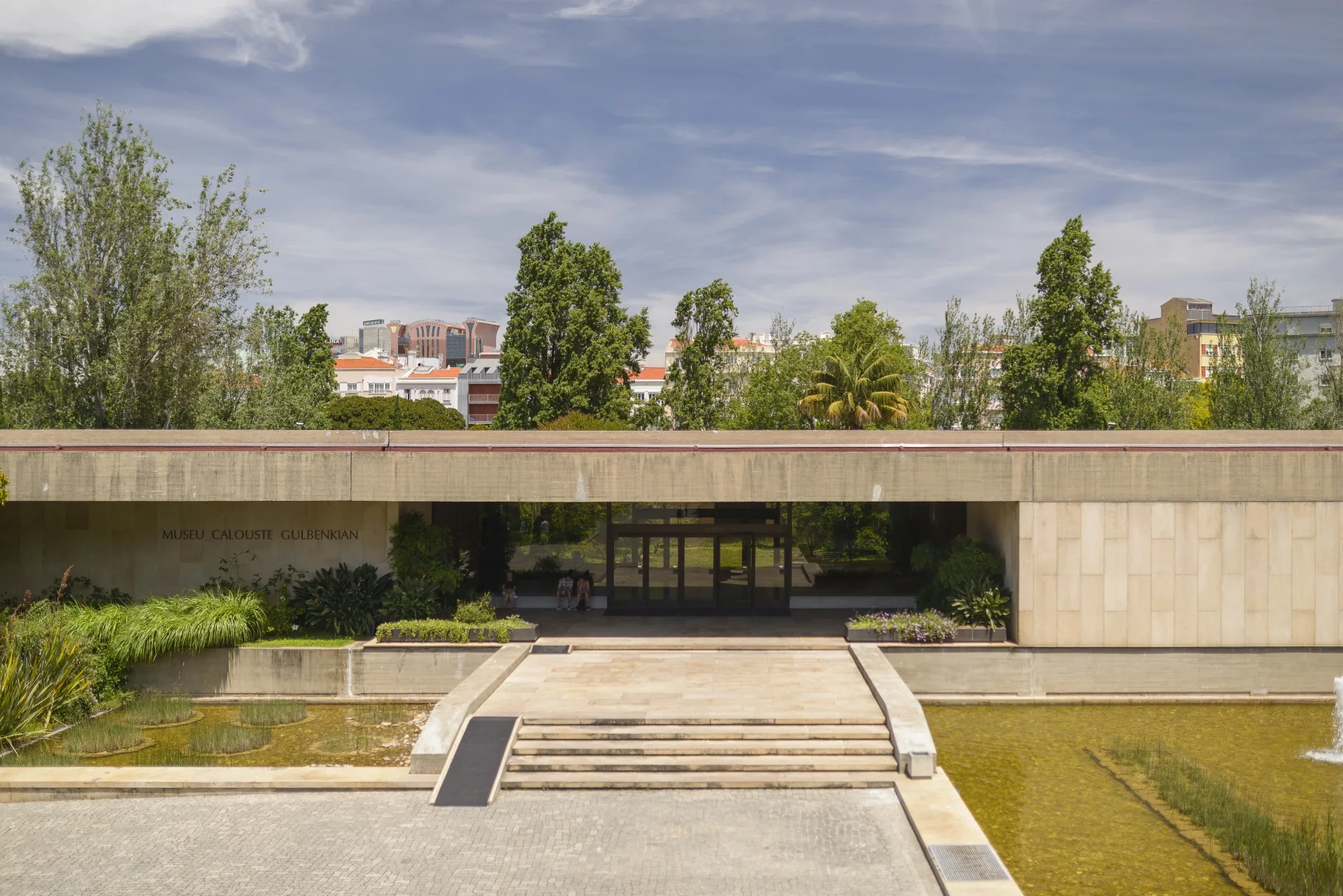
- The Gulbenkian Museum’s Founder’s Collection is closed for renovation (reopening expected in 2026 — confirm on the official site) — but the gardens and CAM are still a great plan.
- Perfect on hot days: shade, water, benches, and a slower pace.
- A strong rainy-day backup too (modern art + café time).
- Great for couples who want a calmer, more local-feeling day.
- Pair it with a gentle dinner nearby instead of a cross-city commute.
2026 note: the Gulbenkian Museum is closed (but this is still worth it)
If you were planning the Gulbenkian Museum as your big ‘collection’ stop, here’s the key update: the Founder’s Collection building is closed for a major renovation, with reopening expected in 2026 (confirm the latest on the official site). That’s disappointing — but it doesn’t cancel the Gulbenkian area as a Lisbon plan.
The gardens are one of the city’s best places to slow down, and CAM (Centro de Arte Moderna) gives you a modern-art anchor without turning the day into a stressful museum sprint. Together they make a complete, satisfying afternoon — culture plus calm — even with the headline collection temporarily out of reach.
- Best for: a calm cultural block + a green break from the city’s hills.
- Great on: hot days, low-energy days, or ‘we need a reset’ afternoons.
 Museums in LisbonA shortlist approach — especially helpful during renovation seasons.
 Best time to visitHow to plan museum time vs walking time depending on season.
Sources
- Gulbenkian Museum (official) ↗
Official Gulbenkian Museum site — visiting info and renovation/reopening updates.
The perfect plan: gardens + CAM + a long café pause
Treat the Gulbenkian area like a micro-itinerary: one modern-art anchor, then time outside, then a long café pause. That’s the Lisbon rhythm — and it works especially well when you don’t want another steep neighborhood day.
If you’re traveling as a couple, this is one of the easiest ways to create a romantic, relaxed afternoon without needing reservations or perfect timing.
The pacing is forgiving, too. CAM is compact enough that you won’t feel rushed or exhausted, the garden lets you set your own length, and there’s no queue-management stress the way there is at the headline monuments. It’s the rare Lisbon plan you can do on low energy and still come away feeling like you saw something — which is exactly why it makes such a good mid-trip reset.
- Start: CAM (modern art) for a focused culture block.
- Middle: Gulbenkian gardens walk — slow, shaded, bench-friendly.
- Finish: café pause → early dinner nearby.
Avenidas Novas guideThe wider area vibe: elegant, practical, and calmer than the old hills. Walking routesIf you want to add a gentle loop afterward (without hills).
Sources
- CAM Gulbenkian (official) ↗
Official page for the Centro de Arte Moderna Gulbenkian.
- Gulbenkian Gardens (official) ↗
Official visitor page for the gardens.

Map: Gulbenkian area (easy, central, calm)
Use this pin as your anchor — the Gulbenkian area is simple to reach and easy to build into a longer trip.
Map pins
Map data © OpenStreetMap contributors · Tiles © OpenFreeMap
What the Gulbenkian is (a quick orientation)
The Calouste Gulbenkian Foundation is one of Lisbon’s great cultural institutions, founded on the legacy of the Armenian oil magnate and collector Calouste Sarkis Gulbenkian, who spent his final years in Lisbon and left his extraordinary art collection and his fortune to a foundation in the city. The result is a campus in the Avenidas Novas district that combines a museum, a modern-art centre, an auditorium, and one of the loveliest gardens in central Lisbon.
The two halves to know are the Founder’s Collection — Gulbenkian’s personal trove, spanning ancient Egyptian, Greek, and Islamic art through to European painting and a famous room of Lalique jewellery — and CAM, the Centro de Arte Moderna, which focuses on modern and contemporary Portuguese and international art. Between and around them spreads the garden, a designed landscape of ponds, lawns, and shaded paths that is free to enter and a destination in its own right.
- A foundation built on the legacy and collection of Calouste Gulbenkian.
- Founder’s Collection: ancient to European art, plus a famous Lalique jewellery room.
- CAM: the modern-art centre (Centro de Arte Moderna).
- The garden: a designed landscape with ponds and shade — free to enter.
Museums in LisbonWhere the Gulbenkian fits in the wider museum picture.Avenidas Novas guideThe calm, well-connected district around the foundation.Sources
- Gulbenkian Museum (official) ↗
Official site — collections, CAM, gardens, and renovation/reopening updates.
Why the garden is the real star (especially in 2026)
Even when the headline collection is fully open, the garden is the reason many locals come. It was conceived as an integral part of the campus, not an afterthought — a modernist landscape of water, native and ornamental planting, and quiet corners where the city’s noise simply drops away. On a hot day it’s a shaded refuge; on a grey day it’s an atmospheric stroll; for couples it’s one of the most reliable romantic plans in the city.
With the Founder’s Collection closed for renovation (reopening expected in 2026 — confirm on the official site), the garden plus CAM becomes the smart way to enjoy the campus in the meantime. You still get a genuine culture-and-nature afternoon: a focused look at modern art, then time outside, then a long café pause. It’s a low-stress, low-stairs plan that suits exactly the days when the old hills feel like too much.
- The garden is a designed modernist landscape — a destination, not a margin.
- Great on hot days (shade), grey days (atmosphere), and for couples (romance).
- While the Founder’s Collection is closed (reopening expected 2026 — verify), garden + CAM is the move.
- A low-stairs, low-stress alternative to a hill day.

How to get there and time your visit
The foundation sits in Avenidas Novas, well served by the metro (the São Sebastião and Praça de Espanha stations are both close), which makes it an easy add to almost any day without a hill climb. Because it’s slightly north of the main tourist core, it tends to feel calmer than the old-town sights — part of its appeal.
For timing, treat it as a mid-day or early-afternoon anchor: do a focused CAM visit, then let the garden and a café stretch the rest of the afternoon. Check the official site before you go for opening days (museums here can close a weekday), any temporary exhibition tickets, and the current state of the renovation, since these details shift. Then pair it with a relaxed dinner nearby rather than a long commute back across the city.
- Metro: São Sebastião or Praça de Espanha — easy and hill-free.
- Best as a mid-day/early-afternoon anchor: CAM, then garden, then café.
- Opening days, exhibition tickets, and renovation status are worth a quick check before you go.
- Pair with a nearby dinner instead of a cross-city return.


