Quick take
- Jerónimos is Lisbon’s most iconic landmark in Belém — a must for first-timers who love architecture.
- It’s part of a UNESCO World Heritage listing (with Belém Tower) — inscribed in 1983 as one site.
- Cloister: €18 adult (church is free); closed Mondays; combined Belém Tower ticket available.
- Go early if you want to visit the interior without queue burnout.
- Pair it with a riverside walk and one other Belém icon (tower or Padrão) instead of stacking everything.
- Treat Belém as a flatter, calmer day — it’s your legs’ recovery plan.
- Finish with a pastry ritual and a slow riverfront stroll.
Why Jerónimos feels so ‘Lisbon’
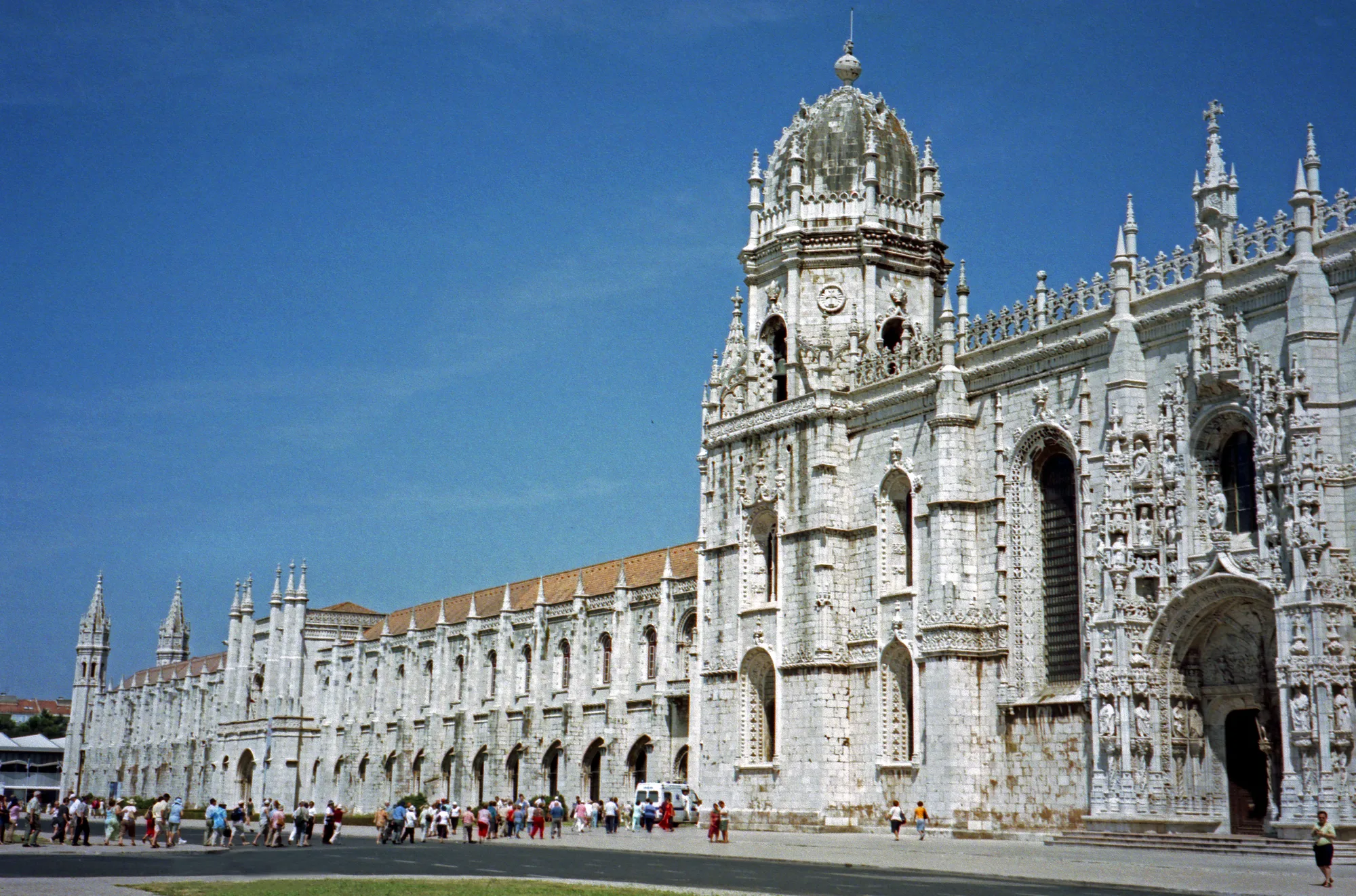
Jerónimos Monastery is the kind of place that stops you mid-walk: carved stone, dramatic scale, and the sense that Lisbon’s river story became architecture. It sits in Belém, the riverside district where Portugal’s maritime era is written into monuments.
If you want one big architectural landmark on your trip, this is a strong choice. And because Belém is flatter than most of Lisbon, the visit feels more like a pleasant day out than a hill workout.
- Best for: architecture lovers, first-timers, and anyone who wants a classic Lisbon ‘wow’.
- Pairs well with: Belém Tower, Padrão dos Descobrimentos, and the riverfront walk.
 Belém guideA half-day plan that makes Belém feel spacious and easy.
 Walking routesBelém stroll ideas that keep the day calm and scenic.
Sources
- UNESCO: Monastery of the Hieronymites and Tower of Belém ↗
Official UNESCO listing page (site overview + inscription details).
- Museus e Monumentos de Portugal: Jerónimos ↗
Official visitor information for the monastery.
- ePortugal.gov: Visit Jerónimos Monastery ↗
Government visitor page (hours, access, and practical notes).
How to visit without queue burnout
Jerónimos is popular, so the experience depends on timing. If visiting inside matters to you, plan an earlier start and keep your Belém day simple: one major interior visit, one outdoor icon, plus river walking.
If you mainly want the atmosphere and photos, you can still have a great Belém day without committing to long lines. Belém is an outdoor-friendly district — big sky, big monuments, long river views.
- Decide: interior visit (early) vs exterior/atmosphere (flexible).
- Best pairing: one big ‘inside’ stop + one big ‘outside’ stop + a long walk.
- Hours and ticket rules can change, so they’re worth a check close to travel time.
Belém TowerThe riverfront icon (and how to time it).Padrão dos DescobrimentosA monument stop that pairs naturally with Jerónimos. Pastel de nata guideThe perfect Belém pairing: pastry + coffee + slow pace.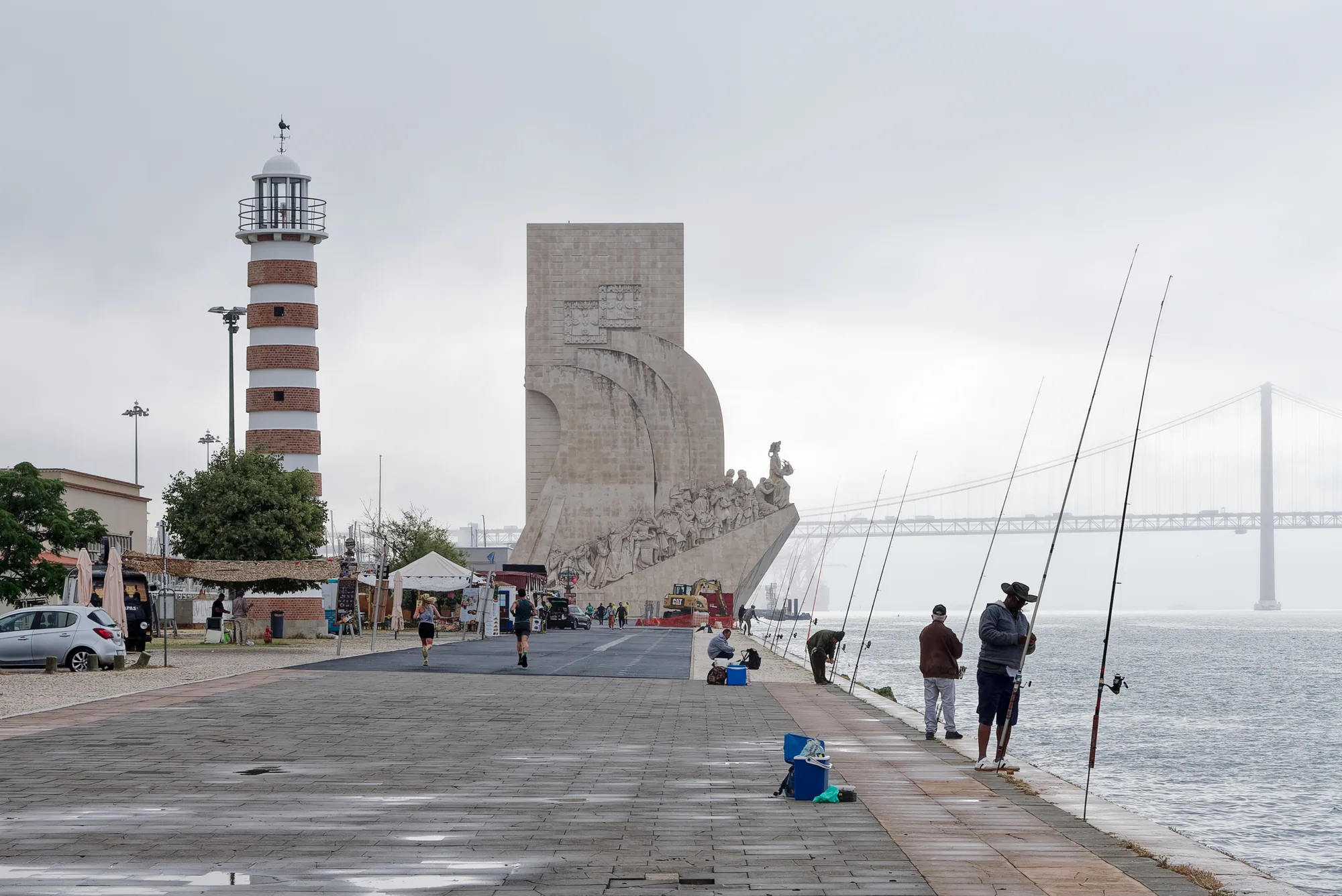
A Belém half-day plan (monuments → river → pastry)
Belém is best when it flows. Do your ‘serious’ monument stop first (Jerónimos), then shift into an outdoor rhythm: Padrão for views, Belém Tower for photos, and a long, easy riverfront walk.
Finish with a pastry ritual. Not because you must — but because Belém is where that ritual feels most satisfying.
- Start: Jerónimos (earlier if you want to go inside).
- Middle: one outdoor icon (tower or Padrão) + riverfront walking.
- Finish: pastry + coffee + golden river light.
The history that built it (the Discoveries in stone)
Jerónimos is essentially a monument to Portugal’s Age of Discovery. Commissioned by King Manuel I in the early 1500s, it was built near the riverside spot from which Vasco da Gama set sail for India, and it was funded in large part by the wealth pouring in from the new spice trade. The monastery was given to the Order of Saint Jerome (the Hieronymites), whose monks were tasked with praying for the king and for the sailors venturing into the unknown.
Its style has its own name: Manueline, a uniquely Portuguese late-Gothic flourish named after the king. The carved stone is covered in maritime and exploration motifs — ropes, knots, armillary spheres, sea creatures and coral — turning the building into a kind of stone diary of a seafaring empire. The south portal and the cloister are the showpieces, among the finest stonework anywhere in Portugal.
The building also holds the tombs of Vasco da Gama and the national poet Luís de Camões, whose epic Os Lusíadas immortalised the voyages. Visiting isn’t just admiring architecture — it’s standing inside the story Portugal tells about its golden age.
- Commissioned by King Manuel I in the early 1500s, funded by the spice trade.
- Built near where Vasco da Gama departed for India; home to his tomb.
- Defines the ornate, maritime-themed Manueline style.
- Also holds the tomb of the poet Camões — a national shrine of the Discoveries.
Free church vs paid cloister (and what to prioritise)
It helps to know that Jerónimos has two parts with two different access rules. The adjoining church of Santa Maria de Belém — with its astonishing forest of slender columns and the tombs of Vasco da Gama and Camões — is generally free to enter, though queues for it can be long. The famous two-storey cloister, widely considered the masterpiece, requires a paid ticket. If you only do one, the cloister is the architectural highlight, but the free church is genuinely worth the wait too.
The cloister is where the Manueline detail reaches its peak: every arch, column and corner is carved, and the play of light through the open quadrangle is the image most people carry away from Belém. The official monument operator (Museus e Monumentos de Portugal) lists the cloister ticket at €18 (adult), with a combined Belém Tower + Jerónimos ticket also available — worth it if you’re doing both. Budget unhurried time for it — this is not a place to rush.
Opening hours run roughly 10:00–18:30 in summer (May–September, last entry 18:00) and 10:00–17:30 in winter (October–April, last entry 17:00); it’s closed on Mondays and on January 1, Easter Sunday, May 1 and December 25. The Calouste Gulbenkian and Azulejo museums elsewhere in the city are partly closed for renovation in this period, but Jerónimos itself remains a star attraction.
- The church (with the famous tombs) is generally free — but queues form.
- The two-storey cloister is the masterpiece: €18 adult ticket (combined tower ticket available).
- Hours: ~10:00–18:30 (May–Sep) / 10:00–17:30 (Oct–Apr); closed Mondays.
- If choosing one, the cloister is the architectural highlight.
 Free things to doThe Jerónimos church is one of Belém’s free highlights.
 Museums in LisbonWhat else is open (and closed) for a Belém culture day.
Getting to Belém and beating the queues
Belém lies a few kilometres west of central Lisbon along the river, and getting there is half the fun. The classic options are the riverside Tram 15E from the centre (Praça da Figueira / Cais do Sodré), the train from Cais do Sodré to Belém station (a short, scenic ride on the Cascais line), or various buses; in good weather it’s also a flat, pleasant cycle or e-scooter along the waterfront. Whichever you choose, leave a little buffer — Belém is a long, spread-out district and the icons sit a walk apart.
Jerónimos is one of Lisbon’s most visited sights, so queue strategy matters. Go early — ideally for opening (around 10:00) — to beat both the cruise-ship crowds and the midday heat, and buy the €18 cloister ticket online in advance to skip part of the line. The Lisboa Card includes free entry to the monastery, which can also let you bypass the ticket queue. Jerónimos is closed on Mondays, so don’t plan a Monday visit.
Build the day around an early Jerónimos slot, then spread out: one indoor highlight, the outdoor icons (Belém Tower, Padrão dos Descobrimentos), a long riverfront walk, and the famous pastry stop. Treating Belém as a relaxed half-day rather than a checklist sprint is the difference between magical and exhausting.
- Reach Belém by Tram 15E, the train from Cais do Sodré, bus, or a riverside ride.
- Go at opening (~10:00) and buy the €18 cloister ticket online to skip much of the queue.
- The Lisboa Card includes entry (free monastery admission).
- Closed Mondays — don’t plan a Monday visit.

Map: Belém’s UNESCO core and nearby icons
Use this map to keep your Belém day coherent: one major interior stop, then outdoor icons and river walking.
Map pins
Map data © OpenStreetMap contributors · Tiles © OpenFreeMap

