Quick take
- Óbidos is a ‘slow walk’ day trip — charming, compact, and very different from Lisbon.
- Go early for calmer streets and softer light.
- Treat it as a half-day-to-full-day escape depending on your pace.
- Keep your plan simple: one loop, one long lunch, one scenic pause.
- It pairs beautifully with a week in Lisbon as a contrast day.
- Return to Lisbon for an easy evening: sunset walk and a simple dinner.
Why Óbidos is a great Lisbon day trip
Óbidos is a classic small-town contrast to Lisbon: compact, scenic, and built for wandering without a plan. It’s the kind of day trip that doesn’t require a complex itinerary to feel rewarding.
If your Lisbon trip is already heavy on hills, Óbidos is a calmer ‘walk-and-breathe’ escape.
- Best for: couples, photographers, and travelers who want a slower rhythm.
- Great timing: mid-trip, when you want a change of scenery without intensity.

How to plan your Óbidos day (simple structure)
Óbidos is best when you keep it simple: arrive, wander, eat, wander again, leave. Don’t try to turn it into a checklist.
- Arrival: go early for calmer streets.
- Midday: long lunch and a slow pause.
- Afternoon: one more loop and photos, then return.
Óbidos vs. Sintra vs. Cascais (which fits your mood?)
These three day trips are all great, but they serve different moods. Choose the one that matches what you want your day to feel like.
- Óbidos: slow, charming, compact, and easy to wander.
- Sintra: dramatic, scenic, and more planning-heavy.
- Cascais: breezy coast, relaxed walking, simplest logistics.
Return-night Lisbon plan (keep it light)
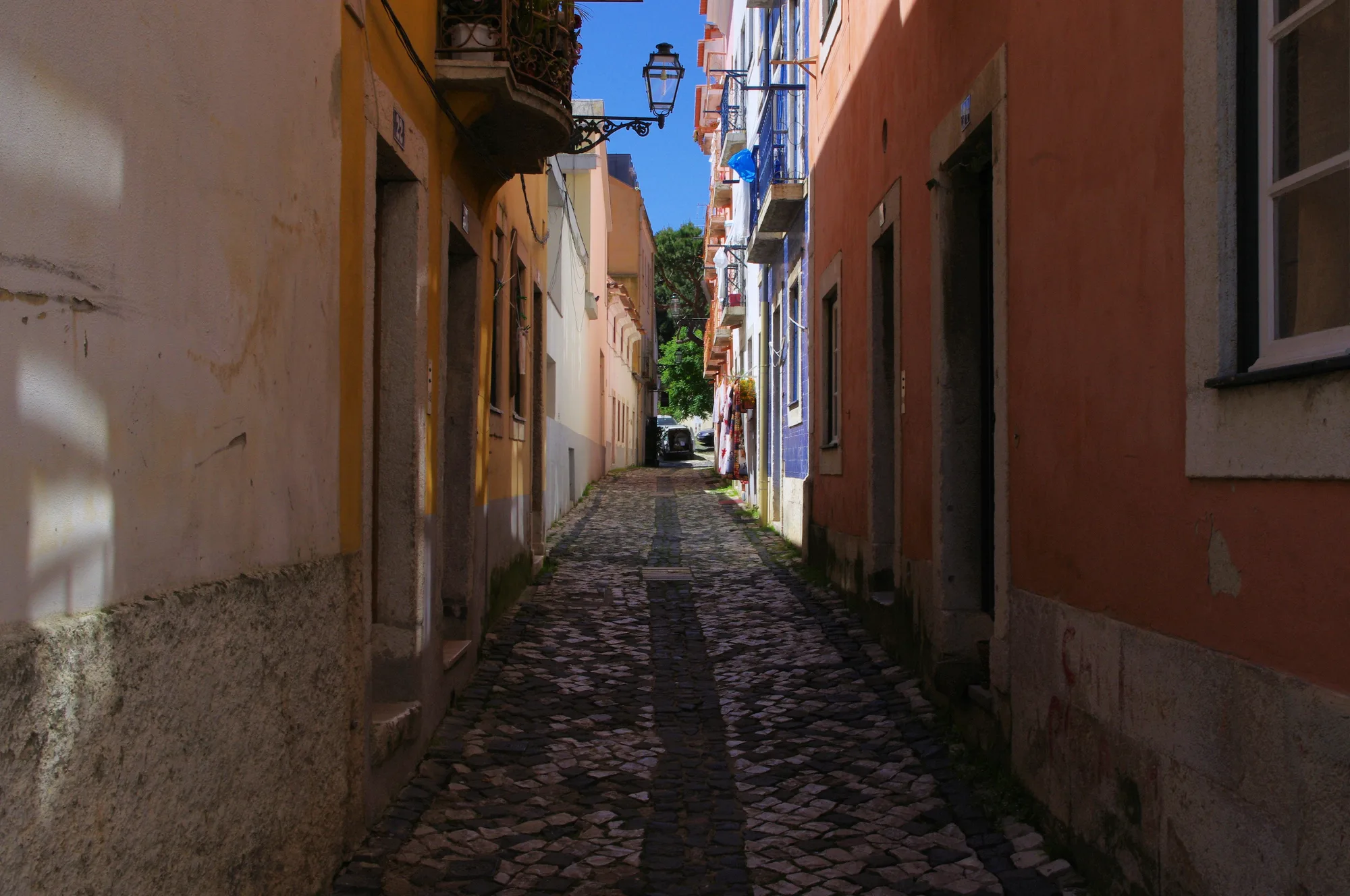
After a day trip, Lisbon is best when you keep it soft: one walk, one meal, one sweet stop. That’s how you keep the week feeling romantic.
- Night walk → simple dinner → dessert.

What Óbidos is (a walled medieval town)
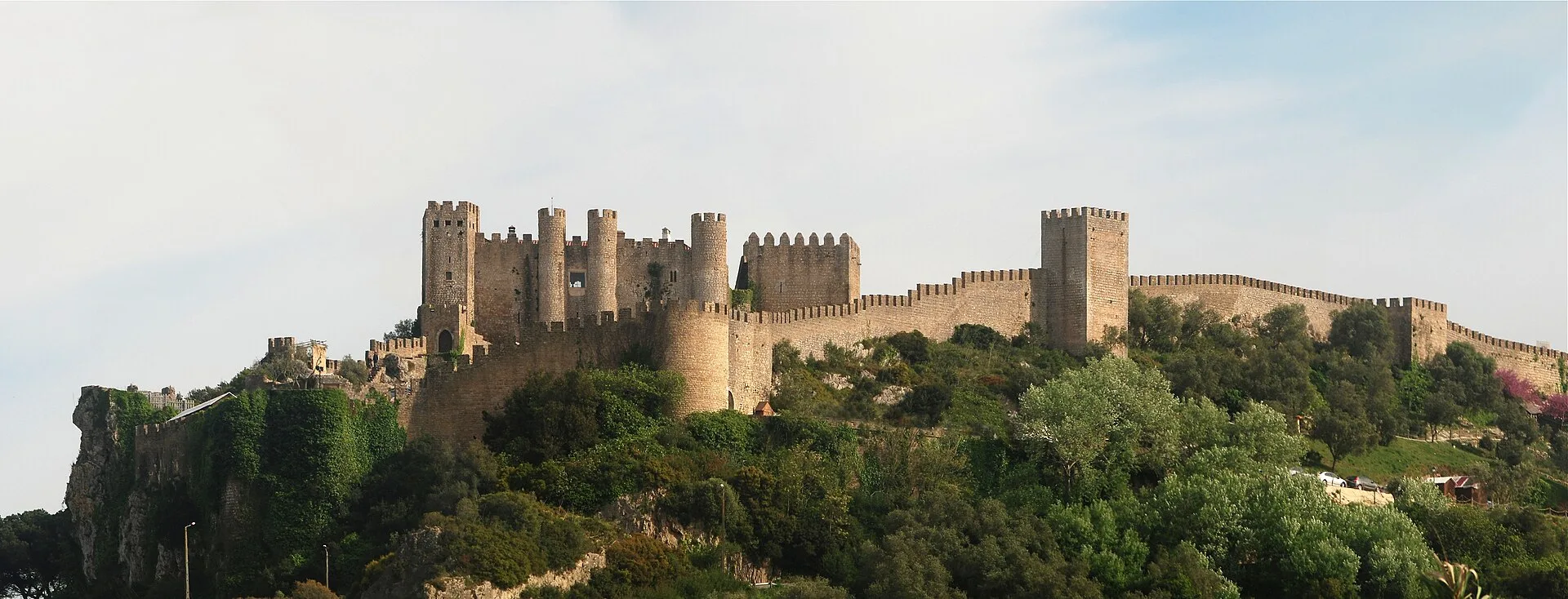
Óbidos is a small medieval town north of Lisbon, wrapped in well-preserved stone walls and crowned by a castle on its hilltop. It’s the kind of place that looks like a film set and is genuinely lived-in: whitewashed houses trimmed in blue and yellow, narrow cobbled lanes, bougainvillea spilling over walls, and the ramparts running right around the old core. For centuries it was famously gifted to Portuguese queens — earning it the nickname ‘the town of the queens’ — which is part of why it’s so lovingly kept.
You enter through the Porta da Vila, the main gate, which is lined inside with blue-and-white azulejo tiles — a lovely first impression. The spine of the town is the Rua Direita, the cobbled main street that runs from the gate up toward the castle, packed with little shops, cafés, and ginjinha stalls. The castle itself is now a historic inn (pousada), but the setting and the walls are the real draw.
Crucially, Óbidos is tiny. You can walk its length in a short while, which is exactly what makes it a low-effort day trip: there’s no complex itinerary to manage, just a beautiful place to wander slowly.
- A walled medieval hilltop town, historically gifted to Portugal’s queens.
- Enter via the tiled Porta da Vila gate; the Rua Direita is the cobbled main street.
- The castle is now a pousada (historic inn) — the walls and setting are the highlight.
- Small enough to wander on foot with no real itinerary.
 AzulejosThe blue-and-white tiles you’ll meet at Óbidos’s town gate.
 Photogenic placesÓbidos is one of the most photogenic day trips going.
Walking the walls and Óbidos’s sweet specialty
The signature Óbidos experience is walking the town walls. The ramparts loop around the old town and give you long views over the rooftops and the surrounding countryside — it’s the moment most people remember. One honest caution: the walls are old, often without railings, and can be narrow and uneven, so they’re not for everyone (vertigo, small children, or unsteady footing make them a hard pass). Wear shoes with grip and take it slowly.
The town’s other claim to fame is ginja de Óbidos — the local sour-cherry liqueur, often served in a tiny edible chocolate cup. Buying one from a Rua Direita stall, sipping it, then eating the cup is a delightfully silly, very Óbidos ritual. The town also leans into a ‘book town’ identity (the Vila Literária, with bookshops tucked into surprising spaces) and hosts seasonal festivals through the year — worth a quick check of what’s on for your date.
- Walk the ramparts for the best views — but note: often no railings, narrow, uneven.
- Try ginja de Óbidos (sour-cherry liqueur), classically in an edible chocolate cup.
- Óbidos is a self-styled ‘book town’ with bookshops in unexpected corners.
- Seasonal festivals run through the year — check what’s on for your dates.
Getting to Óbidos (and how long to give it)
Óbidos isn’t on the main suburban train network, so the usual car-free way to reach it is a regional bus from Lisbon. Buses run out to Óbidos; the operator, departure point, frequency, and journey time change over time, so check the current timetable and aim for an earlier bus to make the most of the day. Driving is easy too, with parking outside the walls (the old town is pedestrian-friendly inside).
On timing: Óbidos can be a half-day or a full, relaxed day depending on your pace and whether you pair it with another stop. Many travellers treat it as a leisurely full day — wander, walk the walls, long lunch, wander again — while others combine it with a coast or nature stop. Either way, go earlier rather than later: the town is busiest with day-trippers and tour groups in the middle of the day, and it’s loveliest in the calmer early hours.
- Reached by regional bus from Lisbon (or by car) — not the main suburban train.
- The bus operator, departure point, frequency, and journey time are worth a look before you head off.
- Give it a half-day to a relaxed full day; go early to beat the midday tour crowds.
Who Óbidos suits
Óbidos is the ideal escape for travellers who want charm and calm over big-ticket sights: couples on a slow day, photographers, and anyone who enjoys simply wandering a beautiful place with no agenda. It’s also a gentle option if Lisbon’s hills have worn you out — the town is compact and pretty, and the day asks very little of you beyond showing up and strolling.
It’s a weaker pick if you need a beach, dramatic nature, or a long list of museums to keep you busy; Óbidos is small, and the experience is the place itself rather than its attractions. Go early to enjoy the quiet before the tour groups arrive, keep the plan loose, and let the walled lanes and the view from the ramparts do the work.
- Great for: couples, photographers, and slow-day wanderers who like charm over sights.
- A gentle option when Lisbon’s hills have tired you out.
- Less ideal if you want a beach, big nature, or lots of museums.
- Go early for the calm; keep the plan loose and just wander.


