Quick take
- Mafra is a great ‘calm culture’ day trip — less crowded than the biggest classics.
- The National Palace of Mafra is the anchor; build the day around it.
- Plan a slow lunch and keep the rest of the day light.
- It’s ideal if you want history and architecture without the Sintra intensity.
- Treat it as a full day trip, but a low-stress one.
- Pair Mafra with a slower Lisbon evening: dessert + short walk.
Why Mafra is worth it (the short version)
If you want a day trip that feels cultural and impressive but calmer than the biggest tourist circuits, Mafra is a strong choice. The day is built around one major anchor, which makes planning simple.
This is the kind of day trip that feels especially good in the middle of a Lisbon week — a change of scenery without draining your energy.
- Best for: architecture lovers, history lovers, and travelers who want a calmer day.
- Great alternative to: a second ‘big’ day trip after Sintra.

How to structure a Mafra day trip
The simplest plan is: arrive, do your main cultural stop, eat slowly, then decide if you want a second small stop or just a walk. Don’t over-stack.
- Morning: palace/monument anchor.
- Midday: long lunch.
- Afternoon: short walk + one small add-on (optional).
- Evening: return to Lisbon for a light plan.

How Mafra compares to Sintra (which should you choose?)
Sintra is the dramatic fairytale. Mafra is the calmer architectural day. If you’re choosing one, pick the one that matches your energy and planning appetite.
- Choose Sintra for: palaces + forests + big ‘wow’ scenery.
- Choose Mafra for: calmer pacing + one major cultural anchor.
 Sintra guideA full plan if you go for the classic fairytale day trip.
 Getting aroundTransit strategy for day-trip starts and smooth returns.
Post-day-trip Lisbon evening plan (keep it soft)
After a day trip, keep Lisbon gentle: dessert, a short walk, and sleep. That’s how you keep a week-long trip feeling romantic instead of exhausting.
- Dessert stop → short night walk → early night.

What Mafra actually is (the National Palace)
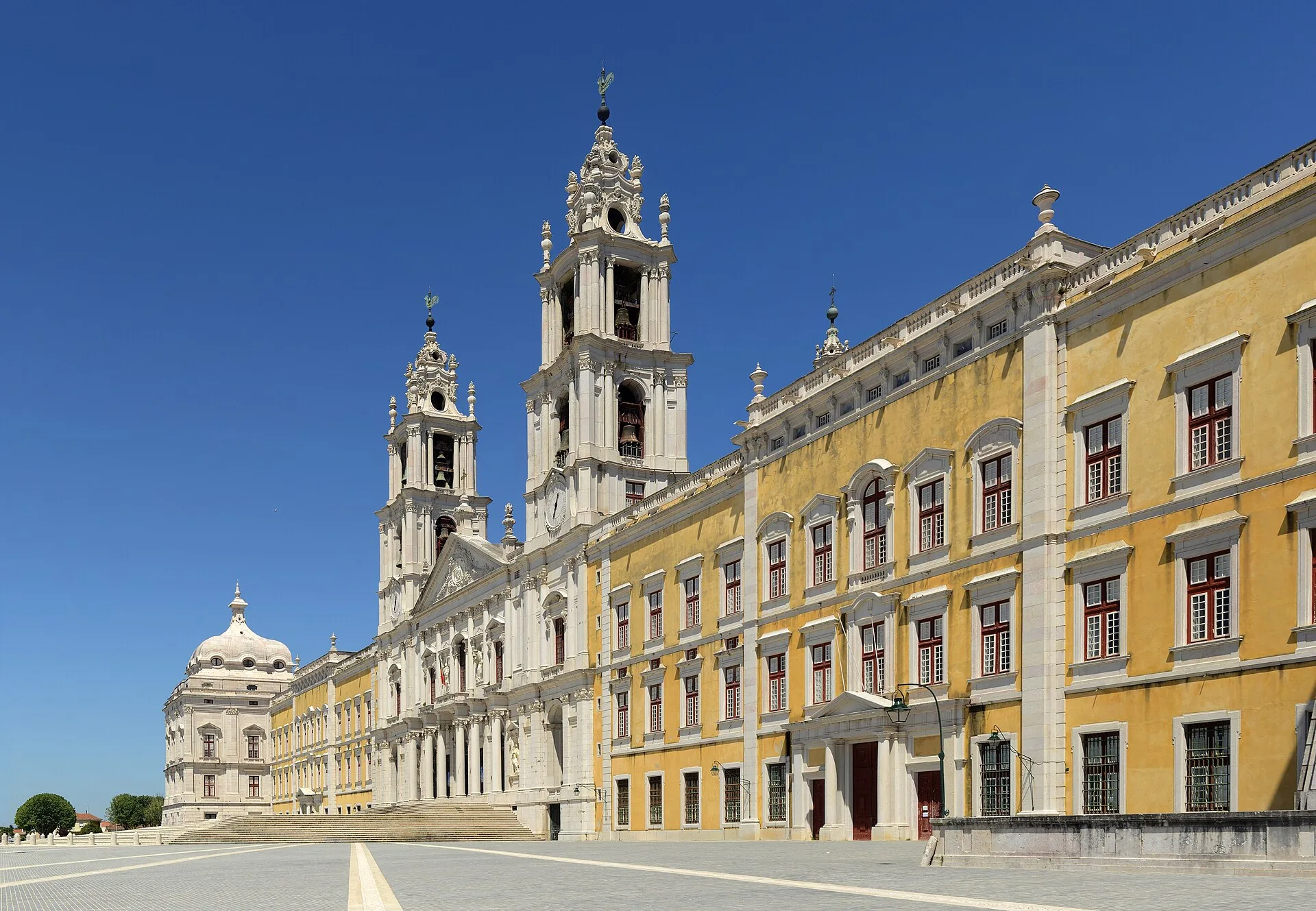
Mafra’s anchor is the Palácio Nacional de Mafra — an enormous baroque palace-convent that doubles as a basilica, built in the 18th century under King João V at the height of Portugal’s gold-from-Brazil wealth. It’s one of the most monumental buildings in the country: a single complex combining a royal palace, a friary, and a grand domed church, all on a scale that’s genuinely hard to take in until you’re standing in it.
The interiors are the draw. The complex is famous for its baroque library — a long, light-filled hall of carved wood and old books that’s among the most beautiful in Europe — and for its set of historic carillons (bells) in the towers. The whole site was inscribed as a UNESCO World Heritage Site in 2019, recognising it as a high point of Portuguese baroque.
Because everything you’ve come to see is essentially one site, planning is refreshingly simple: you arrive, you tour the palace, and you let the rest of the day be slow. That single-anchor quality is exactly what makes Mafra a calmer alternative to the sprawling, multi-stop intensity of Sintra.
- An 18th-century baroque palace-convent-basilica built under King João V.
- Famous for its grand baroque library and historic tower carillons (bells).
- A UNESCO World Heritage Site (inscribed 2019).
- One big anchor site — simple to plan, easy to pace.
How to get to Mafra (and what to verify)
Mafra is northwest of Lisbon and is reached by road rather than the main suburban train lines, so the car-free option is a regional bus from Lisbon. Buses run from the city out to Mafra; the exact operator, departure point, frequency, and journey time change over time, so check the current timetable before you go and aim for an earlier departure to give yourself a relaxed day. Driving is also straightforward if you have a car.
Plan it as a full, low-stress day rather than a quick dash. Because the palace is the whole point, you don’t need to choreograph a tight schedule — just get there in good time, tour at a comfortable pace, have a long lunch in town, and head back. Confirm the palace’s opening days and hours on the official site too, since (like many monuments) it closes on a set day each week and hours can shift seasonally.
- Reached by regional bus from Lisbon (or by car) — not the main suburban train.
- The bus operator, departure point, frequency, and journey time are worth checking before you go.
- Go earlier for a relaxed day; confirm the palace’s opening days/hours officially.
Beyond the palace (nature and a slower town)
If you want more than the palace, Mafra has a green card to play: the Tapada de Mafra, a large walled former royal hunting park nearby, with woodland, wildlife, and trails — a calm, nature-leaning add-on for travellers who like to walk off a big interior. It’s the kind of optional second stop that suits Mafra’s unhurried mood without turning the day into a checklist.
Otherwise, lean into the town itself. After the palace, a long Portuguese lunch and a gentle wander are the whole assignment. The appeal of Mafra is precisely that it doesn’t demand much: one great sight, good food, and time. Keep that spirit and the day stays restful — then return to Lisbon for a soft evening.
- Optional add-on: the Tapada de Mafra walled park for woodland and trails (check access/hours).
- Otherwise keep it slow: palace, long lunch, gentle town wander, return.
- The point of Mafra is calm — don’t over-program it.
Who Mafra suits (and when to choose it)
Mafra is the right call for travellers who love architecture and history but want a calmer, lower-effort day than the big classics. It rewards anyone who’d rather go deep on one extraordinary building than dash between five scattered sights — the kind of visitor who enjoys a great library, a vast church, and the quiet impressiveness of a single monumental complex.
It’s especially good as a second cultural day on a longer trip, when you’ve already done Sintra and want something with a different, slower rhythm. If your priority is dramatic landscape, beaches, or buzzy nightlife, Mafra isn’t the pick — but for ‘calm culture’, it’s one of the most underrated escapes near Lisbon. Choose it when you want to be impressed without being exhausted.
- Great for: architecture and history lovers who want one deep, calm anchor.
- Best as: a second, slower cultural day after the intensity of Sintra.
- Not for: travellers chasing beaches, dramatic scenery, or nightlife.
- Choose it when you want to be impressed without being worn out.


